- Available 24/7 by Appointment


Flight simulators have become an important part of modern pilot training.
Instead of needing to start an aircraft every time you want to practise a procedure, a simulator allows pilots to work through instruments, navigation, avionics, emergencies and different flight scenarios from the ground.
For someone looking at simulator flight training in Melbourne, however, it is important to understand that not every simulator serves the same purpose.
At one end of the spectrum are general aviation simulators used to support students completing qualifications such as an RPL, PPL or CPL.
At the other are sophisticated full-flight simulators used by professional pilots for aircraft type ratings, recurrent training and command courses.
Melbourne also has simulator environments used for:
For a student pilot, one of the biggest advantages is the ability to practise a particular skill repeatedly without using valuable aircraft time.
An instrument approach can be restarted.
An emergency can be introduced again.
A navigation procedure can be rehearsed before flying it for real.
An avionics sequence can be paused while the instructor explains what is happening. That does not mean simulator training replaces flying a real aircraft.
Real flying introduces the physical, environmental and operational conditions that a simulator can only reproduce to varying degrees.
Instead, the real value of simulation is often found in how it supports aircraft training.
So, what can you actually learn in a flight simulator, how does simulator training fit into real pilot training, and where is simulator flight training available in Melbourne?
1. What Is Simulator Flight Training?
Simulator flight training uses a ground-based device designed to reproduce aspects of operating a real aircraft.
Depending on the simulator, this may include:
The sophistication of these devices can vary enormously.
Some simulators are primarily designed to help pilots learn procedures and navigation. Others reproduce a particular aircraft cockpit in considerable detail.
At the professional end of the industry, full-flight simulators can combine aircraft-specific cockpits, visual environments and motion systems to support airline and type-specific training.
This means that asking whether a flight school has a simulator is only the beginning. A more useful question is:
“What is the simulator designed to teach?”
For a PPL student, a simulator designed for procedures, navigation and instrument skills may be extremely useful.
For an airline pilot completing an aircraft type rating, an entirely different level of simulation is required.
The simulator needs to match the training objective.
Is a Flight Simulator the Same as Flying a Real Aircraft?
No.
A simulator creates a controlled synthetic environment.
An aircraft operates in a real aerodynamic, environmental and operational environment.
In the aircraft, you experience factors such as:
A simulator attempts to reproduce relevant parts of that environment, but its purpose is not necessarily to make you forget you are on the ground.
Its value comes from giving you the ability to isolate, practise and repeat particular skills.
For that reason, simulator training is generally best viewed as something that complements real aircraft training rather than automatically replacing it.
2. What Are Flight Simulators Used For?
Flight simulators can be used for a surprisingly wide range of aviation training. For student and private pilots, common uses include:
At the professional level, simulators can also be used for:
There are also simulator programs outside traditional pilot licensing.
Some Melbourne simulator experiences are designed for members of the public who want to experience an airline cockpit, while others use simulation as part of programs designed to help nervous flyers understand what happens during a flight.
The common thread is the ability to create a controlled and repeatable environment. Why Use a Simulator Instead of an Aircraft?
There are several reasons why a particular exercise may be well suited to a simulator. Safety
Emergency and abnormal situations can be introduced without deliberately creating the same situation in a real aircraft.
Repetition
An exercise can often be reset and repeated quickly.
Cost
Simulator sessions can be less expensive than operating a real aircraft, depending on the device and training involved.
Weather independence
Training can continue on the ground even when actual flying conditions are unsuitable. Scenario control
An instructor can introduce specific situations to test or develop a particular skill. Standardisation
Professional training organisations can give different pilots the same scenario and assess how they respond.
The important point is that simulator training should have an objective. Simply spending time in a simulator does not automatically make training more effective.
3. What Types of Flight Simulators Are Used in Melbourne?
The term flight simulator covers several different types of devices.
This is important when comparing simulator flight training in Melbourne because a general aviation student, an instrument pilot and an airline crew may all say they are completing “simulator training” while using completely different equipment.
General Aviation Simulators
General aviation simulators are commonly used to support training for:
They may reproduce the cockpit and systems of common training aircraft or provide an environment suitable for developing general flying procedures.
Typical exercises can include:
For a student pilot, this type of simulator can be particularly useful when it is integrated directly with what they are currently learning in the aircraft.
FNPTs
FNPT stands for Flight Navigation Procedure Trainer.
As the name suggests, these devices are particularly useful for training involving:
Depending on the particular device and its approval, an FNPT may form part of structured aviation training.
The important distinction is that an FNPT is a training device with a specific aviation purpose rather than simply a recreational computer flight simulator.
Flight Training Devices
Flight Training Devices, or FTDs, can provide more detailed replication of aircraft systems, controls and procedures depending on their design and certification.
Their capabilities vary.
This is why students should avoid assuming that every simulator provides the same training value or regulatory credit.
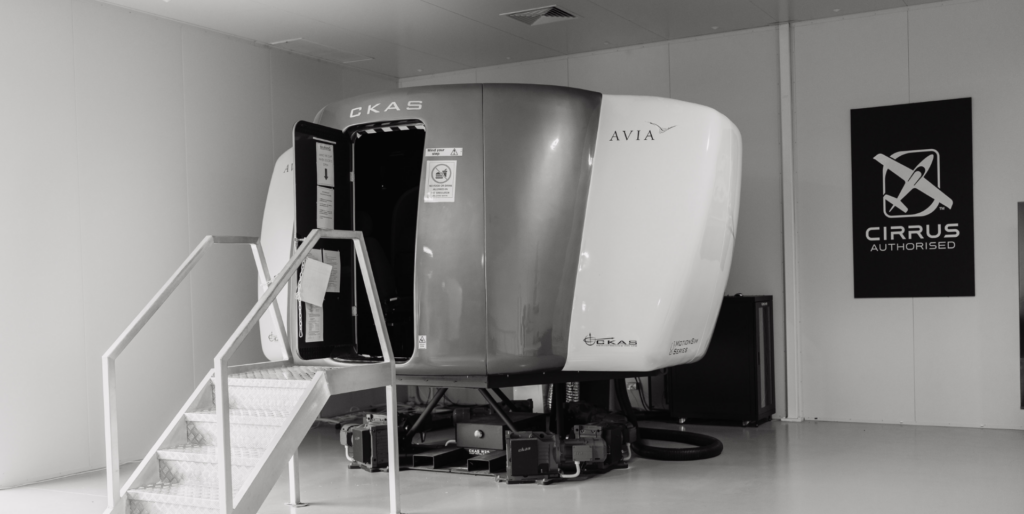
Full Flight Simulators
At the professional end of simulator training are Full Flight Simulators, commonly associated with airline and advanced aircraft training.
These devices can include:
They allow professional crews to train for situations that would be difficult, expensive or inappropriate to deliberately reproduce in the actual aircraft.
Does More Expensive Automatically Mean Better?
No.
The best simulator is the one that suits the training objective.
A full-motion airline simulator may be an extraordinary piece of technology, but a PPL student learning basic navigation or instrument procedures does not necessarily need that level of equipment.
Likewise, a professional pilot completing an aircraft-specific type rating requires far more detailed simulation than a beginner learning basic procedures.
Instead of asking:
“Which simulator is the most advanced?”
ask:
“Which simulator is most appropriate for what I am trying to learn?”
4. General Aviation Simulator Training in Melbourne
For student and private pilots, general aviation simulator training can provide a bridge between learning something theoretically and performing it in a real aircraft.
The research provided identifies simulator environments representing common training aircraft such as:
The exact aircraft represented will depend on the simulator and training provider. General aviation simulator sessions can focus on areas such as:
For example, a student preparing for navigation training could practise a route in the simulator before flying it in the aircraft.
Rather than seeing a particular procedure for the first time while also managing the aircraft, radio and navigation, the student arrives with some familiarity.
The same concept can apply to instrument training.
A student can practise maintaining an instrument scan and following a procedure without needing to use aircraft time every time they want another attempt.
Who Is General Aviation Simulator Training For?
General aviation simulator training can be useful for:
Beginner pilots
Simulator sessions can introduce cockpit layouts and basic procedures. RPL students
Simulation may support areas such as procedures, radio and basic instrument awareness. PPL students
Navigation, instruments, emergencies and procedures can all be rehearsed. CPL students
Simulation can support more advanced procedures and workload management. Private pilots
Licensed pilots may use simulation to refresh procedures or practise skills. Pilots preparing for instrument training
Instrument procedures are particularly well suited to a controlled simulator environment.
The important consideration is how the simulator fits into the pilot’s broader training program.
5. Airline Full-Flight Simulator Training in Melbourne
Melbourne also has a significant professional simulator-training sector.
This is very different from the simulator environment typically used by someone learning to fly for the first time.
Professional flight-training organisations use sophisticated synthetic training devices and full-flight simulators for aircraft including examples identified in the research such as:
These simulators can be used for:
One of the major benefits is the ability to introduce scenarios that would be impractical or unsafe to deliberately reproduce in the real aircraft.
An airline crew can be presented with an abnormal or emergency scenario and assessed on how they:
The exercise can then be discussed, reset and repeated.
Airline simulator training generally serves a different purpose from student pilot or recreational simulator sessions.
Professional approved simulator programs may be designed around:
A public simulator experience, on the other hand, may allow someone to experience operating an airline-style cockpit without completing an approved professional training course.
The fact that both take place in a “flight simulator” does not make them equivalent.
For a student pilot, the better question is usually not whether they can access the biggest simulator available.
It is whether the simulator they use is relevant to the aircraft, procedures and qualification they are currently learning.
6. Helicopter Simulator Training Simulator training is not limited to fixed-wing aircraft.
Advanced helicopter simulators can also be used for training involving:
The research provided highlights an H135 simulator intended to support Australian rotorcraft training, incorporating features such as Garmin avionics, a wide visual system and simulated airframe feedback.
This demonstrates how simulator technology can be adapted to very different aviation environments.
Is Helicopter Simulator Training the Same as Fixed-Wing Training? No.
While some training concepts overlap, helicopters and fixed-wing aircraft have different:
The simulator therefore needs to reflect the aircraft and skills being taught. Again, the value is not simply in having an advanced simulator.
It is in using the right simulator for the right training purpose.
7. Flight Simulator Experiences for the General Public
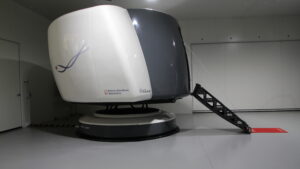
Not every flight simulator in Melbourne is designed for someone completing a pilot licence. Some simulator experiences are designed specifically for:
These sessions may allow someone to sit in the pilot’s seat and experience parts of a simulated flight such as:
They can be an enjoyable way to understand more about aviation without committing to formal flight training.
No.
A public simulator experience may be:
but that does not automatically make it part of an approved pilot-licensing course. This distinction matters if your goal is to become a pilot.
If you want simulator time to form part of your actual flight training, ask the provider: “How does this simulator session fit into my licence or training program?”
If your goal is simply to experience flying an aircraft from the cockpit, a recreational simulator experience serves a completely different purpose.
8. Simulator Training for Fear of Flying
Flight simulators can also be used outside traditional pilot training to help people better understand what happens during a flight.
The research provided identifies Melbourne programs using Boeing 737-based simulation as part of fear-of-flying coaching.
A simulator can allow participants to experience and discuss areas such as:
For someone who is nervous about flying, understanding what is happening can make the experience feel less mysterious.
Instead of sitting in the passenger cabin wondering why the aircraft has made a particular noise or movement, the simulator allows the situation to be explained from the cockpit perspective.
One of the major advantages is control.
A scenario can potentially be:
For example, a participant may be able to experience a simulated turbulence scenario while an instructor explains what is happening and how the pilots respond.
The important distinction is that this type of simulator session is coaching and education rather than pilot licensing training.
Its objective is confidence and understanding rather than achieving an aviation qualification.
9. Who Uses Simulator Flight Training in Melbourne?
There is no single type of simulator student.
Different simulator environments serve completely different groups.
Student Pilots
Students completing qualifications such as:
may use simulators to support procedures, instruments, navigation and emergency training. Private Pilots
Licensed private pilots may use simulation for:
Commercial Pilots
Commercial pilots can use simulation for more advanced procedural and qualification-based training.
Airline Pilots
Airline crews use sophisticated simulators for areas such as:
Helicopter Pilots
Rotorcraft simulation can support areas including:
Nervous Flyers
Simulator-based coaching can help people better understand aircraft operations and the normal sensations associated with flying.
Aviation Enthusiasts
Public simulator experiences allow people to experience an aircraft cockpit without undertaking a formal pilot-training course.
The common technology may be simulation, but the training objective determines how the simulator is used.
10. How Does Simulator Training Fit Into RPL Training?
For an RPL student, simulator training can be used to support the skills being developed in the aircraft.
Potential uses include:
One of the benefits is the ability to separate some of the mental workload from actually controlling the aircraft.
Consider radio procedures.
In the aircraft, a beginner may simultaneously be trying to:
A simulator can provide an environment where some of those procedures can be practised repeatedly.
The same principle can apply to emergency procedures.
Instead of simply discussing an emergency on the ground, the instructor can introduce a simulated scenario and ask the student to respond.
No.
Simulator training should be viewed as a supporting tool for real aircraft training, not an automatic replacement for it.
Students still need real-world flying experience.
That is where they develop familiarity with:
The simulator can help prepare the student for those situations.
A useful way to think about the relationship is:
Learn the concept → Practise it in the simulator → Apply it in the aircraft
When simulator sessions are connected to what the student is actually learning in the aircraft, they can become a valuable part of the overall training process.
Can simulator hours count towards a pilot licence?
Yes, some simulator training may count towards pilot licence or rating requirements, but it depends on the simulator, training course and applicable CASA requirements.
Not every simulator session is automatically creditable. If you are completing an RPL, PPL, CPL or advanced rating, ask the flight school whether the device is approved for your particular training pathway and how the simulator time will be recorded.
Is simulator training cheaper than flying a real aircraft?
Simulator training can often cost less than operating a real aircraft, particularly when practising procedures, instruments, navigation, avionics and emergency scenarios.
The bigger advantage can be efficiency. A simulator allows an exercise to be reset and repeated without spending aircraft time repositioning for another attempt.
However, simulator training does not automatically replace required aircraft experience. Its greatest value is often making the time you spend in the real aircraft more productive.
Can beginners use flight simulators?
Yes. You do not need previous flying experience to benefit from an appropriately structured simulator session.
For student pilots, a simulator can provide an introduction to cockpit procedures, flight instruments, radio calls, navigation and aircraft systems before those skills are applied in the real aircraft.
The simulator should match the student’s experience level and training objective rather than simply being the most advanced device available.
Can you practise emergencies in a flight simulator?
Yes. Emergency and abnormal procedures are some of the most valuable uses of flight simulation.
Depending on the simulator, pilots may be able to practise scenarios involving engine failures, instrument failures, electrical problems, system malfunctions, deteriorating weather and other abnormal situations.
The instructor can introduce the scenario, assess the pilot’s response and then reset it for another attempt without deliberately creating the same emergency in a real aircraft.
Is simulator flight training the same as flying a real aircraft? No. Simulator training complements real aircraft training rather than completely replacing it.
A simulator provides a controlled environment where procedures, navigation, instruments, avionics and emergencies can be practised repeatedly. A real aircraft introduces genuine weather, movement, traffic, aircraft performance and operational decision-making.
For pilot training, the two can work particularly well together:
Learn → Simulate → Fly → Review
The simulator allows you to understand and rehearse the procedure, while the aircraft gives you the experience of applying it in the real flying environment.