- Available 24/7 by Appointment


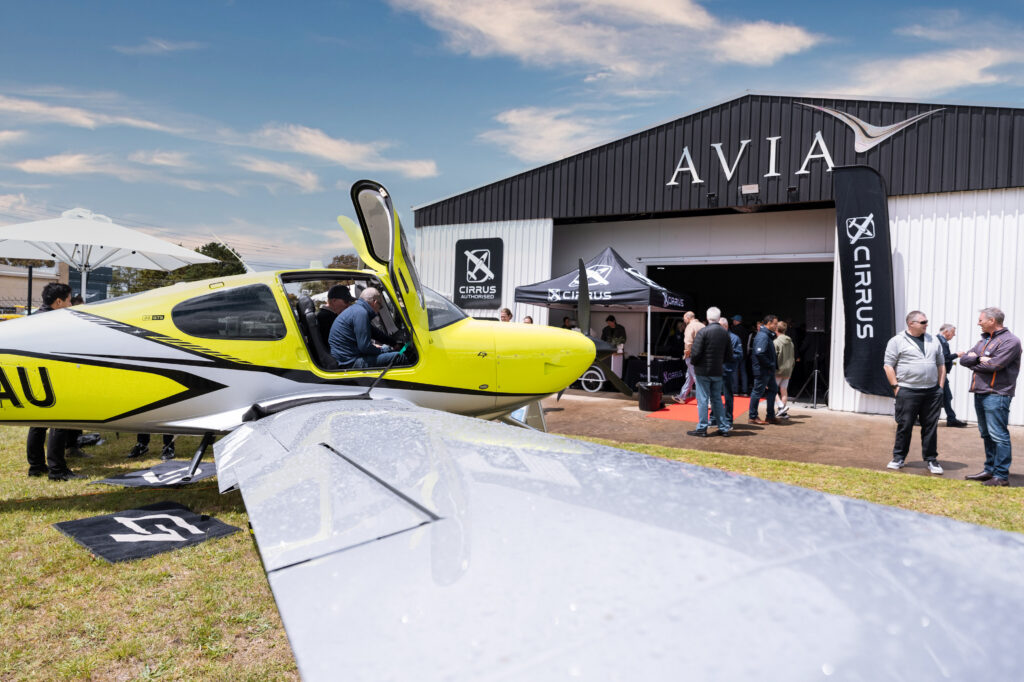
Learning to fly doesn’t necessarily mean starting in a traditional Cessna or Piper.
A complete beginner can start their flight training in a Cirrus SR20, learning the same fundamental flying skills required of every pilot while also becoming familiar with a modern glass cockpit, automation, side-stick controls and the Cirrus Airframe Parachute System, or CAPS.
For some students, that makes the SR20 a very appealing aircraft to learn in.
Instead of earning your Private Pilot Licence in one aircraft and transitioning into a Cirrus later, you can develop your basic flying skills and your familiarity with the Cirrus environment at the same time.
That means learning things such as:
while progressively becoming comfortable with:
The SR20 is therefore more than simply a newer-looking training aircraft.
It is a technically advanced aircraft that introduces students to systems and technology they may otherwise encounter later in their flying.
That comes with advantages, but also some important trade-offs.
Training in an SR20 can cost more than training in a more traditional aircraft, and there is more technology for a new student to understand. For someone whose only objective is obtaining a licence at the lowest possible cost, another aircraft may make more sense.
But if you intend to own, hire or regularly fly Cirrus aircraft after gaining your licence, learning in an SR20 from the beginning can provide valuable continuity.
This guide explains what it is actually like to learn to fly a Cirrus SR20, whether it is a good aircraft for beginners, what you will learn during training and what you should consider before choosing it as your primary training aircraft.
Yes. A complete beginner can learn to fly in a Cirrus SR20.
You do not need to first obtain your pilot licence in another aircraft and then transition into a Cirrus.
The SR20 can be used for primary flight training, meaning a student can begin with little or no previous flying experience and progress through the stages required to work towards a Private Pilot Licence.
That can include:
At the same time, the student progressively learns the systems that make the SR20 different from many traditional training aircraft.
That includes the aircraft’s glass cockpit, navigation systems, automation, autopilot and CAPS.
The key word is progressively.
A new student is not expected to understand every function of the avionics on their first lesson.
Early training still centres on learning how to actually fly the aeroplane.
As your basic handling improves, more of the technology and aircraft systems can be introduced.
The result is a training pathway where you develop fundamental pilot skills and Cirrus-specific knowledge together.
What Does “Learn to Fly an SR20” Actually Mean?
There are two slightly different things someone might mean when they say they want to learn to fly a Cirrus SR20.
The first is:
Learning to fly from zero in an SR20.
This is primary flight training.
You begin as a student pilot and work through the normal stages of learning to fly, potentially continuing all the way through to your Private Pilot Licence.
The second is:
Already holding a pilot licence and learning to operate an SR20.
This is more accurately described as Cirrus transition training.
An existing pilot already understands the fundamentals of flying, so the emphasis shifts towards becoming familiar with the SR20 itself — its systems, avionics, automation, normal procedures, emergency procedures and CAPS.
Both are forms of Cirrus training, but they are very different pathways.
For a new pilot asking whether they can learn to fly in an SR20 from the beginning, the answer is straightforward:
Yes — the SR20 can be the aircraft you learn in from your very first lessons through to your PPL.
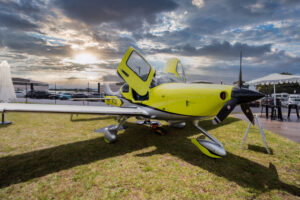
The Cirrus SR20 is a modern single-engine aircraft in the Cirrus SR-series and is used for both flight training and private flying.
What makes it particularly interesting as a training aircraft is the combination of traditional flying skills with a much more technologically advanced cockpit environment.
Depending on the generation and configuration, an SR20 can include features such as:
These are some of the features that distinguish the SR20 from many more traditional training aircraft.
For a new student, that means you are not only learning how to control the aircraft.
You are also progressively learning how to interpret information, manage avionics and understand what the aircraft’s systems are doing.
Is the SR20 a Technically Advanced Aircraft?
The SR20 is commonly described as a technically advanced aircraft, or TAA.
For a student pilot, the practical meaning is more important than the terminology.
You are training in an aircraft where avionics and automation form a significant part of the cockpit environment.
That can mean learning to manage:
The important thing is that these systems should be introduced alongside good fundamental flying.
Technology should never become a substitute for understanding what the aircraft is actually doing.
A well-trained SR20 student should still be developing the same core skills expected of any pilot:
Look outside. Fly accurately. Make good decisions. Understand the aircraft.
The avionics and automation are there to support those skills, not replace them.
The Cirrus SR20 can be an excellent primary training aircraft for the right student.
That last part matters.
There is no single aircraft that is automatically the best choice for every person learning to fly.
Someone who wants the lowest possible hourly training cost may make a very different choice from someone who knows they ultimately want to own or regularly fly Cirrus aircraft.
The SR20’s biggest advantages come from the fact that you are learning in a modern aircraft environment from day one.
Modern Glass Cockpit From Day One
One of the most obvious differences is the cockpit.
Rather than learning in a simple analogue environment and transitioning into advanced avionics later, an SR20 student becomes familiar with glass-cockpit flying throughout their training.
Depending on the aircraft, this can include Perspective or Perspective+ avionics.
That means learning how to use electronic displays and integrated navigation systems becomes a normal part of your flying rather than a separate skill introduced later.
For someone who expects to continue flying modern general aviation aircraft, that experience can be useful.
The important thing is that students learn to understand the information rather than simply follow what appears on a screen.
CAPS
Another major difference is CAPS — the Cirrus Airframe Parachute System.
CAPS is one of the defining systems found in Cirrus aircraft and becomes part of aircraft familiarisation and emergency-procedure training.
For a new student, that means learning about CAPS as part of the aircraft from the beginning rather than encountering the system later during transition training.
However, CAPS should never be viewed as a replacement for good pilot skills.
Students still need to learn:
CAPS becomes another tool within that broader safety framework.
More Performance and Comfort
The SR20 also provides a different flying environment from many basic training aircraft.
The research identifies the aircraft as offering greater performance and comfort than many traditional trainers.
That can become particularly noticeable as training progresses beyond local lessons and into navigation and cross-country flying.
For a student who plans to use their licence for private touring or eventually move further into the Cirrus range, that capability may be part of the attraction.
Automation and Systems Management
Perhaps the biggest difference is how early a student is exposed to automation and systems management.
SR20 training can progressively introduce concepts such as:
That can provide valuable experience, but it also places greater responsibility on the training program.
A student should never become someone who simply presses buttons because they know what normally happens next.
They should understand:
What did I ask the aircraft to do?
What is it actually doing?
Why is it doing that?
What will I do if the automation does something unexpected?
That is where structured instruction becomes especially important.
The goal is not to create a student who is dependent on technology.
It is to develop a pilot who can fly the aircraft manually, understand its systems and use automation intelligently when appropriate.
For the right student, that combination is what makes the SR20 such an appealing aircraft to learn in.
The Cirrus SR20 can be an excellent aircraft to learn in, but it is not automatically the best choice for every student.
Its biggest strengths — modern avionics, automation, performance and systems — are also the reasons it can demand a little more from both the student and the training budget.
Higher Training Cost
The first trade-off is cost.
The research consistently shows that SR20 training generally costs more per hour than training in a traditional aircraft such as a Cessna 172.
That matters because flight training costs accumulate over dozens of hours.
Even a relatively modest difference in hourly aircraft rate can produce a substantial difference in the total cost of a Private Pilot Licence.
The exact amount varies according to:
Newer SR20 generations can also cost more to hire than older aircraft.
That means someone choosing an SR20 is generally making a deliberate choice to train in a more advanced aircraft rather than simply selecting the cheapest possible training platform.
More Complex Cockpit
The SR20 also introduces more information and more systems than many basic training aircraft.
A student may need to become comfortable with:
That can initially feel like a lot.
The danger is becoming what instructors sometimes call a “button pusher” — someone who knows which button normally produces a result but does not fully understand what the aircraft is doing.
Good SR20 training should prevent that.
The student should understand the aircraft first and the automation second.
Lower Availability
Another consideration is availability.
There are simply fewer SR20s in the training market than more common aircraft such as Cessna 172s.
That can mean:
For anyone comparing schools, aircraft availability should therefore be considered alongside the hourly rate.
A good aircraft is only useful if you can book it consistently enough to progress.
The SR20 can be a particularly good fit for someone who already has a clear idea of the type of flying they want to do after receiving their licence.
The supplied research identifies several situations where learning in an SR20 may make particular sense.
The SR20 May Suit You If:
For these pilots, the extra cost of learning in an SR20 may be easier to justify because the aircraft itself is relevant to their long-term flying.
Instead of completing a licence in one aircraft and then immediately transitioning into something very different, they are building familiarity with the aircraft environment they intend to keep using.
It May Be Less Suitable If:
The SR20 may be less attractive if:
There is nothing wrong with choosing a lower-cost trainer.
For many students, that is the most sensible option.
The important thing is matching the training aircraft to your budget, goals and intended flying.
The SR20 is not automatically the best trainer simply because it is more modern.
It makes the most sense when the aircraft itself is relevant to where you want your flying to go next.
Learning to fly an SR20 is still, first and foremost, learning to fly an aeroplane.
Your first lessons are not about mastering every page of the avionics system.
They are about understanding what the aircraft does when you move the controls, change the power or alter the attitude.
Early training can include:
These are the same fundamental skills that form the basis of flight training in any aircraft.
As you become more comfortable, more of the SR20’s technology is introduced.
That can include:
The learning therefore happens in layers.
First you learn to control the aircraft.
Then you learn how the aircraft’s systems can support what you are already doing.
Learning the Aircraft and the Technology Together
One of the advantages of starting in an SR20 is that you do not have to treat advanced avionics as something completely separate that appears later in your flying career.
Instead, the technology gradually becomes part of your normal operating environment.
That can be useful, but only if the training remains disciplined.
The student should always be able to fly the aircraft without relying blindly on automation.
A useful way to think about it is:
Fly the aircraft first. Understand the systems second. Use the technology appropriately third.
Every flight school will structure its program slightly differently, but the supplied research describes a typical SR20 pathway in three broad stages.
Phase 1: Foundations
The first stage focuses on learning the aircraft and basic flying skills.
This may include:
At this stage, technology is introduced carefully rather than allowing it to dominate the lesson.
The priority remains basic aircraft control.
Phase 2: Solo and Local Flying
Once the student has developed sufficient competence, training progresses towards greater independence.
This can include:
This is also where the student begins integrating aircraft management, navigation and decision-making more seriously.
Phase 3: Advanced Skills and Flight-Test Preparation
The later stages of training focus on bringing everything together.
That can include:
The pilot is now expected to manage not only the aircraft itself but also the broader workload around each flight.
Single-Pilot Resource Management
The research also identifies Single-Pilot Resource Management as an important Cirrus-style training theme.
In practical terms, this means helping the pilot manage:
It is about becoming a pilot who can manage the entire flight, not simply manipulate the controls accurately.
There is no single answer because every student progresses at a different rate.
The regulatory minimum and the amount of training a real student requires are not always the same thing.
The supplied research notes that some Cirrus-focused programs are structured around approximately 55–75 flight hours, plus ground instruction and simulator training.
That should not be treated as a universal guarantee.
Your total training time can be influenced by:
Why Training Frequency Matters
Consistency is one of the biggest influences on training efficiency.
If you fly regularly, you generally spend less time re-learning things from your previous lesson.
That can help with:
Long gaps between lessons can create more revision.
That does not mean everyone needs to train full-time.
It means that whichever schedule you choose, consistency matters.
Yes.
A student can complete their Private Pilot Licence training in a Cirrus SR20.
The aircraft does not change the fact that you still need to develop the competencies required of a private pilot.
Training can include:
The difference is that you complete those stages while flying an SR20.
Do You Receive a Different Licence Because You Trained in a Cirrus?
No.
There is no separate “Cirrus PPL.”
The licence is the same licence.
What changes is the aircraft and training environment you used to achieve it.
Someone who completed their training in an SR20 will naturally have more familiarity with that aircraft, its avionics, its systems and its operating philosophy than someone who trained in a very different aircraft.
That familiarity can be valuable if you intend to continue flying Cirrus aircraft afterwards.

SR20 PPL training combines traditional pilot skills with aircraft-specific systems and technology.
Aircraft Handling
Students still need to master the fundamentals.
That can include:
These skills form the foundation for everything that comes later.
Take-Offs and Landings
Training then develops into:
Repeated circuit training helps build consistency and judgement.
Navigation
As training progresses, students move into:
This is where the SR20’s avionics become increasingly useful, but students still need to understand the underlying navigation principles.
Emergency Procedures
Training also covers emergency management.
That can include:
The aim is to develop sound decision-making rather than simply memorising procedures.
Solo Flying
Solo flying is one of the most important stages of training.
It is where the student begins applying their skills without an instructor physically beside them.
That progression generally begins with local flying before expanding into more advanced solo tasks.
Avionics and Automation
Throughout training, students also build familiarity with:
The goal is to make these tools part of good flying rather than a distraction from it.
One of the first physical differences many people notice in the SR20 is the side-stick control system.
Rather than using a traditional yoke positioned directly in front of the pilot, the SR20 uses side-stick controls.
For someone who has already spent years flying aircraft with a yoke, that may initially feel different.
For a complete beginner, however, there is no existing habit to unlearn.
The side-stick simply becomes the flight control system they learn from the beginning.
Is the Side-Stick Harder for Beginners?
There is no simple reason to assume that it is.
A new student has no previous control system to compare it with.
They still need to learn:
Those fundamentals do not disappear because the physical control looks different.
What matters more is the quality and consistency of instruction.
Once the student becomes accustomed to the control feel, it simply becomes part of flying the aircraft.
CAPS stands for the Cirrus Airframe Parachute System.
It is one of the defining features of the Cirrus SR-series and is incorporated into the aircraft as a whole-airframe parachute system.
For someone learning in an SR20, CAPS becomes part of the aircraft from the beginning.
That means students are introduced not only to the existence of the system but also to how it fits into the aircraft’s broader emergency procedures and decision-making philosophy.
What Does CAPS Training Involve?
At a high level, CAPS training can include:
The important part is not simply knowing where the handle is.
The important part is understanding when the system may become part of your decision-making.
CAPS Is Not a Substitute for Flying Skills
CAPS should never be viewed as replacing basic pilot competence.
A student still needs to learn:
CAPS is another safety tool available to the pilot.
It does not eliminate the need to become a capable pilot.
One of the major attractions of learning in an SR20 is exposure to a modern avionics environment.
Depending on the aircraft generation and configuration, students may train using Perspective or Perspective+ avionics.
That environment can include:
For someone coming from no flying experience at all, this technology can initially look intimidating.
There is a lot of information available.
The goal of training is to teach the student which information matters, when it matters and how to use it correctly.
Does Glass Cockpit Training Make Learning Harder?
It can add more information for a beginner to process, but it does not necessarily make the aircraft unsuitable for training.
Structured instruction makes a significant difference.
The student does not need to learn every function immediately.
Instead, avionics knowledge can be built progressively alongside flying skills.
The basic principle should remain:
Understand first. Press buttons second.
Autopilot is another tool students may encounter during SR20 training.
Like every piece of automation, it should be taught as a system to understand rather than a shortcut around flying.
Training may include:
One of the most important lessons is understanding what mode the aircraft is actually operating in.
A pilot should know:
Why Manual Flying Still Matters
Autopilot proficiency does not replace manual flying proficiency.
Students still need strong aircraft-handling skills.
Automation is there to help manage workload when appropriate.
It should never become something the pilot relies on because they are uncomfortable flying the aircraft themselves.
Simulator training can complement aircraft training, particularly when learning advanced avionics and procedures.
The supplied research notes that Cirrus-focused simulators can be used for areas such as normal procedures, emergencies, avionics and automation.
A simulator can be useful for practising:
One of its biggest benefits is repetition.
A procedure can be paused, repeated and discussed without the same operating cost or logistical limitations involved in aircraft flying.
Can Simulator Time Count Towards Your Licence?
That depends on the regulator, the training program and whether the simulator is an approved device.
Not every simulator session will necessarily count towards licence requirements.
Even when simulator time does not replace aircraft time, it can still provide useful training value.
Where Simulators Add the Most Value
Simulator training can be particularly useful for:
These are areas where repetition can build confidence before applying the same skills in the aircraft.
There is no universal price for learning to fly an SR20.
The supplied research contains a number of overseas pricing examples, but these should not be treated as direct Australian pricing.
What the research does show clearly is that SR20 training generally costs more than training in a lower-cost traditional trainer.
Your total cost can depend on:
Why the Aircraft Generation Matters
Not every SR20 is the same age or configuration.
A flight school may operate:
Different generations can attract different hourly rates.
That means two schools offering “SR20 training” may have substantially different pricing depending on the aircraft they operate.
For that reason, always ask exactly which SR20 you will be training in when comparing costs.
The reason is relatively simple.
A traditional training aircraft can have a lower operating cost.
An SR20 is a more expensive aircraft with a more advanced cockpit and additional systems.
That difference is reflected in the hourly training rate.
The basic equation remains:
Higher hourly aircraft rate × total training hours = higher overall licence cost
Over dozens of hours, the gap can become significant.
Is the Higher Cost Worth It?
That depends entirely on what you are trying to achieve.
If your only objective is obtaining a licence at the lowest possible cost, the answer may be no.
If your goal is to fly Cirrus aircraft after receiving your licence, the answer may be very different.
In that case, you are not simply paying for the licence.
You are also spending your training time becoming familiar with the aircraft you actually intend to keep flying.
That is where the value discussion becomes more nuanced than simply comparing dollars per hour.
The Cirrus SR20 and Cessna 172 can both be used for flight training, but they offer very different training environments.
| Factor | Cirrus SR20 | Cessna 172 / Traditional Trainer |
| Cockpit | Modern glass cockpit | Often simpler; varies by aircraft |
| Controls | Side-stick | Traditional yoke |
| CAPS | Yes | Generally no equivalent |
| Automation | Greater emphasis | Depends on aircraft |
| Cost | Usually higher | Usually lower |
| Availability | More limited | Widely available |
| Best suited to | Pilots wanting a modern Cirrus pathway | Cost-conscious or general training |
The supplied research highlights these same broad differences between SR20 and traditional training aircraft.
Which Is Better?
There is no universal winner.
If your priority is keeping your training cost as low as possible, the Cessna 172 or another traditional trainer may make more sense.
If your goal is to continue flying Cirrus aircraft, the SR20 may offer stronger continuity.
The important question is not:
“Which aircraft is better?”
It is:
“Which aircraft better matches the flying I want to do after my licence?”
For someone determined to train in Cirrus aircraft, another common question is whether to begin in the SR20 or SR22.
The supplied research generally positions the SR20 as the more suitable primary trainer, while the SR22 is commonly associated with higher-performance and more advanced flying.
SR20
The SR20 typically offers:
SR22
The SR22 generally offers:
Which Is Better for a Beginner?
For many new pilots specifically wanting to learn in Cirrus aircraft, the SR20 is the logical starting point.
It allows the student to learn the Cirrus environment without immediately moving into the higher performance and cost of the SR22.
That is not an absolute rule.
A school may recommend a different pathway depending on the student, aircraft availability and long-term objectives.
It can make a great deal of sense.
Learning in an SR20 means you are already becoming familiar with many of the broader characteristics of the Cirrus training environment.
That can include:
Later, transitioning into an SR22 then becomes a progression into a higher-performance aircraft rather than your first introduction to the entire Cirrus environment.
However, training in an SR20 does not mean you should assume no further transition training will be required.
The SR22 has different performance characteristics and should be treated as its own aircraft.
The value of SR20 experience is familiarity and continuity — not an automatic shortcut.
It can be a very logical choice.
If you already know that you intend to purchase a Cirrus after completing your licence, learning in an SR20 allows you to become comfortable with the broader Cirrus environment from the beginning.
That can include:
Instead of completing your licence in one aircraft and then immediately starting a major transition, your initial training is already helping prepare you for the type of flying you intend to do later.
That said, buying a Cirrus does not mean you must learn in one.
You can complete your initial licence in another aircraft and transition later.
The question is simply whether learning in the SR20 provides enough long-term value to justify the additional training cost.
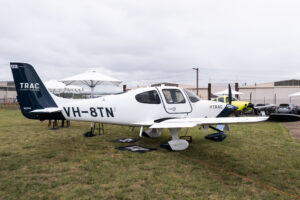
It can involve more information, but “more advanced” does not automatically mean “too difficult for a beginner.”
What Can Make It More Challenging?
The student may need to become comfortable with:
That can create a higher initial workload.
What Can Make It Easier to Adapt To?
The advantage of starting from zero is that the technology is not something you have to add later.
You learn the system gradually from your first lessons.
There is no need to first become comfortable with one cockpit environment and then completely re-learn another.
Structured training also helps break the aircraft into manageable pieces.
The student does not need to understand everything immediately.
The key point is:
More advanced does not automatically mean unsuitable for a beginner.
It simply means the training needs to be structured properly.
If you have decided that you want to learn in an SR20, the next step is choosing the right training provider.
The research suggests looking for schools that actually specialise in Cirrus rather than simply operating one aircraft occasionally.
Useful things to compare include:
Aircraft and instructor availability deserve particular attention.
An excellent training program is difficult to complete efficiently if you can only book the aircraft once every few weeks.
The same applies if you are constantly changing instructors.
The Question to Ask
Instead of simply asking:
“What is your hourly rate?”
ask:
“What does your complete SR20 training pathway look like from my first lesson through to PPL?”
That gives you a much clearer picture of what you are actually buying.
Consistency matters.
Learning to fly involves building both knowledge and muscle memory.
In an SR20, you are also developing familiarity with avionics and systems.
Regular training can help with:
Long gaps between lessons can mean spending more time revisiting previous material.
That can increase the total amount of training required.
There is no single perfect schedule for every student.
The key is to choose a training frequency you can realistically maintain.
Consistency is usually more useful than trying to train intensively for a short period and then disappearing for several weeks.
Receiving your PPL is not the end of learning.
For many Cirrus pilots, it is simply the beginning of a longer progression.
A possible pathway might look like:
PPL → Cirrus Proficiency → Touring → Instrument Training → Recurrent Training → SR22 Transition
Not every pilot will follow that exact route.
But the SR20 can provide a foundation for progressively more capable flying.
Continue Learning the Aircraft
After receiving a licence, pilots can continue developing areas such as:
One of the biggest changes after receiving a licence is that you are now responsible for deciding when additional training would benefit you.
Legal currency and genuine proficiency are not always the same thing.
For the right pilot, yes.
But it depends on what you value.
It May Be Worth It If:
Another Aircraft May Make More Sense If:
The SR20 should not be chosen simply because it looks newer or more advanced.
It should be chosen because the aircraft itself makes sense for your intended flying.
That is the strongest argument for learning in one.
If you have decided the SR20 may be the right aircraft for you, getting started is relatively straightforward.
Step 1: Find an SR20 Training Provider
Look for a flight school that operates the aircraft regularly and has instructors experienced with Cirrus training.
Check:
Step 2: Take an Introductory Flight
Before committing to a full training program, experience the aircraft.
An introductory flight gives you the opportunity to see:
It also gives you a chance to decide whether the aircraft and school feel right for you.
Step 3: Discuss Your Goal
Tell the flight school what you ultimately want to achieve.
That might include:
Your goal should influence your training pathway.
Step 4: Build a Training Plan
A structured program may include:
Step 5: Train Consistently
Once you begin, maintain momentum where practical.
Consistent training can help reduce revision and build confidence in both the aircraft and its systems.
Can a Complete Beginner Learn to Fly in a Cirrus SR20?
Yes.
A student can begin their primary flight training in an SR20 and progress towards a Private Pilot Licence in the aircraft.
You do not need to obtain your licence in another aircraft first.
Is the Cirrus SR20 Harder to Learn Than a Cessna 172?
Not necessarily, but the SR20 introduces more technology and systems.
A Cessna 172 may provide a simpler cockpit environment, while the SR20 exposes the student to glass avionics, automation and CAPS from the beginning.
Which one is better depends on the student’s budget and intended flying.
How Much Does It Cost to Learn to Fly an SR20?
There is no universal price.
The total cost depends on the aircraft generation, hourly rate, instructor costs, number of flight hours, ground training, simulator use and other fees.
SR20 training generally costs more than training in a lower-cost traditional aircraft.
Can I Complete My PPL in a Cirrus SR20?
Yes.
You can complete your Private Pilot Licence training in an SR20.
The licence itself is not different because you trained in a Cirrus, but you will finish your training with greater familiarity with the aircraft and its systems.
Should I Learn in an SR20 If I Eventually Want to Fly an SR22?
It can be a logical pathway.
Learning in an SR20 gives you early exposure to Cirrus avionics, CAPS, automation and the broader Cirrus operating environment.
You may still require specific transition training before moving into an SR22, but the SR20 can provide useful continuity.
Yes — a complete beginner can learn to fly in a Cirrus SR20, and for the right student it can be an excellent primary training aircraft.
The SR20 allows a student to develop:
Fundamental Flying Skills + Glass Cockpit Knowledge + Automation + CAPS + Systems Management
at the same time.
You still learn the same foundations expected of every pilot:
But you learn them inside a modern Cirrus environment.
The trade-off is cost.
SR20 training generally costs more than training in a traditional lower-cost aircraft, and there is more technology for a beginner to understand.
For someone whose only objective is earning a licence for the lowest possible cost, another trainer may be the better option.
But for someone who intends to own, hire or regularly fly Cirrus aircraft, learning in an SR20 can provide valuable continuity.
Instead of gaining your licence in one aircraft and beginning another major transition afterwards, you can develop your pilot skills and your Cirrus-specific knowledge together.
Ultimately, that is the strongest reason to learn in an SR20.
If your goal is to fly modern Cirrus aircraft after receiving your licence, the aircraft you train in can be part of the destination — not simply the vehicle you use to obtain the licence.
Learn to Fly Cirrus SR20: Frequently Asked Questions
Can a complete beginner learn to fly in a Cirrus SR20?
Yes. You can begin your flight training in a Cirrus SR20 with no previous flying experience and progress through your initial training towards a Private Pilot Licence.
You will still learn the fundamentals first, including aircraft handling, circuits, take-offs, landings, navigation and emergency procedures. Cirrus-specific systems such as glass-cockpit avionics, automation and CAPS are introduced progressively as your skills develop.
Is the Cirrus SR20 a good aircraft to learn to fly in?
The SR20 can be an excellent training aircraft for someone who wants to fly modern, technically advanced aircraft and particularly for pilots who intend to continue flying Cirrus aircraft after gaining their licence.
It provides early experience with glass-cockpit avionics, automation, side-stick controls and CAPS. The main trade-off is that SR20 training will generally cost more than training in a lower-cost traditional aircraft.
Is a Cirrus SR20 harder to learn than a Cessna 172?
Not necessarily. The SR20 has more avionics, automation and systems for a student to learn, while a Cessna 172 may provide a simpler cockpit environment.
For a complete beginner, however, the SR20 simply becomes the aircraft they learn from the beginning. With structured training, the technology can be introduced gradually while the student concentrates on developing strong fundamental flying skills.
Can I complete my Private Pilot Licence in a Cirrus SR20?
Yes. You can complete your Private Pilot Licence training in a Cirrus SR20 rather than obtaining your licence in another aircraft and transitioning into a Cirrus later.
Your licence is not a separate “Cirrus PPL”. The advantage is that you can finish your training already familiar with the SR20’s aircraft systems, avionics, automation, side-stick controls and CAPS.
Should I learn in an SR20 if I eventually want to fly an SR22?
For many pilots, the SR20 can provide a logical pathway towards eventually flying an SR22.
Training in the SR20 gives you experience with the broader Cirrus operating environment, including glass-cockpit avionics, CAPS, automation and systems management. Moving into the higher-performance SR22 may still require aircraft-specific transition training, but your previous SR20 experience can provide useful familiarity and continuity.