- Available 24/7 by Appointment


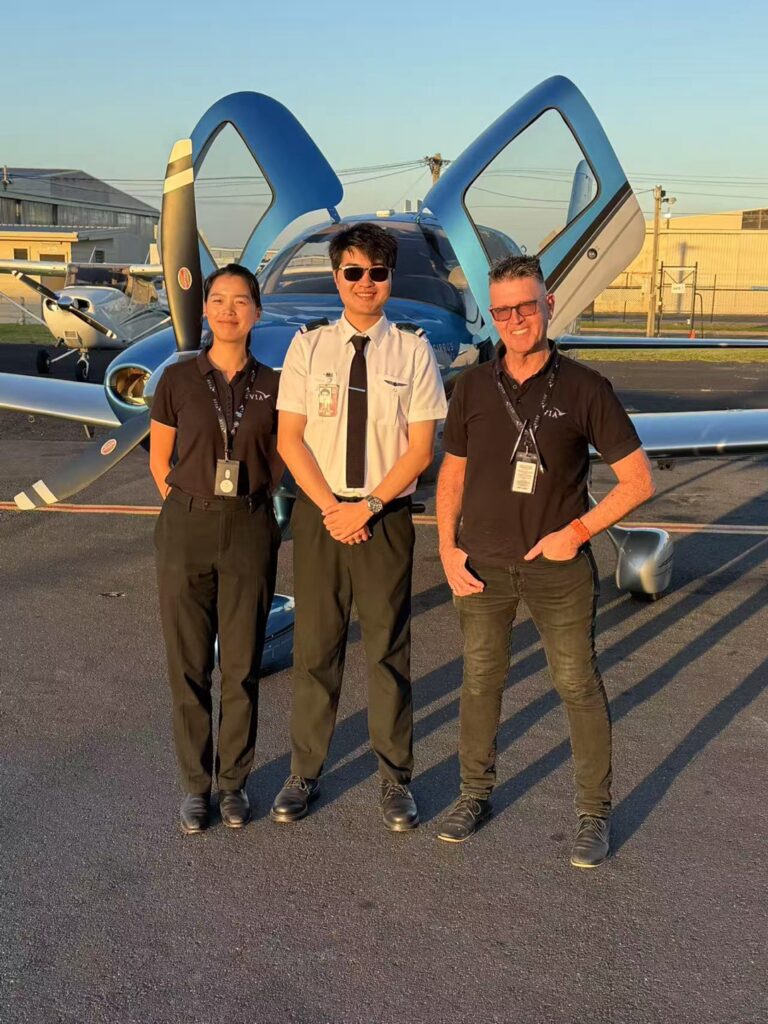
Pilot training in Melbourne can take you from zero flying experience through to recreational, private or commercial pilot qualifications.
You do not need to have flown an aircraft before, and you do not need to know exactly where your aviation journey will eventually take you.
What you should think about early, however, is what you ultimately want to do as a pilot.
Do you want to fly recreationally on weekends?
Do you want to use an aircraft for private travel?
Or is your goal to eventually work professionally as a pilot?
In Australia, those goals generally lead towards three main pilot licence pathways:
From there, pilots can continue into advanced training such as instrument flying, multi-engine aircraft and flight instructor qualifications depending on where they want their flying to take them.
Melbourne has an established pilot-training industry, with Moorabbin Airport forming one of the major general aviation and flight-training hubs in Victoria.
Students training in Melbourne can experience busy airport operations, radio communications, changing weather conditions and the broader environment that comes with operating from an established general aviation airport.
But choosing where to complete your pilot training should involve more than simply finding the closest flight school.
You should consider the licence you want, the aircraft you want to fly, how frequently you can train and whether the school can support your progression beyond your first few lessons.
The best pilot training program in Melbourne isn’t necessarily the longest or most advanced.
It’s the one that provides a clear pathway from where you are now to the type of flying you ultimately want to do.
What Is Pilot Training?
Pilot training is the process of developing the practical skills, theoretical knowledge and experience required to operate an aircraft safely and work towards a pilot licence, rating or qualification.
It involves considerably more than simply learning how to physically control an aeroplane.
A complete pilot-training program can include:
At the beginning, most of the flying is completed with an instructor beside you.
Your instructor demonstrates each exercise, explains what you are doing and gradually gives you greater responsibility for managing the aircraft.
As your skills develop, you begin combining individual exercises.
Aircraft handling progresses into take-offs and landings. Circuit training progresses towards your first solo. Local flying eventually develops into navigation and cross-country operations.
The goal is progressively to move from student under direct instruction to a pilot capable of safely operating the aircraft independently.
Exactly how far that process goes depends on the licence or qualification you are working towards.
Is Pilot Training the Same as Flying Lessons?
The terms are often used interchangeably, but there is a useful distinction.
A flying lesson generally describes an individual training flight with an instructor.
Pilot training is the broader structured program those individual lessons form part of.
For example, you might complete a flying lesson focused specifically on landings.
That lesson forms one small part of a larger pilot-training program involving aircraft handling, circuits, emergencies, navigation, theory, solo flying and eventually a flight test.
If your goal is to receive a pilot licence rather than simply experience flying, it is worth thinking about the complete training pathway rather than individual lessons in isolation.
Yes.
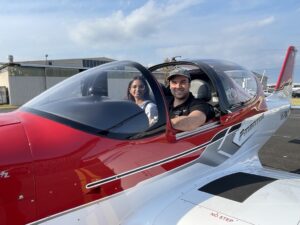
You can begin pilot training in Melbourne with no previous flying experience.
Flight training is designed to start from the fundamentals.
You are not expected to arrive already knowing how to:
Those are all skills you progressively learn during your training.
Your early lessons generally concentrate on fundamental aircraft control.
Your instructor demonstrates how the aircraft responds to different inputs before giving you the opportunity to practise under supervision.
As your skills improve, the exercises become progressively more involved.
You move from basic aircraft handling into take-offs, landings and circuits. Eventually, you begin taking greater responsibility for the entire flight.
Solo flying only occurs once you have demonstrated the required competence and your instructor is satisfied you are ready.
Theory also develops alongside your practical skills.
Over time, you begin understanding not only how to fly the aircraft, but why it behaves the way it does and how to make appropriate decisions as the pilot.
Do You Need to Complete an Introductory Flight First?
You don’t necessarily need to complete a Trial Introductory Flight before beginning pilot training.
However, an introductory flight can be a useful first step if you have never flown a light aircraft before.
It gives you the opportunity to:
It can also be a useful opportunity to evaluate the flight school itself.
Rather than committing immediately to a longer training program, you can experience how the school operates, talk to an instructor and ask questions about the training pathway that would suit your goals.
The typical pilot-training journey can be thought of as a series of progressively more advanced stages:
Introductory Flight → RPL → PPL → CPL → Advanced Ratings
Not every pilot needs to complete every stage.
Your pathway depends on what you ultimately want to do.
Someone interested primarily in recreational flying may work towards an RPL.
Someone wanting greater freedom for private travel may continue towards a PPL.
Someone intending to work professionally as a pilot will ultimately need to progress towards a CPL and potentially additional qualifications relevant to their intended career.
For career pilots, the pathway can continue further into areas such as:
The important thing is that pilot training does not have one universal finish line.
For one person, receiving an RPL may achieve exactly what they wanted from aviation.
For another, a PPL may be the beginning of years of private touring.
For someone pursuing aviation professionally, even receiving a CPL may only be one stage in a much longer training pathway.
That is why it makes sense to plan your training backwards from the type of flying you want to do.
The pilot licence you should work towards depends primarily on what you want to do once your training is complete.
A simple way to compare the main pathways is:
| Your Goal | Likely Training Pathway |
| Experience flying | Introductory Flight |
| Recreational or local flying | RPL |
| Private travel and cross-country flying | PPL |
| Professional flying | CPL |
| Instrument flying | Instrument Rating |
| More advanced aircraft | Additional ratings or endorsements |
If your main goal is recreational flying, you may not need to commit immediately to a commercial training program.
Likewise, if you already know that you want aviation to become your career, it makes sense to understand the complete professional pathway rather than planning only as far as your first licence.
Recreational Flying
If you primarily want to fly for enjoyment, the RPL may be your first major licence objective.
It allows you to build the core skills required to operate an aircraft independently within the applicable privileges and limitations.
Private Flying
If your goal involves longer trips, cross-country navigation and greater private flying freedom, the PPL is likely to be more relevant.
PPL training builds on your fundamental flying skills and introduces the navigation, planning and independent decision-making required for broader private operations.
Professional Flying
If you want to be paid to fly, your pathway will ultimately involve a CPL.
Commercial training requires significantly more flight experience and theoretical knowledge and prepares you to operate at a professional standard.
Depending on your intended career, you may then need further training beyond the CPL.
The question therefore shouldn’t simply be:
“Which pilot licence should I get?”
A better question is:
“What type of flying do I ultimately want to do?”
Once you know that, the appropriate licence pathway becomes much clearer.
A Recreational Pilot Licence, commonly referred to as an RPL, is an early licence milestone for many people learning to fly in Australia.
It is particularly relevant for pilots whose primary goal is recreational flying rather than immediately pursuing longer-distance private or professional operations.
RPL training develops the fundamental skills you need to begin operating an aircraft independently.
That includes learning how to control the aircraft, operate around an airport, communicate appropriately and respond to abnormal situations.
The supplied research identifies approximately 25 hours as the minimum-style RPL pathway, commonly described as around 20 hours dual and five hours as pilot-in-command. That should be viewed as a regulatory-style minimum rather than a guarantee that every student will complete their RPL in exactly 25 hours.
Individual progress varies.
What matters is reaching the required competency rather than simply accumulating a particular number of hours.
What Do You Learn During RPL Training?
RPL training builds the core skills that will underpin almost everything you do later as a pilot.
Aircraft Handling
You begin by learning fundamental aircraft control.
This includes exercises such as straight-and-level flight, climbs, descents and turns.
These early exercises teach you how changes in power, attitude and control inputs affect the aircraft.
Take-Offs and Landings
As your aircraft handling develops, training moves into circuit operations.
You progressively learn how to:
Landings are a skill developed through repetition rather than something most students master immediately.
Emergency Procedures
Your training also prepares you for situations where the flight does not go exactly as planned.
You learn relevant emergency procedures while developing the ability to maintain aircraft control and make appropriate decisions under increased workload.
Radio Communications
Operating an aircraft also means communicating within the aviation environment.
Students progressively learn aviation terminology, radio calls and how to listen to and understand other traffic.
At a busy training airport such as Moorabbin, radio communications become an important part of learning how to operate within the wider aviation system.
Solo Flying
Eventually, you reach one of the biggest milestones in pilot training:
your first solo flight.
Your instructor only sends you solo once you have demonstrated the required skills and they are satisfied you can safely operate the aircraft independently.
That first solo represents an important shift.
You are no longer simply learning individual flying exercises with someone sitting beside you.
You have demonstrated that you can begin taking responsibility for operating the aircraft yourself.
Who Is RPL Training Best For?
RPL training can make sense for someone who:
The RPL does not necessarily need to be the end goal.
For many students, it is simply the first major licence milestone in a longer training pathway.
If you later decide you want broader private flying privileges and cross-country travel, you can continue building your skills towards a PPL.
A Private Pilot Licence, or PPL, is one of the most common goals for students who want greater freedom to fly privately.
Where an RPL is focused more heavily on recreational and local operations, PPL training develops the skills required for broader private flying.
That includes:
For someone who wants to be able to plan a flight to another destination, manage the trip themselves and operate with greater independence, the PPL is usually the more relevant licence.
PPL training builds directly on the aircraft-handling skills developed earlier.
By this stage, the focus starts moving away from simply controlling the aeroplane and towards managing the entire flight.
What Are the PPL Requirements?
The PPL pathway includes a combination of practical experience, theory and assessment.
The supplied research identifies requirements including:
Your flight school will normally guide you through these requirements as your training progresses.
How Many Flight Hours Does a PPL Require?
The research identifies different minimum-hour requirements depending on whether the training is completed through an integrated or non-integrated pathway.
However, the most important distinction is:
Minimum hours are not the same as the number of hours every student will require.
A student needs to reach the required standard before being recommended for a flight test.
The total amount of training can vary depending on:
The focus should therefore be on competency rather than simply trying to reach a particular number in the logbook.
Can You Start Directly With PPL Training?
Depending on how your chosen flight school structures its program, your training may be planned from the beginning around progressing towards a PPL.
You may still complete earlier competencies and milestones along the way.
The important thing is that the school understands your end goal.
If you know from the beginning that you want broader private flying privileges, tell your instructor.
That allows your training program to be planned with the PPL in mind rather than treating each licence milestone as an isolated qualification.
A Commercial Pilot Licence, or CPL, is the main licensing pathway for someone who intends to fly professionally.
Commercial pilot training is a significantly larger commitment than recreational or private pilot training.
It involves building substantially more flight experience, completing more advanced theory and developing the standard expected of someone intending to operate professionally.
A CPL may form part of a pathway towards areas such as:
The CPL itself is important, but career-focused students should think beyond simply obtaining the licence.
Depending on the type of flying you eventually want to do, you may also require additional qualifications such as:
The supplied research identifies approximately 150 hours for integrated CPL pathways and 200 hours for non-integrated pathways, although the exact structure depends on the training program.
What Does CPL Training Include?
Commercial pilot training develops many of the same core skills introduced during earlier licences, but at a higher level.
Areas can include:
The difference is not simply that you fly more hours.
The expectation is that you progressively develop a professional standard of aircraft management, judgement and consistency.
Is CPL Training Full-Time?
It can be, but not every CPL pathway is structured the same way.
Some Melbourne students complete CPL training through a full-time integrated program.
Others complete their training progressively through a non-integrated pathway.
A full-time program may suit someone who wants aviation to become their main focus and wants a highly structured timetable.
A part-time pathway may suit someone who needs greater flexibility around work or other commitments.
The better option depends on your goals, available time and the structure offered by your chosen training provider.
The best licence depends on what you want to do after training.
| Licence | Primary Goal | Typical Pilot | Training Level | Possible Next Step |
| RPL | Recreation | Recreational pilot | Initial | PPL |
| PPL | Private travel | Private pilot | Intermediate | Ratings or CPL |
| CPL | Professional flying | Career pilot | Advanced | Ratings and professional flying |
“I Only Want to Fly Recreationally”
An RPL may be an appropriate first objective.
It gives you a licence milestone while developing the core skills required to operate an aircraft independently within the applicable limitations.
“I Want to Fly Myself and My Family Around Australia”
A PPL is likely to be more relevant.
It develops the cross-country, navigation and decision-making skills associated with broader private flying.
“I Want to Become a Professional Pilot”
You will ultimately need to progress towards a CPL.
You should also look beyond the CPL and consider which additional ratings or qualifications may be relevant to the type of professional flying you want to pursue.
“I’m Not Sure Yet”
You do not need to know your entire aviation future before starting.
Begin with initial flight training.
As you gain experience, you will have a much better understanding of whether you want to fly recreationally, privately or professionally.
One of the bigger choices for someone serious about pilot training is whether to complete an integrated or non-integrated training pathway.
The terms refer to how the training program is structured.
Integrated Training
Integrated training is usually delivered as a structured course designed around a defined qualification pathway.
A student progresses through a planned sequence of theory and practical training.
The supplied research associates integrated CPL pathways with structured diploma-style programs and lower regulatory hour minimums than non-integrated pathways.
This type of program may suit someone who:
Non-Integrated Training
A non-integrated pathway generally provides greater flexibility.
Students may progress through qualifications individually rather than completing one continuous structured course.
This can suit someone who:
Which One Should You Choose?
There is no universal answer.
Consider:
If you are pursuing aviation as a career, compare the entire pathway rather than simply the first qualification.
A Diploma of Aviation is a nationally recognised training qualification that may be incorporated into some structured commercial pilot training programs.
The supplied research identifies Melbourne programs that combine CPL training with diploma outcomes and, in some cases, additional qualifications.
Depending on the program, a Diploma of Aviation may include training towards areas such as:
These programs are often designed for students intending to pursue aviation professionally.
Do You Need a Diploma to Become a Pilot?
Pilot licensing and educational qualifications should be considered separately.
A pilot licence is issued through the Australian aviation regulatory framework.
A Diploma of Aviation is an educational qualification delivered through an approved training program.
Whether a diploma pathway makes sense depends on:
The important thing is understanding exactly what qualification and aviation outcomes the course actually provides.
Pilot training combines practical flying with theory and progressively increasing responsibility.
The early stages focus heavily on aircraft handling.
Later stages require you to manage increasingly complex flights independently.
Aircraft Handling
Students learn core flying skills such as:
These exercises create the foundation for everything that follows.
Take-Offs and Landings
Training then progresses into circuits.
You learn how to:
Emergency Procedures
Pilot training also prepares you for situations where something goes wrong.
This involves learning relevant procedures while maintaining aircraft control and making appropriate decisions.
The emphasis is not simply on memorising steps.
It is on learning how to prioritise, manage workload and make sound decisions under pressure.
Navigation
Navigation becomes increasingly important as you progress towards a PPL and beyond.
Training can include:
Radio Communications
Radio communications are another key part of pilot training.
Students learn aviation terminology, procedures and how to communicate clearly within the operating environment.
At a busy airport such as Moorabbin, radio confidence can become an important part of a student’s development.
Solo Flying
Eventually, you progress from flying with an instructor to operating independently.
Solo flying is an important milestone because it demonstrates that you can safely manage the aircraft without the instructor beside you.
Pilot training is not only practical.
You also need to understand the rules, systems and environment in which you are operating.
The supplied research identifies major theory areas including:
Air Law
Air law covers the regulations and operational rules relevant to pilots.
It helps you understand your responsibilities and how flights are legally and safely conducted.
Navigation
Navigation theory supports cross-country flight planning and in-flight navigation.
It helps you understand routes, position, timing and how to manage a flight away from your local training area.
Meteorology
Weather has a major influence on aviation.
Students learn how to interpret relevant weather information and understand how conditions can affect a planned flight.
Aircraft Performance
Aircraft performance involves understanding how different conditions affect the aeroplane.
This becomes important when planning and managing flights safely.
Human Factors
Human factors focuses on the pilot.
It covers areas related to decision-making, workload, performance and the limitations that affect people operating aircraft.
Is Theory Completed Before Flight Training?
Not necessarily.
Depending on the program, flight training and theory may be completed alongside each other.
In many cases, this can help because practical experience gives context to the theory.
Is CPL Theory Harder Than PPL Theory?
Commercial pilot theory progresses to a greater depth than private-pilot theory because the knowledge requirements reflect professional operations.
Rather than thinking of it simply as “harder”, it is better to think of it as more detailed and more professionally focused.
Your first lessons are designed around the assumption that you are a beginner.
A typical training flight may follow a structure such as:
Briefing → Pre-Flight → Aircraft → Instructor Demonstration → Student Practice → Return → Debrief
Before the flight, the instructor explains the lesson objectives.
You then move to the aircraft and begin the practical portion of the flight.
Early exercises may include:
As you improve, the instructor gradually gives you more responsibility.
When Do You Start Flying the Aircraft Yourself?
Very early.
Students can begin handling the controls under instructor supervision during their initial lessons.
The instructor remains responsible for the flight and can intervene whenever necessary.
Your responsibility increases progressively as your competence develops.
Your first solo happens when your instructor is satisfied that you can safely operate the aircraft without them onboard.
It is not simply based on completing a fixed number of lessons.
Before solo, students normally need to demonstrate competence in areas such as:
The instructor gradually reduces how much assistance they provide.
Eventually, you are demonstrating that you can manage the flight yourself.
What Is the First Solo?
Your first solo is normally an early independent flight where you operate the aircraft without the instructor onboard.
It is a major milestone because you are applying what you have learned independently.
But it is only one step in the broader pilot-training journey.
Training continues well beyond your first solo.
A broad progression may look like:
Solo → Consolidation → Navigation → Cross-Country → Solo Navigation → Licence Preparation
After solo, you continue consolidating basic aircraft-handling skills.
The next major stage is usually expanding beyond the immediate airport environment.
Navigation training introduces a much greater level of planning and responsibility.
Eventually, you are expected to plan and conduct cross-country flights while managing:
The training becomes progressively more independent as you work towards the standard required for your licence.
Navigation training is one of the stages where student pilots begin combining almost everything they have learned.
Rather than concentrating on one exercise, you have to manage the entire flight.
Navigation training can include:
This is also where planning on the ground becomes increasingly important.
A good navigation flight begins before the aircraft starts.
When Does Navigation Training Begin?
Navigation training generally comes after the student has established the fundamental aircraft-handling and circuit skills required for greater independence.
The exact point depends on the program and individual progress.
There is no need to attach it to one specific lesson number.
PPL and CPL training share many core flying skills, but the intended outcome is different.
| Area | PPL Training | CPL Training |
| Primary purpose | Private flying | Professional flying |
| Flight experience | Lower | Significantly greater |
| Theory | Private-pilot level | Commercial level |
| Standard | Private licence | Commercial/professional |
| Career focus | Not required | Yes |
A CPL is not simply a PPL with more hours.
Commercial training requires greater depth of knowledge, greater consistency and a higher professional standard.
You are learning to operate not simply as someone flying for themselves, but as someone intending to work within aviation.
That affects the required:
Obtaining a CPL does not necessarily complete a professional pilot’s training.
Depending on the career pathway, additional ratings and qualifications may be required.
Instrument Rating
Instrument training teaches pilots to operate using aircraft instruments and relevant procedures rather than relying purely on outside visual references.
It is a major qualification for many professional flying pathways.
Multi-Engine Training
Multi-engine training introduces aircraft with more than one engine.
Students learn additional systems, performance considerations and relevant abnormal and emergency procedures.
Night VFR
Night VFR training allows appropriately qualified pilots to operate under visual flight rules at night within the applicable privileges.
Flight Instructor Training
Pilots who want to teach others to fly can continue into instructor training after meeting the relevant prerequisites.
Flight instruction can itself become a professional aviation pathway.
Do You Need Every Rating?
No.
The right qualifications depend on your intended flying.
A private pilot, charter pilot, flight instructor and airline-bound pilot may all require different combinations of licences, ratings and experience.
An Instrument Rating allows a pilot to develop the skills required to operate under instrument flight procedures.
Training may include areas such as:
Instrument training is a major progression because it requires the pilot to manage the aircraft accurately while relying heavily on cockpit information and procedures.
The supplied research identifies instrument ratings as part of the advanced pilot-training pathways available in Melbourne.
Multi-engine training involves learning to operate aircraft fitted with more than one engine.
This introduces additional considerations compared with single-engine flying.
Training can include:
Multi-engine training is commonly associated with pilots progressing towards more advanced or professional flying.
Not every pilot needs a multi-engine qualification.
Whether it is relevant depends on the aircraft and career pathway you intend to pursue.
Yes, flight instructor training forms part of the broader professional aviation pathway.
A simplified progression might look like:
CPL → Instructor Training → Instructor Qualification → Professional Instruction
Flight instructors teach student pilots and play a major role in developing future recreational, private and commercial pilots.
For some pilots, instruction becomes a long-term career.
For others, it forms part of a broader professional aviation journey.
When comparing career-focused pilot training programs, it can therefore be useful to ask whether instructor training is available after CPL if that is a pathway you may eventually want to pursue.
There is no single timeframe for completing pilot training.
The supplied research identifies broad timelines ranging from several months for early licences through to approximately a year or longer for structured commercial pathways.
The total timeframe depends on factors including:
RPL
For many students training regularly on a part-time basis, RPL training can take several months.
PPL
A PPL may take several months to a year or longer depending heavily on how frequently you fly.
CPL
A structured full-time CPL pathway may take approximately a year or longer depending on the program.
Part-time commercial training may take considerably longer.
Why Training Frequency Matters
Flight training is a practical skill.
If there are long gaps between lessons, some of the next lesson may be spent revising skills that have faded since the previous flight.
More consistent training can help with:
That does not mean everyone needs to train full-time.
It means that whatever schedule you choose should ideally be one you can maintain consistently.
One of the major decisions for Melbourne students is whether to train full-time or part-time.
Full-Time Training
Potential advantages include:
Potential trade-offs include:
Part-Time Training
Potential advantages include:
The main trade-off is continuity.
If part-time training becomes too irregular, progress can slow.
Which Is Better?
It depends on your goal.
If you are pursuing aviation as a career and want to complete training efficiently, a full-time structured program may make sense.
If you are learning privately while maintaining a full-time job, part-time training may be far more practical.
The best training schedule is one that matches both your aviation goal and your real life.
Yes.
Many students complete flight training while continuing to work.
The practical challenge is maintaining a reliable training schedule.
Possible approaches include:
There is also an important difference between progressively completing an RPL or PPL and undertaking an intensive professional training program.
Private pilot training can often be structured around work commitments.
A full-time commercial program may require aviation to become your primary commitment for the duration of the course.
Pilot training takes place from several airports and airfields around Melbourne and Victoria.
For most searches around pilot training Melbourne, however, Moorabbin Airport is one of the main locations.
Moorabbin Airport
The supplied research identifies Moorabbin as a major general aviation and pilot-training hub.
Students training there can be exposed progressively to:
This environment can provide students with experience operating in a busy aviation setting rather than learning solely from a quiet regional airfield.
Are There Other Places to Train?
Yes.
Pilot training is also available at other airports and regional airfields around Melbourne and Victoria.
Different locations offer different operating environments.
The best choice depends on:
Training at Moorabbin involves learning not only how to control an aircraft, but how to operate within a busy airport environment.
Students progressively develop skills such as:
At first, the environment can feel busy.
You may be concentrating on aircraft control while also hearing multiple radio calls and watching other traffic.
That workload is introduced progressively.
Is Moorabbin Too Busy for a Beginner?
Not necessarily.
Beginners are not expected to manage everything independently from their first flight.
The instructor remains there to manage workload and provide guidance.
As your competence improves, the instructor gradually transfers more responsibility to you.
Over time, tasks that initially feel overwhelming can become part of normal aircraft operation.
Flight schools use a wide variety of aircraft for pilot training.
The supplied research identifies examples including Cessna, Piper and Diamond aircraft, but individual fleets vary considerably.
Broadly, students may encounter three categories.
Traditional Trainers
Traditional training aircraft are commonly used for initial flight training.
They generally provide a straightforward platform for teaching:
Modern Glass-Cockpit Aircraft
Some schools operate technically advanced aircraft with modern integrated avionics.
These may introduce students to:
Multi-Engine Aircraft
Multi-engine aircraft are generally introduced later for students completing relevant advanced or professional training.
Does Your Training Aircraft Matter?
Yes.
The aircraft you train in can influence:
The best aircraft is not automatically the newest or simplest.
It should make sense for the type of pilot training you are completing.
Students may have the option to learn in either a traditional training aircraft or a technically advanced aircraft.
| Factor | Traditional Trainer | Technically Advanced Aircraft |
| Cockpit | Often simpler | Modern glass |
| Automation | Usually less | Greater |
| Systems | Simpler | More advanced |
| Availability | Often widespread | Depends on school |
| Future relevance | General | Strong if flying modern aircraft |
Traditional Trainer
A traditional trainer may offer a simpler cockpit environment and allow the student to concentrate heavily on fundamental aircraft control.
Technically Advanced Aircraft
A technically advanced aircraft introduces modern avionics, integrated navigation and greater levels of automation earlier in training.
This can make sense for someone who expects to continue flying similar aircraft after receiving their licence.
Which Should You Train In?
There is no universal winner.
Ask:
What do I ultimately want to fly?
If your future flying is likely to involve modern glass-cockpit aircraft, there can be advantages in learning that environment from the beginning.
If you prefer a simpler initial platform, a traditional trainer may suit you better.
The aircraft should fit the overall training pathway.
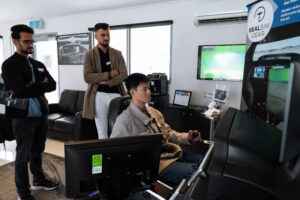
Simulator training can be valuable when used alongside aircraft training.
The supplied research identifies simulators as part of some Melbourne pilot-training programs.
They can be particularly useful for practising:
One of the biggest advantages of simulation is the ability to repeat scenarios efficiently.
An instructor can stop, reset and run the same procedure again without having to reposition an aircraft.
Does Simulator Time Replace Aircraft Time?
Not automatically.
Whether simulator time can be credited towards a particular training requirement depends on:
Simulation should therefore be viewed as one component of a broader pilot-training program rather than a universal substitute for aircraft experience.
Aviation medical requirements depend on the type of licence and flying you intend to undertake.
The supplied research identifies Class 1 and Class 2 aviation medicals as relevant depending on the training objective.
Private Pilot Training
Students pursuing private flying need to understand the medical requirements that apply to their intended licence and operations.
Commercial Pilot Training
Professional pilot pathways involve different medical considerations.
Because commercial students are investing in a career pathway, it is particularly important to understand the relevant medical requirements early.
When Should You Organise Your Medical?
Discuss it with your flight school early.
If you already know you intend to pursue professional flying, it makes sense to understand the relevant medical pathway before progressing too far into training.
Your training provider can explain which medical is appropriate for the licence you intend to pursue.
An Aviation Reference Number, commonly referred to as an ARN, is an identifier used within the Australian CASA aviation system.
Student pilots encounter the ARN as they begin completing the administrative requirements associated with aviation licensing.
Your flight school will usually explain when you need to obtain one and how it fits into your training pathway.
It is simply one of the administrative steps that sits alongside the practical and theoretical elements of becoming a pilot.
Choosing a flight school should involve much more than comparing websites.
The school will influence:
Areas worth comparing include:
Don’t Choose Based on Marketing Alone
A polished website tells you very little about how easy it will actually be to train consistently.
Ask operational questions.
Can you realistically book aircraft?
Are instructors available?
Can you keep a consistent training schedule?
Can the school support your progression after your first licence?
A school may offer exactly the aircraft or qualification you want, but if availability is poor, your actual training experience may be very different from what you expected.
Before committing to a training program, ask questions such as:
A good provider should be able to explain the journey clearly rather than only discussing the first few flights.
There can be advantages to completing multiple stages of training with one provider.
Continuity can give you:
It can also allow the school to understand your long-term objectives and plan your training accordingly.
However, you do not necessarily need to complete every qualification with the same provider.
When Might You Change Schools?
You might consider changing if:
The important thing is ensuring that each move supports your broader aviation goal.
Career pilot training requires a different level of planning from recreational flight training.
You should look beyond the initial licence and consider how the complete pathway is structured.
Areas worth examining include:
You should also understand exactly what qualifications are included.
A program described as a career pathway may still require further training after completion depending on the type of flying you want to pursue.
Be Careful With Career Promises
Training qualifications and employment outcomes are not the same thing.
A CPL or other qualification gives you an aviation credential.
It does not automatically guarantee a particular job.
When evaluating career programs, separate:
What qualification will I receive?
from:
What employment opportunities may exist afterwards?
Both are important, but they are different questions.
If you are ready to begin, the process can be broken into a series of practical steps.
Step 1: Decide Your Goal
Are you aiming for:
You do not need every detail planned, but you should understand the broad direction.
Step 2: Decide How You Want to Train
Consider whether you want:
Step 3: Compare Melbourne Flight Schools
Look beyond introductory offers.
Compare:
Step 4: Book an Introductory Flight
Experience the aircraft, instructor and school environment before making a larger commitment.
Step 5: Discuss RPL, PPL or CPL
Explain your end goal to the school and ask which pathway makes the most sense.
Step 6: Organise ARN and Medical
Complete the administrative and medical requirements relevant to your intended licence.
Step 7: Begin Flight Training and Theory
Start developing practical flying skills alongside your aviation knowledge.
Step 8: Work Towards Solo
Your first solo becomes one of the first major milestones.
Step 9: Progress Into Navigation and Licence Training
Develop the independence required for broader flying and licence assessment.
Step 10: Continue Into Advanced Training if Required
Depending on your goal, this may include:
Can I Start Pilot Training in Melbourne With No Experience?
Yes.
Pilot training can begin with no previous aviation experience.
Your instructor starts with fundamental aircraft handling and progressively introduces more advanced skills as you develop.
An introductory flight can also be a useful first step if you want to experience flying before committing to a licence pathway.
What Licence Do I Need to Become a Professional Pilot?
A Commercial Pilot Licence is the main commercial licence pathway for someone intending to be paid to fly.
Depending on the professional flying you want to pursue, you may also need additional qualifications such as an Instrument Rating, Multi-Engine training or instructor qualifications.
How Long Does Pilot Training Take in Melbourne?
It depends on your licence objective, training frequency and whether you train full-time or part-time.
An initial recreational or private licence may take several months, while a structured commercial pathway can take approximately a year or longer.
Weather, aircraft availability, instructor availability and individual progress also affect the total timeframe.
Is Moorabbin Airport Good for Pilot Training?
Moorabbin is one of Melbourne’s major general aviation and pilot-training hubs.
Students can gain experience with radio communications, traffic, multiple runways and an established aviation environment.
The best training location still depends on your aircraft, instructor, licence pathway and scheduling requirements.
Should I Complete a PPL or Go Straight Into a Commercial Training Program?
It depends on your goal and the training structure you choose.
If you are learning for private flying, a PPL may be the appropriate target.
If you already know that aviation will be your career, a structured commercial training pathway may make more sense.
The best approach is to plan from the end goal backwards rather than treating each licence as an isolated decision.
Pilot training in Melbourne can take you from zero experience through to recreational, private or professional flying.
The pathway can develop through stages such as:
Zero Experience → Initial Training → RPL → PPL → CPL → Advanced Ratings → Professional or Private Flying
Not everyone needs to complete every stage.
A recreational pilot may stop at an RPL.
A private pilot may be perfectly satisfied with a PPL.
A career-focused student may continue through commercial training and into instrument, multi-engine or instructor qualifications.
Melbourne offers an established training environment, with Moorabbin Airport forming one of the major general aviation hubs for students beginning and progressing through their training.
The biggest mistake is thinking only about the next licence.
If you already have a longer-term goal, your training should be planned with that goal in mind.
Think about:
Pilot training is most effective when it is planned backwards.
Decide what you ultimately want to do as a pilot, then choose the Melbourne flight school, aircraft, training schedule and licence pathway that gives you the clearest route from where you are now to where you want your flying to take you.
Pilot Training Melbourne: Frequently Asked Questions
Can I start pilot training in Melbourne with no experience?
Yes. You can begin pilot training in Melbourne with no previous flying experience.
Initial lessons start with fundamental aircraft handling under the supervision of a flight instructor. As your skills develop, you progressively move into take-offs, landings, circuits, emergency procedures, radio communications, navigation and eventually solo flying.
An introductory flight can also be a useful first step if you want to experience flying before committing to a longer training program.
What pilot licence should I train for in Melbourne?
The right licence depends on what you ultimately want to do as a pilot.
An RPL may suit someone primarily interested in recreational or local flying. A PPL is generally more relevant for broader private flying and cross-country travel, while a CPL is the main commercial licence pathway for someone intending to fly professionally.
If you already know your long-term goal, it is worth planning your training pathway around that outcome from the beginning.
How long does pilot training take in Melbourne?
The timeframe depends on the licence, how frequently you train and whether you choose a full-time or part-time program.
An RPL or PPL may take several months for someone flying consistently, while a commercial pilot pathway can take a year or longer. Weather, aircraft availability, instructor availability, theory progress and individual competency can all affect the overall timeframe.
Regular training generally provides better continuity than long gaps between lessons.
Is Moorabbin Airport a good place for pilot training?
Moorabbin Airport is one of Melbourne’s major general aviation and flight-training hubs.
Students training there can progressively gain experience with radio communications, other aircraft, multiple runways, controlled airport procedures and a busy general aviation environment.
The best training location still depends on your individual requirements, including aircraft availability, instructors, scheduling and whether the school provides the licence and advanced training pathway you need.
What should I look for when choosing a pilot training school in Melbourne?
Look beyond the aircraft or introductory lesson and consider the complete training pathway.
Important factors include aircraft and instructor availability, training structure, theory support, simulator access, scheduling, full-time or part-time options and whether the school offers progression into PPL, CPL and advanced ratings if required.
A particularly useful question to ask is:
“What does your complete training pathway look like from my current experience through to the licence and qualifications I ultimately want?”