- Available 24/7 by Appointment


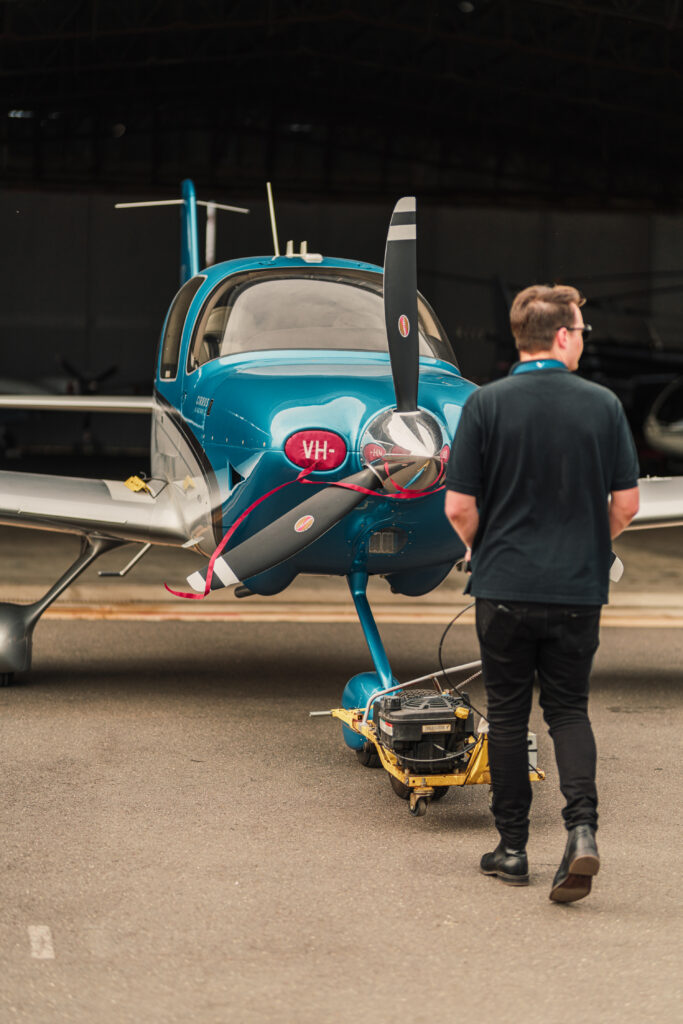
A Private Pilot Licence (PPL) is one of the biggest milestones in learning to fly.
It is the point where your training moves beyond simply learning how to control an aeroplane and starts developing the skills required to plan flights, navigate to other destinations, carry passengers and operate with much greater independence.
If you are considering completing your Private Pilot Licence in Melbourne, the requirements themselves are set nationally through Australia’s aviation licensing framework. What changes from one Melbourne flight school to another is the aircraft you train in, the instructors you fly with, how your training is structured and the environment in which you learn.
For many students, the PPL is the qualification that makes private flying genuinely useful.
With a PPL, you can work towards flying for purposes such as:
A PPL does not allow you to simply fly anywhere, in any aircraft, under any conditions. Your actual privileges still depend on your ratings, endorsements, aircraft qualifications, recency and the conditions of the flight.
It also does not allow you to be paid to fly professionally. That is where the Commercial Pilot Licence (CPL) becomes relevant.
For Melbourne students, Moorabbin Airport (YMMB) is one of the major general aviation and pilot-training locations, with several different aircraft and training pathways available.
That creates an important decision before training even begins.
You are not only choosing where to get a PPL.
You are choosing:
So, what does it actually take to go from little or no flying experience to holding a Private Pilot Licence in Melbourne?
A Private Pilot Licence, commonly called a PPL, allows you to operate an aircraft in private flying operations within the privileges of your licence, ratings and endorsements.
In practical terms, it gives you significantly greater freedom than simply learning to fly within a local training environment.
A PPL can allow you to:
For many students, that is the real attraction of progressing to PPL level.
Early flight training teaches you how to fly the aeroplane.
PPL training starts teaching you how to manage the entire flight.
That means combining aircraft handling with:
Rather than simply completing an exercise with an instructor, you progressively learn to take responsibility for planning and conducting a flight yourself.
Can You Be Paid to Fly With a PPL?
No.
A Private Pilot Licence is for private flying, not commercial flying.
The simple distinction is:
PPL → private flying
CPL → commercial/professional flying
Holding a PPL does not give you the commercial licence required to work as a professional pilot and be paid to conduct commercial flying operations.
That does not mean a PPL is unrelated to a professional career.
For many pilots, PPL training forms part of a longer progression towards:
PPL → CPL → Advanced Ratings → Professional Flying
If you already know that professional aviation is your end goal, it is worth planning that broader pathway from the beginning rather than treating the PPL as an isolated qualification.

A PPL opens up a much broader range of private flying than the initial stages of learning to fly.
Once appropriately licensed, qualified and current, you can use your PPL for activities such as:
For many private pilots, cross-country flying is one of the biggest reasons to complete a PPL.
Instead of remaining primarily within the local training environment, you begin using the aeroplane to travel from one destination to another.
That brings together many of the skills developed during your training.
A private flight might require you to consider:
This is where the PPL starts becoming less about completing individual flying exercises and more about making safe decisions throughout an entire flight.
Can You Fly Around Australia With a PPL?
A PPL provides the foundation for private cross-country flying around Australia, subject to the privileges and qualifications you hold.
That does not mean receiving your licence automatically allows you to operate every aircraft in every condition.
A particular flight can still depend on factors such as:
For example, holding a PPL does not by itself mean you can simply conduct an instrument flight through cloud.
That requires the appropriate instrument qualification.
Likewise, a flight school or aircraft operator may have its own requirements before allowing you to hire a particular aircraft.
The licence provides the foundation.
Your experience, ratings and aircraft qualifications determine how far you can build from it.
Can You Fly Overseas With an Australian PPL?
An Australian PPL can potentially be used as part of private flying overseas, but the rules depend on where you intend to fly and how the licence is recognised in that country.
Different jurisdictions may have requirements relating to:
So while a PPL can eventually open the door to international private flying, you should check the specific requirements of the country and aircraft involved before planning the flight.
A PPL provides broad private-flying privileges, but it is not an unrestricted aviation licence.
The most important limitation is:
A PPL is not the commercial licence required to be paid to fly professionally.
If your goal is eventually to work as a professional pilot, you will need to progress towards the appropriate commercial qualifications.
A PPL also does not automatically give you every advanced flying privilege.
Additional training, ratings or endorsements may be required for areas such as:
This is an important distinction for new students.
Receiving your PPL does not mean:
“I have now finished learning to fly.”
It means you have reached the standard required to operate with significantly greater independence within the privileges you hold.
From there, you can continue developing.
A private pilot might progress into:
PPL → Private Touring → Night Flying → Instrument Training → Advanced Aircraft
Another may follow:
PPL → CPL → Multi-Engine → Instrument Rating → Professional Flying
The PPL can therefore be either a destination or the foundation for a much longer aviation pathway.
One of the first questions prospective pilots often ask is whether they should work towards a Recreational Pilot Licence (RPL) or a Private Pilot Licence (PPL).
The two qualifications serve different purposes.
An RPL can provide a useful pathway into recreational flying, while the PPL is more closely associated with broader private operations and cross-country flying.
| Area | RPL | PPL |
|---|---|---|
| Main purpose | Recreational/local flying | Broader private flying |
| Cross-country focus | More limited pathway | Major part of training |
| Navigation | Initial/local operations | Greater cross-country emphasis |
| Private touring | More restricted | Better suited |
| Passengers | Subject to applicable privileges | Yes, subject to applicable requirements |
| Progression | Can continue towards PPL | Can continue into advanced ratings or CPL |
One of the biggest differences is navigation.
During the early stages of learning to fly, much of the emphasis is on controlling the aircraft safely:
As you progress towards PPL level, training increasingly focuses on managing flights away from the immediate training environment.
You begin learning how to:
That broader capability is one of the main reasons someone may choose to continue towards a PPL.
Should You Get an RPL Before a PPL?
Not necessarily as a separate end goal.
For some students, the RPL can be a useful milestone within a longer PPL training program.
They may progress through:
Initial Training → First Solo → RPL → Navigation → PPL
The RPL provides a recognisable point of achievement while the student continues building towards broader private-flying privileges.
Other students may know from their first lesson that their real objective is the PPL.
In that situation, the important thing is to tell the flight school what you ultimately want to achieve.
Instead of simply asking:
“How do I get my RPL?”
a better question may be:
“My goal is to hold a PPL and use an aircraft for private travel. What does the complete pathway look like from my first lesson through to PPL?”
That allows the training to be planned around your actual destination.
The main difference between a Private Pilot Licence and a Commercial Pilot Licence is the purpose for which you intend to fly.
A simple way to think about it is:
PPL = private flying
CPL = professional/commercial flying
A PPL is suited to someone who wants to:
A CPL is part of the pathway for someone who wants to operate professionally and pursue paid flying work.
Commercial training also involves additional experience, theory and competency requirements beyond the PPL level.
Should You Get a PPL If You Eventually Want a CPL?
A PPL can form part of a progression towards commercial flying, but if you already know that a professional aviation career is your goal, it is worth planning the entire pathway before committing to a particular training structure.
Depending on the training program, students may have options involving different integrated and non-integrated pathways.
The important question is therefore not simply:
“Should I get my PPL first?”
It is:
“What is the most appropriate pathway from my current experience to the commercial qualifications I eventually want?”
That can influence:
For someone who only wants to fly privately, the PPL may be the main licence they need.
For someone pursuing aviation professionally, it may be one stage in a much longer journey.

The requirements for a Private Pilot Licence in Melbourne are set nationally, so the core licensing requirements are the same whether you train in Melbourne or elsewhere in Australia.
To obtain an aeroplane PPL, you need to meet requirements relating to:
Meeting the minimum administrative and flying requirements is only part of the process.
You also need to demonstrate the required standard of competency before being recommended for the PPL flight test.
That distinction is important.
A pilot may have completed the minimum required hours but still need additional training before being ready for the test.
You must be at least 17 years old to hold a Private Pilot Licence and complete the relevant PPL licensing stage.
That does not mean you need to wait until 17 before beginning flight training.
Can You Start Learning to Fly Before 17?
Yes.
Students can begin flight training before they reach the minimum age for the PPL itself.
This can allow younger students to begin developing:
The important distinction is between:
starting flight training
and
being eligible to complete the PPL licensing process
For younger students, planning the timing of training can be useful so that progress aligns with when they become eligible for the licence.
Yes, you need to satisfy the applicable aviation medical requirements for the licence and flying privileges you intend to exercise.
The research provided identifies medical options including:
The most suitable option depends on your circumstances and longer-term aviation goals.
For example, someone planning only private flying may approach the medical question differently from someone who already intends to continue towards commercial aviation.
When Should You Organise Your Medical?
It is generally sensible to organise your medical early in the training process.
That gives you clarity around your eligibility before committing significant time and money to training.
This is particularly useful if your long-term plan involves:
Your flight school can usually help explain which medical pathway is relevant to your intended training.
An ARN, or Aviation Reference Number, is your identifying number within CASA’s aviation system.
You will use it for aviation-related administration such as:
When Should You Get Your ARN?
Early.
You do not need to wait until you are approaching your flight test.
If you are serious about beginning flight training, organising your ARN near the start can make the rest of the administrative process easier.
Your chosen flight school can usually guide you through what needs to be completed.
One of the most common questions prospective students ask is:
“How many hours do I need for a PPL?”
The important answer is:
The legal minimum and the realistic number of hours required for an individual student are not necessarily the same thing.
The research you provided identifies two broad pathways.
Non-Integrated PPL
For a non-integrated aeroplane PPL pathway, the minimum aeronautical experience is 40 hours.
This includes applicable requirements for:
Integrated PPL
For an approved integrated course, the minimum aeronautical experience is 35 hours.
The lower minimum does not mean the training is automatically easier.
It reflects the structure of the approved integrated syllabus.
Does Everyone Finish Their PPL in the Minimum Hours?
No.
The minimum hours establish a regulatory baseline.
They do not guarantee that every student will be ready for the flight test at that point.
A student still needs to demonstrate the required level of competency.
Some students may require additional time because of:
The more useful question is not:
“What is the minimum?”
It is:
“How many hours does a typical student in this aircraft and training program usually take to reach PPL standard?”
There are different ways to structure PPL training.
Two of the main pathways are commonly described as integrated and non-integrated training.
Integrated PPL Training
Integrated training follows an approved, structured syllabus.
The research provided identifies a 35-hour minimum aeronautical experience requirement for this pathway.
Integrated training is generally built around a closely managed training program with defined progression.
Non-Integrated PPL Training
Non-integrated training is typically more flexible.
The research provided identifies a 40-hour minimum aeronautical experience requirement for this pathway.
This style of training is commonly suited to students who are:
Which PPL Pathway Is Better?
There is no universal answer.
It depends on:
The right pathway is the one that fits both your lifestyle and your end goal.
Solo flying is an important part of PPL training because it demonstrates increasing independence.
For the non-integrated aeroplane pathway described in the research, the requirements include:
Solo flying is not simply about adding hours to your logbook.
It shows that you can begin taking responsibility for the aircraft without an instructor physically beside you.
That includes:
As training progresses, your instructor gradually reduces the amount of support you need.
One of the major milestones in PPL training is the qualifying solo cross-country flight.
The research provided identifies a requirement for a flight of at least 150 nautical miles, including full-stop landings at two aerodromes outside the local training area.
This flight is significant because it requires you to bring together many of the skills developed throughout PPL training.
You need to manage:
And you do it without the instructor sitting beside you.
By this stage, the challenge is no longer simply controlling the aircraft.
It is managing the complete flight safely and independently.
Yes, the PPL training pathway includes basic instrument flying experience.
The research provided identifies dual instrument time within the aeronautical experience requirements.
This is designed to introduce the pilot to controlling the aircraft using flight instruments.
It is important, however, not to confuse this with holding an Instrument Rating.
Does a PPL Let You Fly IFR?
Not by itself.
A PPL and an Instrument Rating are separate qualifications.
The basic instrument component of PPL training gives you exposure to instrument flying skills.
An Instrument Rating requires additional dedicated training, theory and assessment.
So the progression may eventually look like:
PPL → Additional Training → Instrument Rating
PPL training develops progressively.
You do not begin with cross-country flights on your first lesson.
Instead, the training builds from fundamental aircraft control towards complete flight management.
Aircraft Handling
Early training focuses on fundamental control skills such as:
These skills form the foundation for everything that follows.
Circuits
Circuit training develops:
This stage is also where students work towards their first solo flight.
Emergency Procedures
You will also learn how to respond to abnormal and emergency situations.
The focus includes:
Solo Flying
Once ready, you begin operating the aircraft without an instructor beside you.
Solo flying helps consolidate confidence and independence.
Navigation
Navigation training introduces complete cross-country flight management.
You learn how to plan and conduct flights away from the local training area.
Instrument Skills
Basic instrument flying is incorporated into the PPL training pathway.
Licence Preparation
The final stage brings everything together.
Rather than practising individual exercises in isolation, you need to demonstrate that you can manage an entire flight to PPL standard.
Your first lessons are generally focused on building basic aircraft control and confidence.
A typical training sequence may look like:
Briefing → Pre-flight Inspection → Aircraft → Instructor Demonstration → Student Practice → Debrief
Before the flight, your instructor explains what you are about to learn.
During the flight, they may demonstrate the exercise before handing control to you.
After the flight, you review:
Students usually begin handling the controls early in their training.
You are not simply sitting beside the instructor watching.
Do You Need an RPL Before Starting PPL Lessons?
No.
RPL and PPL training do not need to be treated as completely separate courses.
If your long-term goal is PPL, your training can be planned around that from the beginning.
The RPL may still become a useful intermediate milestone, but the overall pathway can continue directly towards PPL.
There is no single hour at which every student flies solo.
Solo occurs when your instructor is satisfied that you are ready and the relevant requirements have been met.
Before your first solo, you need to demonstrate confidence and competency in areas such as:
Your instructor needs to be comfortable that you can safely manage the aircraft without them beside you.
Is First Solo the Halfway Point to a PPL?
Not necessarily.
First solo is one of the biggest milestones in learning to fly, but there is still substantial training ahead.
After first solo, students usually continue into:
So first solo is better viewed as:
the beginning of greater independence
rather than the end of training.
After first solo, the training starts to expand.
A typical progression may look like:
First Solo → Consolidation → Navigation → Dual Cross-Country → Solo Cross-Country → PPL Preparation
At first, your instructor is responsible for almost every major decision.
As training progresses, more of that responsibility moves to you.
You begin taking greater ownership of:
By PPL level, the expectation is no longer simply that you can fly individual exercises.
You need to demonstrate that you can manage the flight as a whole.
Navigation is one of the biggest differences between early flight training and PPL-level flying.
During navigation training, you learn how to plan and conduct flights between airports and through different operating environments.
That may involve:
Why Navigation Changes the Training
Earlier lessons may focus on one exercise.
For example:
Today we are working on landings.
Navigation is different.
Now you may need to manage:
at the same time.
That is why navigation represents such an important step towards becoming an independent private pilot.
PPL training includes a substantial theory component.
The research provided identifies areas including:
Theory is not separate from practical flying.
It explains why you make many of the decisions you make in the aircraft.
For example:
Should You Study Theory While Flying?
Yes.
Studying theory alongside practical training can help both areas make more sense.
Something you read in a textbook may become much clearer after you experience it during a flight.
Likewise, understanding the theory before a lesson can help you make better use of your flying time.
The PPL licensing pathway includes a CASA theory examination relevant to the aircraft category.
The examination assesses the knowledge required for private pilot operations.
The areas you study throughout PPL theory form the foundation for that assessment.
Is the PPL Theory Exam Difficult?
It requires preparation.
The PPL theory syllabus covers a wide range of subjects, so attempting to learn everything immediately before the exam is unlikely to be the best approach.
A more effective strategy is to study progressively while you are flying.
That allows you to connect subjects such as:
to practical experience.
The exam is a significant milestone, but the theory is manageable when approached systematically.
The PPL flight test is designed to assess whether you can safely bring together the skills and knowledge developed throughout your training.
The research provided identifies areas including:
The flight test is therefore not simply a demonstration of perfect landings.
You need to show that you can operate as a pilot.
When Are You Ready for the Flight Test?
Not simply when your logbook reaches the minimum number of hours.
Your instructor needs to be satisfied that you are competent and ready to be recommended for the assessment.
That means the final decision is based on:
competency, not just time
Two students can have the same number of hours while being at very different stages of readiness.
There is no single PPL completion timeframe.
The research provided suggests that training frequency has a major influence on how long the process takes.
Training Frequently
Students flying regularly may be able to complete their PPL over several months.
Part-Time Training
Students flying around work or study may take longer.
Irregular Training
Long gaps between flights can extend the process beyond a year.
The important point is that calendar time and flying hours are not the same thing.
A student who trains regularly may retain skills more effectively than someone who flies infrequently.
Consistency matters.
Regular flight training helps maintain:
Long gaps can mean spending part of the next lesson revising what you learned previously.
Is Once a Week Enough?
It can be.
Some students successfully train once a week.
Others prefer two or more sessions where possible.
The more useful goal is to create a schedule that is:
regular, realistic and sustainable
Training three times in one week and then disappearing for a month may provide less continuity than a steady schedule.
Yes.
Many students complete PPL training while working full-time.
A part-time pathway may involve:
The biggest challenge is often maintaining consistency.
If every cancelled flight results in a three-week gap before the next booking, progression can slow considerably.
For a working student, a realistic schedule is usually more valuable than an overly ambitious one.
There is no universal maximum price for a Private Pilot Licence in Melbourne.
The total cost can vary considerably depending on:
One of the biggest variables is aircraft choice.
A student training in a lower-cost conventional trainer can have a very different overall budget from someone completing the same licence in a higher-cost technically advanced aircraft.
Why Aircraft Choice Changes PPL Cost So Much
A major component of the budget can be thought about simply as:
Total Flight Hours × Hourly Training Cost
If two students both require similar flight time but one aircraft costs substantially more per hour, the final PPL budget can change by tens of thousands of dollars.
That is why broad statements such as:
“A PPL costs $X.”
can be misleading.
The better question is:
“What does this PPL pathway typically cost in the aircraft I actually intend to train in?”
How Much Can a PPL Cost?
Some traditional training pathways may sit considerably lower than premium or technically advanced aircraft programs.
Higher-cost aircraft can increase the complete training budget substantially.
At Avia, depending on aircraft and training pathway, a PPL can cost up to approximately $75,000.
This is why any PPL cost estimate should be viewed in context rather than treated as a universal ceiling.
Aircraft and instruction usually make up the largest part of the PPL budget, but they are not the only costs.
Depending on the school and training pathway, you may also need to budget for:
Some costs may be included in a package.
Others may be separate.
Ask for the Complete PPL Cost
Instead of asking only:
“What’s your hourly rate?”
ask:
“What does a typical student spend from their first lesson until receiving their PPL in the aircraft I intend to train in?”
That gives you a much more useful number.
An hourly rate does not tell you:
Compare complete pathways, not isolated hourly rates.
Hourly aircraft cost is important.
But it is only one part of the total equation.
A low hourly rate may still result in a higher total cost if the training process includes:
Other factors include:
The goal is not simply to find:
the cheapest flight
It is to understand:
the most effective complete pathway to PPL standard.
You cannot remove the need to reach the required competency standard.
But you can make your training more efficient.
Regular flying reduces skill fade.
Know the objective before arriving.
Theory helps practical training make more sense.
Mental rehearsal can improve confidence before the flight.
Know exactly what skill you are trying to improve.
Simulation can help with procedures, navigation and instrument skills where applicable.
Do not settle for:
“That landing wasn’t great.”
Ask:
“What exactly should I change on the next one?”
Maintaining future bookings can protect training continuity.
Long breaks often require revision.
Do not budget only for the theoretical minimum number of hours.
The Cheapest Lesson Is Often the One You’re Prepared For
Aircraft time is expensive.
Preparation can be done before the engine starts.
Review:
before arriving.
The more prepared you are, the more of the flight can be spent actually improving the skill being taught.
PPL training can be completed in different aircraft depending on the provider and program.
Training environments may include:
The better way to compare them is not simply by brand.
Think about the type of cockpit and training environment.
Traditional Training Aircraft
Traditional trainers generally provide a relatively simple environment focused heavily on basic aircraft handling.
They can be excellent aircraft for developing fundamental flying skills.
Modern Glass-Cockpit Aircraft
Modern training aircraft may incorporate:
Technically Advanced Aircraft
Technically advanced aircraft may also include:
Does Aircraft Choice Matter?
Yes.
It matters particularly if you know what you want to fly after receiving your PPL.
If you eventually plan to fly modern touring aircraft, learning within that environment earlier may provide useful continuity.
For some students, the Cirrus SR20 can be a logical aircraft in which to complete PPL training.
It may suit someone who:
Learning in an SR20 means that modern avionics and aircraft systems become part of your normal training environment.
Is Cirrus Necessary for a PPL?
No.
You do not need to learn in a Cirrus to become a good private pilot.
Traditional training aircraft can provide excellent PPL training.
Cirrus is an aircraft choice, not a different type of PPL.
The strongest reason to choose it is usually that the aircraft aligns with what you want to fly afterwards.
Both traditional trainers and technically advanced aircraft can be used to develop strong private pilots.
They simply create different training environments.
| Factor | Traditional Trainer | Technically Advanced Aircraft |
|---|---|---|
| Cockpit | Simpler | Glass cockpit |
| Avionics | Basic to moderate | Advanced |
| Automation | Usually lower | Greater |
| Systems workload | Generally lower | Higher |
| Training cost | Often lower | Often higher |
| Future relevance | Depends on intended flying | Strong for modern GA |
Neither option automatically produces a better pilot.
A better question is:
“What do I want to fly after receiving my PPL?”
If your long-term goal is simple recreational flying, a traditional trainer may suit you well.
If your long-term goal involves modern private touring aircraft, advanced avionics experience may be more valuable.
Melbourne has several general aviation training options.
One of the major centres is Moorabbin Airport (YMMB).
When comparing training locations, consider more than distance from home.
Look at:
A school located slightly further away may still be the better fit if it allows you to train more consistently in the aircraft you actually want.
Moorabbin Airport is one of Melbourne’s busiest general aviation environments.
PPL students training there may progressively become familiar with:
Is Moorabbin Too Busy for a Beginner?
No.
Beginners are not expected to manage the full workload immediately.
Your instructor introduces responsibility progressively.
Early in training, the instructor may handle more of the:
As your skills improve, more responsibility shifts to you.
A busy airport does not automatically make someone a better pilot.
What it can do is provide regular exposure to radio, traffic and structured procedures as part of the training environment.
Choosing a PPL flight school should involve more than comparing websites and hourly rates.
Look at the complete training experience.
Important factors include:
One of the most important questions is whether the school can realistically support the frequency at which you want to train.
A good aircraft is not particularly useful if it is rarely available.
Likewise, a strong instructor team is less valuable if you constantly change instructors and repeat the same lesson.
Don’t Compare Flight Schools on Hourly Rate Alone
Hourly rate matters, but total training efficiency matters too.
Compare:
The cheapest hourly rate does not always produce the cheapest complete PPL.
Before committing to a school, ask:
The Most Important Question
Ask:
“What does a typical student spend from their first lesson until receiving their PPL in the aircraft I intend to train in?”
That single question tells you far more than:
“How much is the aircraft per hour?”
The complete process can be broken into a series of manageable stages.
Step 1: Decide Your Goal
Determine whether you want to fly:
Step 2: Choose Your Training Pathway
Compare available integrated and non-integrated options where relevant.
Step 3: Choose a Melbourne Flight School
Consider:
Step 4: Take an Introductory Flight
Use an introductory flight to experience:
Step 5: Organise Your ARN and Medical
Complete the relevant administrative requirements early.
Step 6: Begin Flight Training
Start with fundamental aircraft handling.
Step 7: Begin Theory
Study alongside practical training.
Step 8: Work Towards First Solo
Develop the skills required to operate independently in the circuit environment.
Step 9: Begin Navigation Training
Learn how to plan and conduct cross-country flights.
Step 10: Complete Solo Navigation Requirements
Build the required solo cross-country experience.
Step 11: Pass PPL Theory
Complete the relevant theory assessment.
Step 12: Prepare for the PPL Flight Test
Bring together:
Step 13: Pass the Flight Test
Demonstrate the required standard to the examiner.
Step 14: Receive Your PPL
At this point you move from student training into private flying and continued proficiency.
Receiving your PPL is a major achievement, but it does not need to be the end of your development as a pilot.
Possible next steps include:
PPL Is the Beginning of Independent Flying
During training, much of your flying is structured around reaching the required standard.
After receiving your licence, the objective begins to change.
You start developing:
Training gets you to licence standard.
Flying afterwards develops experience.
Holding a PPL does not mean you can ignore ongoing currency requirements.
You need to remain aware of areas such as:
The research provided references flight reviews typically occurring every 24 months and passenger recency requirements.
Current vs Proficient
There is an important difference between being legally current and feeling genuinely proficient.
You may technically meet a minimum recency requirement while still feeling uncomfortable with:
That is where recurrent training can be useful.
A short proficiency flight with an instructor can be more valuable than waiting until a formal review is due.
Yes, subject to the requirements of the aircraft operator.
Holding a PPL does not mean every flight school or owner must immediately allow you to hire every aircraft they operate.
Operators may set their own requirements relating to:
This becomes particularly relevant when moving into:
The licence establishes your private pilot privileges.
The operator still needs to determine whether you meet their requirements for that particular aircraft.
Yes, subject to the applicable privileges and recency requirements.
For many private pilots, carrying friends and family is one of the biggest reasons to complete a PPL.
But passengers also change the level of responsibility.
You need to think carefully about:
A flight you might happily complete by yourself may require more conservative decisions when carrying passengers.
The licence gives you the privilege.
Good judgement determines how you use it.
Yes.
Private travel is one of the major attractions of holding a PPL.
Depending on the aircraft, weather and your own qualifications, private flying can allow you to travel to:
This is where PPL training starts becoming particularly relevant.
Navigation, weather, fuel planning and decision-making are no longer academic exercises.
They become part of planning a real trip.
However, private aviation should not be treated like an airline timetable.
Flights can be affected by:
Good private pilots need to remain comfortable changing or cancelling plans when conditions are not suitable.
Yes.
A PPL can form part of a longer commercial pilot pathway.
A broad progression may look like:
PPL → CPL → Advanced Ratings → Professional Flying
If professional flying is already your goal, it is worth planning that progression early.
Your decisions around:
may be different from someone whose final goal is private flying.
The PPL is therefore not necessarily the end point.
For a career student, it can be one milestone within a much longer training pathway.
Once you hold a PPL, you can continue developing in several directions.
Night VFR
Night training develops the skills required for eligible operations after dark.
Instrument Rating
Instrument training allows pilots to progress towards IFR operations, subject to the appropriate rating and requirements.
Multi-Engine Training
Multi-engine training introduces aircraft with more than one engine and additional systems and performance considerations.
Aircraft-Specific Transition Training
Pilots moving into more advanced aircraft may complete dedicated transition training.
This can be particularly relevant to aircraft such as Cirrus.
Commercial Pilot Training
If professional aviation is the goal, you can continue building towards CPL-level training and experience.
The PPL therefore provides a strong base from which you can specialise.
A Private Pilot Licence is well suited to someone who wants to:
It is particularly relevant to someone who wants to do more than simply fly locally.
Who Might Be Better Starting With an RPL?
Someone whose main goal is recreational or local flying may find the RPL a logical initial milestone.
That does not prevent them from progressing later.
They may follow:
RPL → Navigation Training → PPL
The right licence depends on the kind of flying you actually want to do.
That depends on why you want to fly.
A PPL involves a substantial commitment of:
For someone who only wants to experience flying occasionally, completing an entire licence may not be necessary.
For someone who wants to:
the PPL can be a major milestone.
The real value comes from what you intend to do with it afterwards.
If your goal is genuine independent private flying rather than simply experiencing aviation, the PPL is where that capability begins.
How Long Does It Take to Get a PPL in Melbourne?
The timeframe depends heavily on how frequently you train and how quickly you reach the required standard.
Students who fly regularly may complete their PPL over several months, while part-time or irregular training can take considerably longer.
Weather, aircraft availability, instructor availability and theory progress can also affect the overall timeframe.
How Many Hours Do You Need for a PPL?
The research provided identifies a minimum of 40 hours for a non-integrated aeroplane PPL pathway and 35 hours for an approved integrated pathway.
These are minimums, not guaranteed completion times.
You still need to demonstrate the required competency before being recommended for the flight test.
How Much Does a PPL Cost in Melbourne?
There is no universal maximum price.
The total cost depends on:
Aircraft choice alone can change the overall PPL budget substantially.
Can You Carry Passengers With a PPL?
Yes, subject to the applicable licence privileges and recency requirements.
Carrying passengers also increases your responsibility for areas such as weather, fuel, briefing and decision-making.
Where Is the Best Place to Complete PPL Training in Melbourne?
There is no single best location for every student.
Moorabbin Airport is one of Melbourne’s major general aviation and flight-training hubs.
When comparing schools, consider:
rather than choosing on location alone.
A Private Pilot Licence represents the transition from learning individual flying exercises to operating with much greater independence as a private pilot.
The pathway typically develops through:
Choose School → Begin Training → First Solo → Navigation → Solo Cross-Country → Theory → Flight Test → PPL → Private Flying
How you move through that pathway will depend on:
The most important thing to remember is that minimum hours are not the same as guaranteed completion hours.
PPL training is competency based.
Aircraft choice also matters.
A traditional trainer may provide a simpler and often lower-cost training environment.
A technically advanced aircraft may provide greater exposure to modern avionics, automation and the type of aircraft you intend to fly after receiving your licence.
Neither option automatically makes someone a better pilot.
The right choice is the one that supports your long-term goals.
Likewise, when comparing Melbourne flight schools, do not look only at hourly price.
Look at the complete pathway:
A Private Pilot Licence is not simply about passing a flight test.
It is about developing the knowledge, judgement and flying skills required to plan a flight, carry passengers and operate an aircraft independently.
Your choice of aircraft, instructor and Melbourne flight school will shape how you get there.
Private Pilot Licence Melbourne: Frequently Asked Questions
How long does it take to get a PPL in Melbourne?
The time required depends mainly on how often you train, how quickly you progress and factors such as weather, aircraft availability and theory study.
Students who fly consistently may complete their PPL over several months, while part-time or irregular training can take considerably longer.
The key is consistency. Long gaps between lessons can lead to more revision and slower progress.
How many flight hours do you need for a PPL?
For an aeroplane PPL, the minimum aeronautical experience depends on the training pathway.
A non-integrated pathway has a higher minimum than an approved integrated course, but the legal minimum should not be treated as a guaranteed completion time.
You still need to demonstrate the required competency before being recommended for the PPL flight test, and many students require more than the minimum hours.
How much does a Private Pilot Licence cost in Melbourne?
There is no single fixed price for a PPL in Melbourne.
The total cost depends on factors such as:
The best question to ask a flight school is:
“What does a typical student spend from their first lesson until receiving their PPL in the aircraft I intend to train in?”
Can you carry passengers with a PPL?
Yes, a PPL allows you to carry passengers in private operations, subject to the privileges of your licence and any applicable recency, rating or aircraft requirements.
Carrying passengers also increases your responsibility for areas such as weather, fuel planning, passenger briefings and personal operating limits.
Where can I complete PPL training in Melbourne?
Moorabbin Airport is one of Melbourne’s main general aviation and flight-training locations and offers a range of PPL training options.
When choosing a school, compare more than just location or hourly price. Look at aircraft availability, instructor continuity, training frequency, theory support, total pathway cost and whether the school can support the type of flying you want to do after receiving your PPL.