- Available 24/7 by Appointment


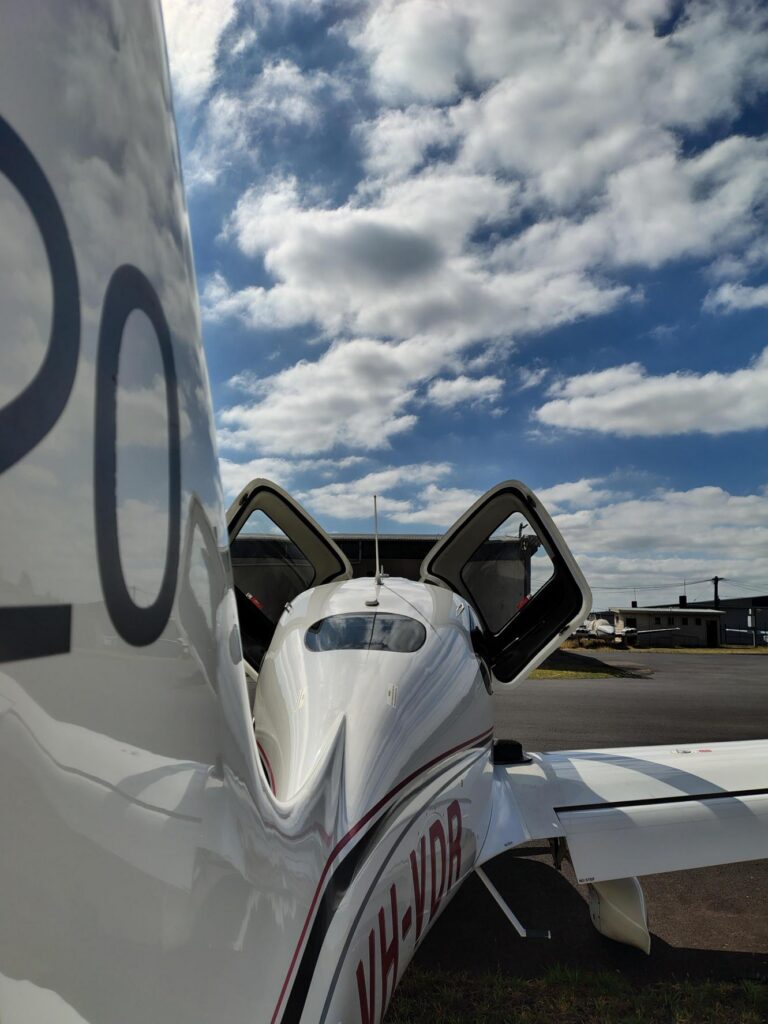
Searching for “flying lessons near me” is often the very first step into aviation.
You may have always wanted to fly an aircraft.
You might be looking for a birthday or milestone experience.
Or you may be wondering whether flying could eventually become a hobby or career.
The good news is that you don’t need previous flying experience to take your first lesson.
Most flight schools offer an introductory, trial or discovery flight designed specifically for complete beginners. You’ll normally fly with a qualified flight instructor, receive a briefing before the flight and have an opportunity to handle the aircraft controls once airborne.
If you enjoy the experience, you can then decide whether you want to continue into formal pilot training.
The simplest starting point is:
Find a reputable local flight school → Book an introductory flight → Experience flying → Decide whether you want to continue
Flying lessons are generally available through:
The type of lesson you choose depends on why you want to fly.
| Type of Flying Lesson | Best For | Typical Commitment |
|---|---|---|
| Introductory / Trial Flight | Trying flying for the first time | One lesson |
| RPL Training | Recreational/local flying | Ongoing training |
| PPL Training | Private and cross-country flying | Ongoing training |
| CPL Training | Professional aviation career | Long-term training |
If you have never flown before and aren’t sure where to start, an introductory flight is usually a better first step than immediately committing to a complete pilot-training program.
You can experience flying first and make the bigger decision later.
The term “flying lesson” can describe very different experiences.
Someone searching for a birthday experience may only want to spend an hour at the airport.
Someone else may be beginning a training pathway that eventually involves hundreds of flight hours.
Understanding the difference will help you choose the right product.
2.1 Introductory, Trial and Discovery Flights
Flight schools use several different names for beginner flying experiences.
You may see:
Although the exact format varies, they are broadly designed to introduce a complete beginner to flying.
You normally fly with an instructor and may experience:
Your instructor remains with you throughout the flight and is responsible for safety.
Typical airborne time may be approximately 30–60 minutes, depending on the particular product and flight school.
Who Is an Introductory Flight For?
An introductory flight may suit someone who:
You don’t need to know whether you eventually want an RPL, PPL or CPL before booking your first flight.
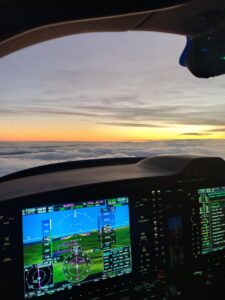
Generally, yes.
An introductory flying lesson is different from simply buying a passenger sightseeing flight.
The intention is usually to introduce you to actually controlling an aircraft.
Your instructor may first demonstrate how the controls work and then transfer control to you.
Under supervision, you may practise basic exercises such as:
The exact amount of control you have depends on the flight, conditions, aircraft and instructor.
The instructor remains responsible for the safety of the aircraft and may handle or closely supervise higher-workload stages such as:
You aren’t expected to know how to fly beforehand.
That’s the entire point of the lesson.
A first flying lesson isn’t simply a sightseeing flight where you sit in the passenger seat. It’s an introduction to actually controlling an aircraft.
Knowing what to expect can make the first experience much more comfortable.
The exact format varies between flight schools, but most introductory lessons include several stages.
You’ll usually begin by checking in with the flight school.
The school may confirm things such as:
If you’re considering learning to fly rather than simply taking a one-off experience, tell the instructor.
That can help them tailor the flight and explain what future training would look like.
Before going to the aircraft, your instructor may explain:
Don’t worry if much of the aviation terminology is unfamiliar.
Your instructor should explain what you need to know for the lesson.
Before flying, pilots inspect the aircraft.
Your instructor may introduce you to this process and point out areas such as:
You’re not expected to conduct the inspection independently on your first lesson.
The goal is simply to start understanding that flying begins well before the aircraft leaves the ground.
Once inside, your instructor may introduce:
The cockpit can look complicated the first time you see it.
You do not need to understand every switch, gauge or display.
Your instructor will focus your attention on the items relevant to the flight.
Once airborne and established away from higher-workload airport operations, the instructor may demonstrate how the aircraft responds to the controls.
A common training pattern is:
Instructor demonstrates → Student tries → Instructor coaches
You may practise:
One of the surprising things for many beginners is how sensitive an aircraft can feel compared with driving a car.
Small control movements are normally enough.
As the aircraft returns towards the airport, workload increases.
There may be:
The instructor will generally handle or closely guard the controls through the higher-workload parts of the flight.
After landing and shutdown, you may have a short debrief.
This can cover:
Remember:
Your first lesson is instruction, not an examination.
Nobody expects you to arrive knowing how to fly.
No previous flying experience is normally required for an introductory flying lesson.
You aren’t expected to understand:
These skills are taught progressively if you continue training.
What Should You Do Before the Lesson?
Preparation can be simple.
Follow the school’s instructions and:
You do not need to spend weeks studying aviation theory before trying your first lesson.
Experience flying first.
If you decide to continue, formal theory will become part of your training.
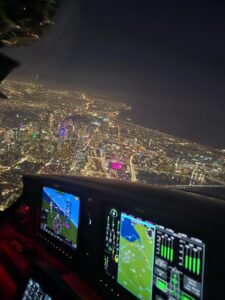
Flying-lesson prices can vary considerably.
Factors include:
Introductory Flying Lesson Cost
The research used to structure this article identified approximately $200–$350 as a broad Australian benchmark for many introductory flying experiences.
Treat this as an indicative range rather than a universal current price.
Some products will cost less.
Others may cost substantially more, particularly if they involve:
Why Can Two Flying Lessons Cost Very Different Amounts?
Imagine two products.
One offers 30 minutes airborne in a relatively economical training aircraft.
Another offers 60 minutes airborne in a more advanced aircraft.
It wouldn’t make sense to compare those products based only on the final price.
Check:
Don’t compare introductory flights based solely on the advertised price. Compare what you actually receive.
It may—but don’t assume that every introductory experience is structured identically.
Whether the flight can be logged or contribute towards subsequent training depends on the flight, school and applicable training requirements.
If there is even a possibility that you may continue training, ask before booking:
“Will this flight be logged and count towards my training if I decide to continue?”
This is particularly useful when comparing an experience-style product with a formal introductory training lesson.
If two flights are similarly priced and one can form part of your training pathway, that may influence your choice.
You don’t need to commit to a pilot licence before your first flight.
Take the lesson first.
If you enjoy it, you can then discuss formal training.
A simplified Australian pathway may look like:
Introductory Flight → RPL → PPL → CPL
But that sequence is not compulsory for everyone.
Someone may take one introductory flight and never fly again.
Another person might decide they want to obtain an RPL and enjoy recreational flying.
Another may want a PPL for private travel.
Someone else may discover an interest in becoming a commercial pilot.
Your next step should depend on what you actually want flying to allow you to do.
The Recreational Pilot Licence, or RPL, is an early Australian pilot-licence milestone.
It is primarily suited to recreational flying and provides more limited privileges than a PPL.
Training develops foundational flying skills including:
The research originally used for this article identifies a minimum 25-hour aeronautical experience requirement for the RPL.
That is a regulatory minimum rather than a guaranteed completion time.
You still need to reach the required competency standard.
Who Is an RPL Suitable For?
An RPL may suit someone mainly interested in:
If your ultimate goal is broader private travel or professional aviation, discuss the complete pathway with your flight school before deciding where to stop.
A Private Pilot Licence provides broader private flying privileges.
For many students, the PPL represents the transition from simply learning to operate an aircraft locally to being able to use an aircraft for broader private flying.
PPL training may involve:
Who Should Consider a PPL?
A PPL may suit someone who wants to:
The PPL remains a private licence.
If you want to be paid to fly, you need commercial pilot privileges.
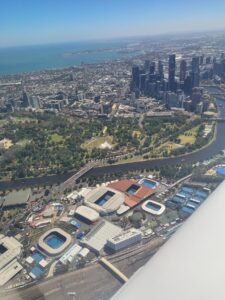
Someone searching for their first flying lesson may eventually decide that aviation is something they want to pursue professionally.
The Commercial Pilot Licence is the major licence milestone associated with being able to be paid to fly, subject to the requirements of the operation and any additional qualifications required.
Commercial training involves:
There are different training structures available, including more structured integrated programs and flexible non-integrated or modular pathways.
If your goal is professional aviation, tell potential flight schools before committing to your initial training.
You should understand not only how they will get you through your first licence, but what your longer pathway may involve.
The cost of one flying lesson and the cost of becoming a licensed pilot are very different questions.
Your complete training cost depends on:
The original research contained broad market estimates for different training stages, but these should not be treated as universal price ceilings.
In particular, there is no universal maximum price for a PPL.
Aircraft choice alone can change the overall cost by tens of thousands of dollars.
For example:
50 hours at $350 per hour = $17,500
50 hours at $600 per hour = $30,000
50 hours at $900 per hour = $45,000
And those figures represent aircraft-time examples before other costs are considered.
The useful question to ask a flight school is:
“What does a typical student spend from their first lesson until receiving the licence in the aircraft I intend to train in?”
The cost of learning to fly isn’t simply the aircraft hourly rate multiplied by the regulatory minimum number of hours.
Formal pilot training involves expenses beyond flying lessons.
Depending on your pathway, these may include:
Ask for an itemised estimate before committing to a complete training program.
Two schools can advertise similar aircraft rates but have very different total training costs once all additional charges are included.
If you’re trying to find a local flying lesson, start by looking for nearby general aviation airports and flight schools.
Search by City or Suburb
Useful search terms include:
Search Your Nearest General Aviation Airport
Flying schools aren’t usually based at the major passenger terminal you use for airline travel.
Many operate from:
Search the airports around your city and look at which flight-training organisations operate from them.
Look for Aero Clubs
Local aero clubs may offer:
For some recreational students, the aero-club environment may suit their goals well.
Look for Aviation Colleges
If you’re seriously considering professional aviation, you may also encounter dedicated aviation colleges offering structured CPL and professional programs.
The best option depends on whether you’re looking for:
One experience
or
A complete training pathway
The closest flight school isn’t automatically the best.
But distance matters more than many new students initially realise.
For one introductory flight, travelling an extra hour may not bother you.
If you decide to pursue a licence and need to visit the airport once, twice or three times every week, that travel time becomes much more significant.
Consider:
Imagine two schools.
School A is 20 minutes away.
School B is 70 minutes away.
If you fly twice each week for a year, that difference becomes substantial.
For one introductory flight, travelling further may not matter. For formal pilot training, convenience can have a real impact on consistency.
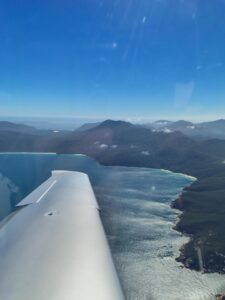
If you enjoy your first flight and decide to continue, your flight-school choice becomes much more important.
Do not choose solely because one school happens to be closest.
Compare the complete training environment.
For Australian flight training, understand whether the organisation holds the appropriate CASA approvals for the training you intend to complete.
You should also look at broader professional operating standards.
Consider:
Regulatory approval matters, but it does not automatically tell you which school will provide the best individual training experience.
Your instructor can have a major influence on your progress.
Consider:
A highly experienced pilot isn’t automatically the instructor you will learn best from.
Flying ability and teaching ability are related but different skills.
You want someone who can identify what you’re struggling with and explain it in a way that makes sense to you.
Ask:
The aircraft you choose will affect both your experience and your training cost.
Fleet size and aircraft availability are not the same thing.
A school could own a large number of aircraft but have even more students competing for those aircraft.
Ask:
“If I wanted to fly twice a week, could you realistically accommodate that?”
That can be one of the most useful questions you ask.
Ask whether you will have a primary instructor.
Consider:
Flying with different instructors occasionally can be useful.
Constant changes without good communication can reduce training continuity.
If there’s a possibility that you’ll continue, understand what the school can offer beyond your first licence.
Ask whether they provide:
You don’t necessarily need to complete every qualification with the same school.
But understanding the complete pathway early makes planning easier.
Do not simply compare:
Aircraft A: $X per hour
against
Aircraft B: $Y per hour
Ask what those figures include.
Possible additional costs include:
For formal training ask:
“What does a typical student actually spend from their first lesson until receiving the licence?”
That number matters far more than the headline hourly rate.
Not necessarily.
A cheaper flying lesson may represent great value.
But the lowest hourly rate doesn’t automatically produce the lowest total training cost.
For example, lower-cost training could become less efficient if:
Likewise, a more expensive aircraft or school isn’t automatically better.
The goal is to compare the complete training environment:
Aircraft + Instructor + Availability + Training Structure + Cost + Your Goals
For a one-off introductory flight, price can be a major factor.
For an entire licence, consistency and training quality become much more important.
The answer depends on whether you’re simply trying flying or pursuing a licence.
One-Off Introductory Flight
There is no ongoing commitment.
You can enjoy the experience and stop there.
Once a Month
For someone simply flying for an occasional experience, monthly flying may be fine.
For formal training, large gaps can make efficient progression more difficult.
Once a Week
Weekly flying can provide more consistent skill development for many recreational students.
You have time to study between flights without leaving excessively long gaps.
Two or Three Times Per Week
Students seeking faster progression may aim to fly several times each week.
This can provide:
Training frequency connects directly to:
Skill Retention + Completion Time + Overall Cost
Flying more frequently does not guarantee fewer total hours, but long gaps can make efficient progression more difficult.
You normally don’t need specialist aviation clothing for your first flying lesson.
Wear practical, comfortable clothing.
Consider:
Your feet need to operate the rudder pedals, so practical footwear is useful.
Always follow any specific instructions provided by the flight school.
Some aircraft may also have particular size, weight or clothing considerations.
Maybe.
Whether another passenger can accompany you depends on:
Some introductory flights are conducted in two-seat aircraft, meaning only the instructor and student can fly.
Other aircraft may have additional seats.
Even if seats are available, aircraft weight and balance limitations can still affect whether another passenger is permitted.
Ask the flight school before assuming someone can come with you.
An introductory flying lesson can be a memorable gift for someone interested in aviation.
Common occasions include:
But compare the product before buying a voucher.
Check:
A product described as a “flying experience” may not necessarily be structured in the same way as an introductory training lesson.
If the recipient is interested in learning to fly, ask whether the flight can be logged towards later training.
Before booking your first flight, useful questions include:
If you think you may continue into formal training, also ask:
Those final questions can tell you whether the school is only suitable for your first experience or potentially suitable for your entire training pathway.
How much does a flying lesson cost?
Prices vary by location, aircraft and flight duration.
The research originally used for this article identified approximately $200–$350 as a broad Australian benchmark for many introductory flying experiences.
Treat that as an indicative range rather than a universal current price.
When comparing lessons, check how much actual flight time is included and what aircraft you’ll fly.
Can I fly a plane on my first lesson?
Generally, yes.
During many introductory flying lessons, the instructor will demonstrate the basic controls and then allow you to practise flying under supervision.
The instructor remains responsible for safety and may handle higher-workload stages of the flight.
Do I need any experience to take a flying lesson?
No previous flying experience is normally required for an introductory flying lesson.
You aren’t expected to understand aircraft controls, radio communication, aviation terminology or navigation beforehand.
Your instructor introduces the basics during the lesson.
How long is a first flying lesson?
The airborne portion of many introductory flights may be approximately 30–60 minutes, depending on the provider and product.
The complete experience may take longer once the ground briefing, aircraft preparation and post-flight debrief are included.
Check the advertised flight time, not simply the overall experience duration.
How do I find a good flight school near me?
Look beyond distance alone.
Compare:
Approvals + Instructors + Aircraft + Availability + Cost Transparency + Location
If you may continue training, also ask whether the school can realistically provide the aircraft, instructors and training frequency needed to take you through the licence you eventually want.
If you have never flown an aircraft before, you do not need to immediately decide whether you want an RPL, PPL, CPL or an aviation career.
Start smaller.
Find a reputable local flight school and book an introductory flying lesson.
Use the experience to answer a few simple questions:
If the answer is yes, you can then start investigating formal pilot training.
At that point, the decision changes.
You are no longer simply searching for the closest flying lesson.
You need to consider:
The best flying lesson near you isn’t necessarily the cheapest or the closest.
Look for a school that provides a safe, well-structured introduction to flying—and, if you decide to continue, has the aircraft, instructors and availability to support where you want to go next.
In Australia, an introductory flying lesson will often cost around $200–$350, depending on the aircraft, flight duration, airport and flight school.
When comparing prices, check how much actual flight time is included. A cheaper lesson with 30 minutes in the air isn’t directly comparable with a more expensive lesson that includes 60 minutes of flying, a longer briefing or a different aircraft.
Generally, yes.
During an introductory lesson, the instructor will usually demonstrate the controls before giving you an opportunity to practise basic flying exercises such as straight-and-level flight, gentle turns, climbs and descents.
The instructor remains responsible for the safety of the flight and may take or closely supervise the controls during higher-workload stages such as take-off, radio-intensive operations and landing.
No previous flying experience is normally required for an introductory lesson.
You aren’t expected to understand aircraft controls, radio calls, navigation, checklists or aviation terminology before arriving. Your instructor introduces these progressively and explains what you need to know as the lesson unfolds.
The flying portion of an introductory lesson is commonly around 30–60 minutes, depending on the flight school and product you book.
The total experience will usually be longer because you’ll also spend time checking in, completing a ground briefing, preparing the aircraft and having a short debrief afterwards.
When booking, ask whether the advertised duration refers to flight time or the entire experience.
Don’t choose purely on price or distance.
Compare schools based on appropriate approvals, instructor quality, aircraft, actual aircraft availability, instructor availability, training pathways, cost transparency and how practical the location is for regular training.
If you think you might continue beyond one introductory flight, one of the most useful questions to ask is:
“If I wanted to fly once or twice a week, could you realistically accommodate me?”
Consistent access to an aircraft and instructor can become far more important than saving a small amount on each individual lesson.