- Available 24/7 by Appointment


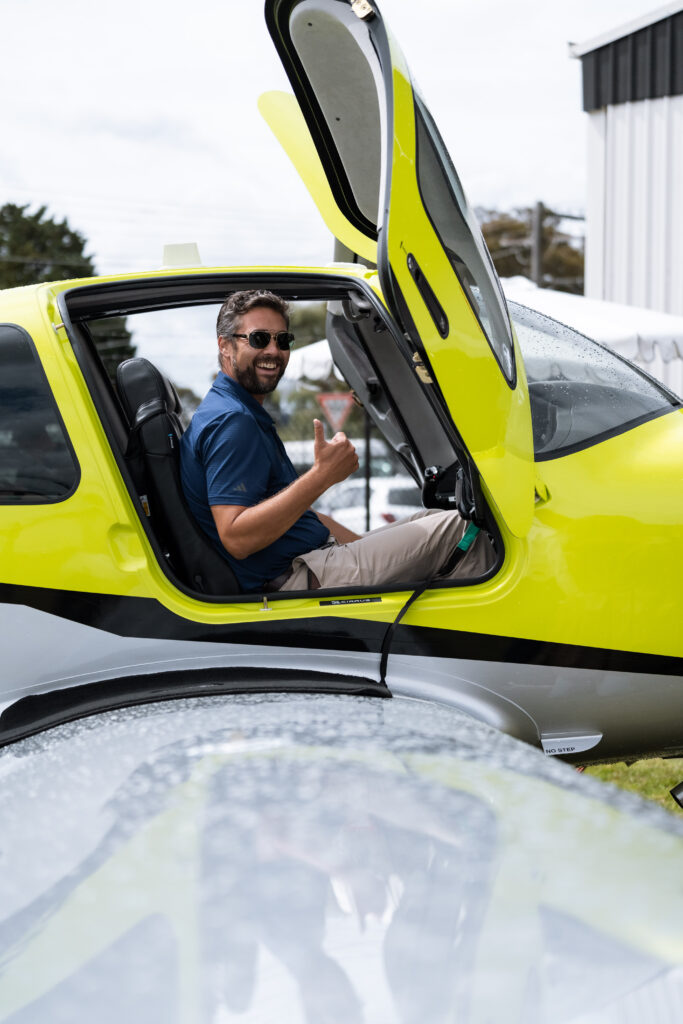
Search for the cost of a Private Pilot Licence in Australia and you’ll find very different answers.
One flight school might publish an estimate below $20,000.
Another might quote $30,000 or more.
Train in a newer, higher-performance or premium aircraft and the final cost can climb substantially beyond either figure.
Why?
Because you’re not really buying a Private Pilot Licence for a fixed price.
You’re paying for the aircraft, instructor and training required to reach the standard for a Private Pilot Licence.
The final amount you spend can be influenced by:
A useful starting benchmark from the research used for this article is approximately $20,000–$35,000+ for PPL training in common training aircraft.
But that should not be interpreted as a universal Australian price range or a maximum.
Depending on the aircraft, flight school and number of hours required, the total cost can be considerably higher.
1. How Much Does a Private Pilot Licence Cost in Australia?
The short answer is:
There is no single price for a Private Pilot Licence in Australia.
A useful way to think about the cost is:
PPL Scenario Indicative Cost What It Represents Minimum-style estimate Around
Highly efficient training near minimum
$19,000–$20,000
hours
Common training-aircraft
benchmark $20,000–$35,000+Conventional training environment Higher-cost training $35,000+More hours, higher rates or more expensive aircraft
The original research identifies approximately $20,000–$35,000+ as a useful benchmark for students starting with little or no experience.
Some lower estimates assume:
That can happen.
But it should not be the assumption used to plan every student’s budget. Why Is There Such a Large Price Range?
Because the cost of a PPL is not fixed.
Two students can receive exactly the same licence while spending very different amounts. One student might:
Another might:
Both can end up holding the same licence.
So rather than asking only:
“How much does a PPL cost?”
ask:
“What will it cost to complete a PPL in the aircraft and training environment I’ve chosen?”
That is the much more useful question.
2. What Is a Private Pilot Licence?
A Private Pilot Licence, or PPL, allows a pilot to exercise private flying privileges within the qualifications and ratings they hold.
For many pilots, the PPL is the point where flying becomes much more useful for private travel.
It can allow you to build towards:
A PPL can be an end goal in itself.
Not every pilot needs to continue into commercial flying.
Can You Be Paid to Fly With a PPL?
No.
A PPL is for private flying privileges.
If you want to be paid to fly, you need to progress towards the commercial licensing pathway and any additional qualifications required for the type of flying you want to undertake.
Is a PPL a Stepping Stone?
It can be.
For some pilots:
RPL → PPL
is the entire journey.
For others:
RPL → PPL → CPL → Advanced Ratings
may be part of a longer professional pathway.
That difference matters when comparing cost.
Someone intending to fly privately may choose a different aircraft, training structure or flight school from someone already planning a commercial career.
3. How Many Flight Hours Do You Need for a PPL?
This is one of the most important questions because flight time is normally the largest component of the total cost.
The supplied research identifies minimum aeronautical-experience requirements of:
But these figures should not be treated as guaranteed completion hours. Integrated PPL Training
The research identifies a 35-hour minimum for an integrated pathway. Integrated courses generally follow a structured approved syllabus.
The student progresses through a defined training program designed to combine the necessary theory, practical training and aeronautical experience.
Non-Integrated PPL Training
The research identifies a 40-hour minimum for a non-integrated pathway.
This structure can provide more flexibility and may suit students who want to train part-time or around work and other commitments.
Minimum Hours vs Actual Hours
The regulatory minimum tells you when you may satisfy the minimum experience requirement.
It does not guarantee that you will be ready for the PPL flight test at that exact point.
The original research used for this article identifies approximately 45–60+ hours as a practical planning range in some circumstances.
Even that shouldn’t be viewed as a universal completion figure.
Some students may need less.
Others may need significantly more.
The real question is whether you have reached the required competency standard. Minimum hours determine eligibility. Competency determines readiness.
One of the easiest ways to produce a very low PPL estimate is:
Minimum flight hours × hourly aircraft rate = PPL cost
But that calculation can leave out a significant amount of the real expense. A student may need additional training for:
Training can also be affected by:
Imagine a quote based on 40 hours.
If the student ultimately needs 55, 60 or 70 hours, the total cost changes substantially. That’s why a minimum-hour quote is useful for understanding the theoretical lower end. It should not automatically be treated as the amount you will actually spend.
5. What Determines the Cost of a PPL in Australia?
Several factors influence the final cost.
Some can move your budget by hundreds of dollars.
Others can move it by tens of thousands.
5.1 Aircraft Type
Aircraft choice is one of the biggest variables.
Training fleets can include:
More advanced does not automatically mean better.
And cheaper does not automatically mean better either.
A student whose primary goal is obtaining the licence at the lowest possible aircraft rate may choose a relatively economical trainer.
Another student may intentionally choose a more expensive aircraft because they want:
The important thing is to understand how that choice affects total cost. 5.2 Aircraft Hourly Rate
Small hourly differences become large over dozens of flight hours.
For example:
50 hours × $350 = $17,500
50 hours × $600 = $30,000
50 hours × $900 = $45,000
And that is before theory, examinations, flight tests, equipment and other costs are considered.
This is why there is no universal maximum PPL price in Australia.
Aircraft selection alone can change the final cost dramatically.
5.3 Instructor Costs
Some schools quote aircraft and instructor together.
Others separate them.
Depending on the provider, you may pay for:
Ask exactly what is included in the advertised rate.
5.4 Total Hours Required
Every additional hour matters financially.
If your aircraft and instructor cost $500 per hour, another 10 hours adds $5,000. Another 20 hours adds $10,000.
This is why minimum-hour assumptions have such a large effect on advertised PPL prices. 5.5 Location and Airport
Training costs can vary depending on where you fly.
Potential factors include:
Training at a busy controlled airport can provide useful exposure to ATC and traffic. But it may also involve more time on the ground.
If the aircraft is being charged by time, that still affects cost.
5.6 Training Frequency
Training frequency can affect efficiency.
Flying two or three times per week can provide stronger continuity.
Flying once every few weeks can create longer gaps between lessons. Long gaps may mean more time is spent:
This does not mean every student must fly several times per week.
It means your training schedule should be consistent enough to support progression. 5.7 Weather and Scheduling
Flight training depends on conditions.
Lessons may be affected by:
If you only have one booking every two weeks and that lesson is cancelled, your gap may suddenly become four weeks.
Availability and booking frequency can therefore influence training efficiency. 5.8 Student Progression
People learn at different rates.
One student may understand landings quickly but find navigation challenging.
Another may take longer to become comfortable in circuits but progress rapidly through navigation.
Needing additional training does not mean someone will become a poor pilot. The relevant question is when they reach the required standard.
6. Complete Private Pilot Licence Cost Breakdown
The total cost of a PPL can broadly be divided into:
Flight Training + Theory + Equipment/Administration
Flight training will normally be the largest component.
But the smaller costs around the edges can still add thousands to the overall budget.
Flight training normally represents the majority of PPL expenditure.
The original research used for this article identifies approximately $300–$450+ per hour as a common benchmark for dual training in conventional training aircraft.
That figure should not be interpreted as the maximum possible rate.
Newer, more capable or higher-performance aircraft can cost substantially more. Dual Training
Dual training means an instructor is flying with you.
The rate may include:
But not every school structures pricing identically.
Briefings, airport fees or other charges may be separate.
Solo Training
Once authorised to fly solo, you may pay a different rate because the instructor is no longer physically in the aircraft.
The exact charging structure varies between schools.
How Aircraft Choice Changes the Final Bill
Consider two students.
Student A trains in an aircraft costing $350 per hour.
Student B trains in an aircraft costing $700 per hour.
At 55 flight hours:
Student A’s aircraft-time component is approximately $19,250.
Student B’s is approximately $38,500.
Both students may be working towards exactly the same PPL.
The licence does not determine the price.
The training platform contributes significantly to it.
8. PPL Ground School and Theory
The original research provides an indicative theory budget of approximately $1,000–$3,000. This can vary depending on how the school delivers theory.
Options may include:
Some flight schools include theory within larger packages.
Others charge separately.
Make sure you know what your quoted price contains.
9. CASA Exams and Testing Costs
Theory and practical assessments can sit outside the advertised flying rate. Potential expenses include:
Do not assume the phrase “PPL course cost” automatically includes the final flight test. Ask.
10. Aviation Medical
Medical requirements should be considered early in your training.
The supplied research used for this article gave an indicative aviation-medical cost of approximately $200–$400, depending on the examiner and whether additional testing is required.
Actual medical requirements depend on the privileges you intend to exercise and your individual circumstances.
Possible expenses can include:
The important planning lesson is simple:
If you intend to invest heavily in flight training, investigate your applicable medical requirements early.
11. Pilot Equipment and Study Materials
Pilot training also involves equipment.
Aviation Headset
The supplied research identified approximately:
$300–$1,000+
for a headset.
Entry-level and premium noise-cancelling headsets can differ considerably in price. Navigation Equipment, Apps, Charts and Logbook
Indicative supplied range:
$200–$600
Depending on the school and your training stage, this may involve:
Books and Study Guides
Indicative supplied range:
$150–$400
These figures should be treated as student-expense examples rather than mandatory fixed costs.
There is also a difference between:
What you need
and
What you may choose to buy
A premium headset or tablet setup can be useful, but you do not necessarily need to buy the most expensive equipment on day one.
12. Other PPL Costs People Forget
Other possible costs include:
Individually, some of these costs may seem relatively small.
Together, they can materially affect the final bill.
This is why an itemised training estimate is so valuable.
13. Example Private Pilot Licence Budgets
These examples are illustrative scenarios rather than guarantees.
Scenario 1: Efficient Lower-Cost Training
Approximate supplied example:
Around $19,000
This assumes favourable conditions such as:
This should be viewed as a lower-end scenario.
Scenario 2: Typical Part-Time Training
The supplied research included an example of approximately:
$27,400
based around:
This demonstrates how extra hours quickly move the budget beyond minimum-style estimates.
Scenario 3: Higher-Cost Major-City Training
The supplied research also included an example of approximately: $33,200
based around:
Again, this is an example rather than a national average.
Scenario 4: Higher-Rate or Modern Aircraft Training
This fourth example was included in the original article structure specifically to demonstrate why $35,000 should never be treated as a maximum.
Consider:
55 hours × $700 per hour = $38,500
before:
At higher aircraft rates or higher total flight hours, the final budget can reasonably move into the $50,000–$75,000+ range.
This is an illustrative planning scenario rather than a research-derived national average. Its purpose is to demonstrate the effect of aircraft choice.
14. Cheap Aircraft vs More Expensive Aircraft: Which Should You Choose?
There is no universal answer.
Aircraft selection involves a trade-off between:
Price + Technology + Performance + Capability + Training Goals
If your primary objective is obtaining a PPL at the lowest possible hourly aircraft rate, a simpler trainer may make sense.
If you intend to use your PPL for:
you may place greater value on training in an aircraft closer to what you intend to operate later.
That may increase the initial PPL cost.
Whether that additional cost is worthwhile depends on your goals.
The cheapest way to earn the licence and the best aircraft for what you want to do after earning it aren’t necessarily the same thing.
15. Does Training at a More Expensive Flight School Mean You’re Overpaying?
Not necessarily.
A higher-priced school may differ because of:
But higher price does not automatically mean better training either.
Likewise, a cheaper provider is not automatically better value.
The useful question is:
What am I receiving for the money, and does it improve my ability to train consistently towards the goal I actually have?
Focus on value rather than price alone.
16. Integrated vs Non-Integrated PPL Training
The research used for this article identifies two different minimum experience pathways.
Integrated
Minimum identified in the supplied research:
35 hours
Integrated training generally involves:
Non-Integrated
Minimum identified in the supplied research:
40 hours
Non-integrated training can offer:
Which Is Cheaper?
You cannot determine that from the minimum hours alone.
The relevant calculation is:
Actual Hours × Actual Training Rates + Additional Expenses
An integrated student may have a lower regulatory minimum but train in a more expensive aircraft.
A non-integrated student may have a higher minimum but train at a lower rate. The final cost depends on what actually happens during training.
17. How Training Frequency Affects PPL Cost
Consistency can have a significant impact on progression.
Flying Two to Three Times Per Week
Potential advantages include:
Flying Once a Week
Weekly flying can provide reasonable consistency for many working or recreational students. It gives you time to study between flights while maintaining a regular training rhythm. Flying Once a Fortnight or Less
Longer gaps can create:
That does not mean you cannot obtain a PPL while flying fortnightly.
It means you should understand the potential effect on efficiency.
18. RPL to PPL: The Common Australian Pathway
Many Australian students begin with:
Student → RPL → PPL
An RPL can provide an earlier licence milestone before progressing into broader private flying privileges.
Does an RPL Make Your PPL Cheaper?
Not in the sense that you obtain two completely separate training programs from scratch.
Training and experience accumulated during your RPL progression can form part of your broader development towards a PPL.
Your flight school can explain how your individual training pathway is structured. RPL vs PPL
An RPL is primarily aimed at recreational flying and has more limited privileges.
A PPL provides broader private flying capability, including cross-country operations within the privileges and qualifications held.
If your end goal is already broader private travel, it is worth discussing your complete pathway before deciding how you want to structure training.
19. PPL vs CPL: Where Does the PPL Fit?
A simple way to think about the licensing pathway is:
Recreational Flying → Broader Private Flying → Professional Flying The PPL sits in the private-flying stage.
For someone whose end goal is professional aviation, it may form part of the progression towards the CPL and further ratings.
The original research for this article identified approximately $80,000–$120,000+ as a broad benchmark for a wider professional training pathway.
That highlights another important point.
If your goal is eventually commercial aviation, don’t plan your finances around the PPL alone.
Ask about the total pathway.
20. How to Reduce Your Private Pilot Licence Cost
Reducing cost should not mean cutting corners.
The goal is to train efficiently.
Fly Regularly
Consistent flying can reduce skill fade.
Prepare Before Every Lesson
Know what you’re going to practise before you arrive.
If the instructor needs to spend substantial aircraft time explaining something that could have been covered during preparation, that can reduce training efficiency.
Complete Theory Consistently
Keep theory moving alongside your flying.
Avoid reaching advanced practical stages while major theory requirements remain incomplete.
Sort Out Medical Requirements Early
Understand the applicable medical pathway before investing heavily in training. Book Ahead
Future bookings can help protect your training frequency.
Ask About Aircraft Availability
A cheap aircraft you can rarely book may not produce cheaper training. Compare Total Costs
Don’t compare hourly rate alone.
Compare:
Budget for Additional Hours
Do not build your entire financial plan around finishing at the minimum. Allow some contingency.
21. How to Compare PPL Prices Between Flight Schools
Do not simply ask:
“How much is your PPL?”
Ask:
The most useful question is:
“What does a typical student spend from their first lesson until receiving their PPL in the aircraft I intend to train in?”
That gives you a much better basis for comparing schools.
22. Should You Choose the Cheapest PPL Course?
Not necessarily.
Consider this simplified example.
School A
Aircraft/training rate:
$350 per hour
Student requires:
65 hours
Flight-training component:
$22,750
School B
Aircraft/training rate:
$450 per hour
Student requires:
50 hours
Flight-training component:
$22,500
The school with the higher hourly rate produces the lower flight-training total in this example.
Of course, neither calculation includes all other expenses.
The purpose of the example is simply to demonstrate:
Hourly rate ≠ total licence cost
Training efficiency, instructor continuity, aircraft availability and your own progression all matter.
23. How Much Should You Budget for a PPL?
Based on the original research and article structure, a useful planning approach is: Lower-End or Minimum-Style Budget
Approximately:
$19,000–$20,000
Possible in favourable circumstances but not something every student should assume. Common Training-Aircraft Benchmark
Approximately:
$20,000–$35,000+
This was the central range supported by the original research.
It can be useful when discussing conventional training environments.
Higher-Rate Aircraft or Training Providers
Approximately:
$35,000–$75,000+ may be possible
depending on:
This higher band is an illustrative planning range rather than a national average from the supplied research.
The key point is:
There is no universal maximum price for an Australian PPL. Aircraft choice alone can move the total cost by tens of thousands of dollars.
24. Private Pilot Licence Cost Australia: Frequently Asked Questions
How much does a Private Pilot Licence cost in Australia?
A useful benchmark from the research used for this article is approximately $20,000–$35,000+ in common training aircraft.
However, that should not be treated as a maximum.
The final cost can be substantially higher depending on aircraft, hourly rate, number of hours required and additional expenses.
Can You Get a PPL for $20,000?
Potentially.
A total around $20,000 may be possible in a lower-cost aircraft with efficient progression near minimum hours and limited additional expenses.
However, students should not assume they will automatically finish at that price. Can a PPL Cost $50,000 or More?
Yes.
Higher aircraft hourly rates can push the total considerably higher.
For example, 50 hours at $900 per hour represents $45,000 in aircraft time alone before theory, testing and equipment.
A PPL costing $50,000 or more is therefore entirely possible depending on the aircraft and training pathway.
What Is the Minimum Number of Hours for an Australian PPL? The supplied research identifies:
These are minimum experience requirements rather than guaranteed completion hours. How Many Hours Does a PPL Actually Take?
The original research identifies approximately 45–60+ hours as a useful practical planning range in some circumstances.
But there is no universal completion figure.
Your readiness depends on competency.
Is an RPL Cheaper Than a PPL?
An RPL generally involves a smaller training pathway and more limited privileges.
However, if you later progress from RPL to PPL, the experience accumulated during your earlier training can form part of your broader progression.
What Is the Most Expensive Part of Getting a PPL?
Flight training.
Aircraft and instructor time normally represent the largest component of the overall cost. This is why aircraft hourly rate and total flight hours have such a large impact. How Can I Reduce the Cost of My PPL?
Focus on training efficiency rather than simply choosing the cheapest hourly rate. Useful strategies include:
A useful conventional benchmark for a Private Pilot Licence in Australia is approximately $20,000–$35,000+.
But the most important part of that figure is the plus sign.
There is no universal Australian PPL price.
A lower-end scenario may come in around:
$19,000–$20,000
A common conventional-training benchmark may sit around:
$20,000–$35,000+
Training in higher-rate aircraft can potentially move the cost to:
$35,000–$75,000+
depending on the aircraft and hours required.
The price of a Private Pilot Licence isn’t determined by the licence itself. It is determined by:
Aircraft + Hourly Rate + Instructor + Total Hours + Theory + Testing + Additional Costs
That is why a student training in an economical conventional aircraft may spend tens of thousands less than someone completing the same licence in a newer or higher-performance aircraft.
Neither choice is automatically wrong.
They may simply be preparing for different kinds of flying.
Before choosing a flight school, ask for a realistic total based on the aircraft you actually intend to train in.
Do not rely only on:
Minimum Hours × Cheapest Hourly Rate
Instead ask:
“What does a typical student spend from their first lesson until receiving their PPL in the aircraft I intend to train in?”
That will give you a much better idea of what your Private Pilot Licence is actually likely to cost.
The cost of a Private Pilot Licence (PPL) in Australia can vary significantly depending on the aircraft you train in, the flight school’s hourly rates and how many hours you require to reach the required standard.
Around $20,000–$35,000+ is commonly quoted for training in traditional training aircraft, but this shouldn’t be considered a maximum. At our flight school, for example, a PPL can cost up to approximately $75,000 depending on the training pathway and hours required.
The best approach is to ask a flight school what a typical student actually spends in the aircraft you intend to train in, rather than relying solely on an advertised minimum price.
The licence at the end may be the same, but the aircraft and training used to get there can be very different.
Aircraft hourly rates are one of the biggest factors. Instructor rates, airport charges, training frequency and the number of hours required also influence the final amount.
For example, 50 hours at $350 per hour costs $17,500, while 50 hours at $900 per hour costs $45,000 before theory, examinations, flight testing and other expenses are added.
That’s why comparing PPL courses based purely on their headline price doesn’t necessarily provide a fair comparison.
The minimum aeronautical experience requirement depends on the training pathway. The supplied research identifies a minimum of 35 hours for an integrated course and 40 hours for a non-integrated course.
However, reaching the minimum number of hours doesn’t automatically mean you’re ready for your flight test. You still need to demonstrate the required competencies, and many students require additional training before reaching that standard.
Don’t budget for aircraft hire alone. Depending on the flight school, your total PPL cost may also include instructor fees, ground theory, CASA examinations, medical requirements, landing and airport fees, pilot equipment, navigation subscriptions, flight-test costs and administrative charges.
When comparing flight schools, ask for an itemised estimate and find out which expenses are included in the advertised price and which will be charged separately.
Choosing the aircraft with the lowest hourly rate can reduce your PPL cost, but the cheapest hourly rate doesn’t always produce the cheapest licence.
Training regularly, preparing before lessons, completing theory consistently and having reliable access to aircraft and instructors can all help reduce unnecessary revision and additional flight hours.
Aircraft choice should also reflect what you want from your licence. If your only objective is obtaining a PPL for the lowest possible cost, a lower-cost training aircraft may suit you. If you want to train in a particular type of aircraft or with particular technology and capabilities, you may deliberately choose a more expensive training pathway.
The better comparison is total cost and training value — not simply dollars per flight hour.