- Available 24/7 by Appointment


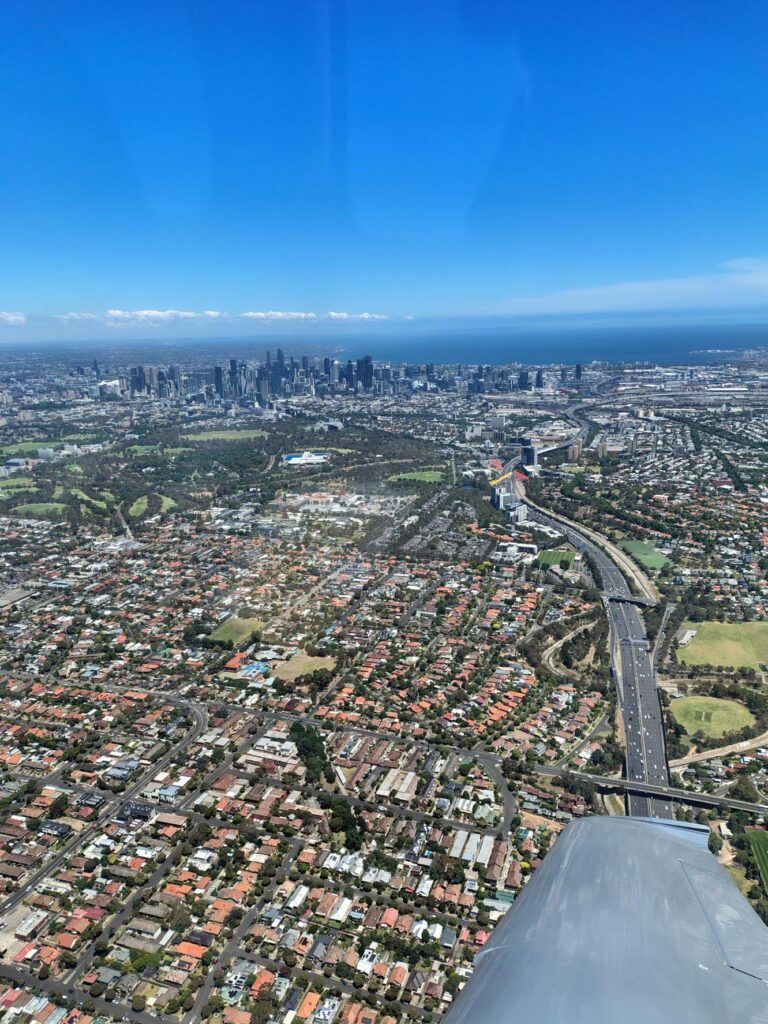
If you have ever looked up at a light aircraft flying over Melbourne and thought, “I’d love to learn how to do that,” getting started is probably easier than you think.
You do not need any previous aviation experience to begin learning to fly.
Flight training starts with the fundamentals, and your instructor progressively teaches you how to control the aircraft, take off and land, communicate on the radio, navigate and eventually fly by yourself.
Melbourne has an established flight-training industry, with Moorabbin Airport forming one of the major hubs for general aviation and pilot training in Victoria.
From your first flying lesson, you can progress through several different licence pathways depending on what you ultimately want to do.
The three big questions to ask yourself are:
Your answer will help determine whether you should work towards a Recreational Pilot Licence (RPL), Private Pilot Licence (PPL) or Commercial Pilot Licence (CPL).
But you don’t need to have your entire aviation journey planned before you start.
For most people, the first step is simply experiencing what it is actually like to fly a light aircraft with an instructor.
From there, you can decide how far you want to take it.
This guide will explain how to learn to fly in Melbourne, where you can train, the different pilot licences available, how much flight training can cost, how long it can take and what to expect from your first lesson through to your first pilot licence.
The simplest way to learn to fly in Melbourne is to find a flight school, complete an introductory flight and then begin a structured flight-training program with an instructor.
For someone starting with no previous experience, the journey might look something like this:
Introductory Flight → Flight Training → First Solo → RPL → Navigation → PPL → Advanced Training/CPL
You do not necessarily need to complete every stage.
The pathway depends on what you want to do with your flying.
If you simply want to fly recreationally, an RPL may be your first major objective.
If you want greater freedom to travel privately and complete longer cross-country flights, you may continue towards a PPL.
If your goal is eventually to work as a pilot, your training can continue towards a CPL and potentially additional ratings and qualifications.
The important point is that you don’t need to decide all of this before taking your first lesson.
Flight training is progressive.
You start with the basics and gradually build your skills as you gain experience.
Your early lessons will typically focus on understanding the aircraft and learning fundamental exercises such as:
You then progress into areas such as circuit training, emergency procedures, radio communications and eventually solo flying.
Later stages introduce navigation and cross-country flying as you work towards the requirements of your chosen licence.
For many students, the first major milestone is not receiving a pilot licence.
It’s flying an aircraft by yourself for the first time.
From there, the training continues towards whichever licence best suits what you ultimately want to do.
For most people considering flying lessons, no previous aviation experience is required to get started.
You do not need to understand aircraft systems, know how to communicate on the radio or already know how to land an aeroplane.
That is what flight training is designed to teach you.
Your instructor is with you during your initial training and introduces new skills progressively.
You might begin by learning how the controls affect the aircraft before progressing into climbs, descents and turns.
Later, you start combining those individual skills.
Eventually, you move into circuits, take-offs, landings, emergencies and navigation.
Solo flying only occurs once you have developed the required skills and your instructor is satisfied that you are ready.
There are also licensing, medical and administrative requirements that become relevant as you progress, particularly depending on which licence you are working towards.
But you don’t need to arrive at your first flying lesson already knowing how all of that works.
A good flight school should explain the pathway and help you understand what you need at each stage.
No.
You can start flight training as a complete beginner.
Your first lessons are designed around that assumption.
Before each flight, your instructor will normally explain what you are going to learn and how the exercise works.
You then practise those skills in the aircraft with the instructor.
After the flight, there is usually an opportunity to review what went well, what needs improvement and what you will work on next.
Over time, those individual lessons start connecting together.
Something that initially feels completely unfamiliar gradually becomes part of your normal flying routine.
You don’t need to be a maths expert to start learning to fly.
Aviation does involve calculations and numerical concepts, particularly as you progress into areas such as navigation, aircraft performance and flight planning.
But these are skills that can be learned during your training.
The same applies to aviation theory more broadly.
You are not expected to arrive knowing meteorology, navigation, aviation law or aircraft performance.
These subjects form part of learning to become a pilot.
What matters much more at the beginning is being willing to learn, prepare between lessons and consistently develop your skills.
There are several options for flight training around Melbourne, including major general aviation airports and smaller regional airfields.
For most people searching for flying lessons in Melbourne, however, one location stands out:
Moorabbin Airport.
Moorabbin Airport
Moorabbin is a major centre for general aviation and flight training in Victoria.
It is home to multiple flight schools and provides an environment where students can gain experience operating alongside other general aviation traffic.
Training from Moorabbin can expose students progressively to:
This can make it a particularly interesting environment in which to learn.
A student isn’t simply learning how to physically control an aircraft.
They are also gradually learning how to operate as a pilot within a real aviation environment.
Radio communication is a good example.
Talking to air traffic control and listening to other aircraft can initially seem like an entirely different language.
With practice, those radio calls gradually become another normal part of operating the aircraft.
Moorabbin also benefits from an established aviation ecosystem, including access to flight schools, instructors, aircraft, maintenance and other general aviation services.
For someone living in Melbourne, it is therefore one of the obvious places to investigate when considering flight training.
Yes.
Moorabbin is not the only place where you can learn to fly.
There are regional airports and other airfields around Melbourne and Victoria where flight training is also available.
A quieter airport can offer a different training environment, particularly for circuit training and general aircraft handling.
The better question is not necessarily:
“Which airport is best?”
It is:
“Which training environment, flight school and aircraft best suit the type of pilot I want to become?”
Location matters, but so do aircraft availability, instructor availability, training frequency, cost and the licence pathway the school can provide.
For most people wanting to learn to fly in Melbourne, Moorabbin is an excellent place to begin that comparison.
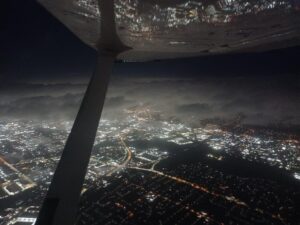
Melbourne gives student pilots access to a well-established aviation environment with busy airports, varied flying conditions and a large general aviation community.
For someone learning from zero, that means you are not only learning how to physically control an aircraft.
You are also progressively learning how to operate as a pilot within a real aviation system.
That includes communicating on the radio, maintaining situational awareness, operating around other aircraft and making decisions as conditions change.
One of the advantages of learning in Melbourne is exposure to a busy general aviation environment.
At airports such as Moorabbin, students can gradually become familiar with:
Initially, that can feel like a lot to manage.
A student may be concentrating simply on flying straight and level while also hearing radio calls from several other aircraft.
But those skills are introduced progressively.
Over time, listening to the radio, identifying traffic and understanding where other aircraft are becomes part of normal flying.
Melbourne is also known for changing weather conditions.
For flight training, that means students can gradually develop experience interpreting weather and making decisions around whether conditions are suitable for a planned flight.
This should not be interpreted as saying that difficult weather automatically makes someone a better pilot.
The value comes from learning how weather affects real-world aviation decisions.
Sometimes the correct decision is to fly.
Sometimes the correct decision is to delay, change the plan or not fly at all.
That judgement becomes increasingly important as training progresses into navigation and independent flying.
Melbourne also has an established aviation ecosystem.
Depending on where you train, students may have access to:
For someone intending to progress beyond an initial licence, that can also make it easier to continue into more advanced training later.
It can create more workload initially.
Radio communications, traffic and airport procedures may feel unfamiliar during your first few lessons.
But beginners are not expected to manage everything independently from day one.
Your instructor introduces those tasks progressively while continuing to supervise the flight.
Eventually, the same environment that initially feels busy becomes normal.
For most people considering flight training, a Trial Introductory Flight, commonly called a TIF, is one of the easiest ways to start.
A TIF is a supervised flight with an instructor designed to give you your first experience inside a light aircraft.
You are not expected to know anything beforehand.
Depending on the flight and provider, you may have the opportunity to:
The supplied research identifies an introductory flight as the typical first step before someone commits to a complete licence pathway.
For many people, this is the moment when flying changes from something they have thought about doing into something they can realistically picture themselves learning.
No.
Taking an introductory flight does not mean you have committed to completing an RPL, PPL or CPL.
That is part of its value.
You can experience the aircraft, meet an instructor and see what the training environment feels like before deciding whether you want to continue.
If you enjoy it, you can then discuss the most appropriate training pathway.
The right pilot licence depends mainly on what you want to do once you can fly.
In Australia, the main aeroplane pathways for someone learning in Melbourne are the Recreational Pilot Licence, Private Pilot Licence and Commercial Pilot Licence.
A simple way to think about them is:
| Your Goal | Likely Pathway |
|---|---|
| Experience flying for the first time | Introductory Flight |
| Recreational or local flying | RPL |
| Private travel and navigation | PPL |
| Professional flying career | CPL |
| More advanced flying | Additional ratings |
You do not necessarily have to make a permanent decision at the beginning.
Many students start with initial flight training, reach an RPL milestone and then decide whether they want to continue towards a PPL.
Others begin knowing from day one that their goal is commercial aviation.
The important thing is that your training pathway matches what you actually want to do with the licence.
The Recreational Pilot Licence, or RPL, is an early pilot licence milestone in Australia.
It is generally aimed at pilots who want to fly recreationally rather than immediately pursue broader private or commercial flying.
Training towards an RPL develops core pilot skills such as:
Once appropriately qualified, an RPL allows a pilot to act as pilot-in-command within the applicable limitations of the licence and endorsements.
For many students, it also acts as an important stepping stone towards a PPL.
An RPL can make sense if you:
You do not need to view the RPL as the end of your flying journey.
For many pilots, it is simply the first licence stage.
A Private Pilot Licence, or PPL, provides broader private flying privileges and is a common goal for people who want to use aviation for travel as well as recreation.
The supplied research identifies the PPL as the main pathway for broader private flying, including cross-country navigation and carrying passengers.
Compared with earlier training, the PPL involves developing greater independence as a pilot.
That means progressing beyond local flying into areas such as:
For someone who dreams of being able to plan a trip, fly themselves to another destination and return later, the PPL is usually the more relevant goal.
The PPL pathway involves several different requirements rather than simply completing a set number of hours.
The supplied research identifies areas including:
Your training provider will normally help guide you through these requirements as your training progresses.
There is an important difference between the regulatory minimum hours and the amount of training a particular student actually needs to reach flight-test standard.
Two people can complete the same training program and require different total hours.
Progress can be affected by:
The goal is not simply to reach the minimum number.
The goal is to reach the standard required to operate safely and pass the flight test.
A Commercial Pilot Licence, or CPL, is the pathway for someone who intends to fly professionally.
It represents a significantly greater training commitment than recreational or private flying.
Commercial training involves building substantially more flight experience and developing a higher level of knowledge and proficiency.
Someone working towards a CPL may ultimately be interested in areas such as:
The exact career pathway can vary considerably depending on what type of professional flying you want to pursue.
Do You Need to Decide on a CPL Before You Start?
No.
You can start learning to fly without deciding that aviation must become your career.
Many pilots begin because they are interested in flying recreationally.
Some later decide they want to take it further.
Others obtain a PPL and are perfectly happy using aviation privately.
Your first flying lesson does not lock you into an entire career pathway.
The easiest way to choose between the licences is to work backwards from what you want to do with the aircraft.
| Licence | Main Goal | Typical Student | Training Commitment |
|---|---|---|---|
| RPL | Recreational flying | Hobby/recreational pilot | Entry-level |
| PPL | Private travel | Private pilot | Intermediate |
| CPL | Professional flying | Career pilot | Significant |
“I Just Want to Fly for Fun”
An RPL may be a suitable initial goal.
It gives you a clear licence milestone while allowing you to develop experience and decide how far you want to continue.
“I Want to Fly Myself and Passengers Around Australia”
A PPL is likely to be more relevant.
The PPL provides broader private flying opportunities and incorporates navigation and cross-country training.
“I Want to Become a Professional Pilot”
You will ultimately be looking towards the CPL pathway.
That means planning for a significantly larger training program, including additional experience, theory and potentially advanced qualifications depending on your career goals.
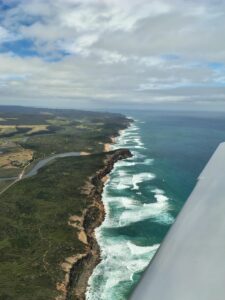
Flight training is built progressively.
Your instructor does not expect you to manage an entire flight from the beginning.
Instead, individual skills are taught first before being combined into increasingly complex flights.
The supplied research describes Melbourne flight training as a combination of instructor-led flying, solo flying and ground theory.
Basic Aircraft Handling
Your earliest lessons typically focus on learning how the aircraft responds to your inputs.
That can include:
These exercises form the foundation for everything that follows.
Take-Offs and Landings
As your aircraft control improves, training progresses towards circuit operations.
You begin combining multiple skills while operating close to the airport.
This involves:
Landings take time to become consistent, which is completely normal.
Emergency Procedures
Students are also taught what to do when things do not go according to plan.
This can include:
The aim is not simply memorising a checklist.
It is learning how to remain composed, prioritise correctly and make good decisions.
Navigation
Once your basic flying skills are established, training expands beyond the local area.
Navigation training can involve:
This is where flying begins to feel much more like travelling rather than simply practising exercises around the airport.
Radio Communications
Radio work is another core skill.
At first, aviation radio calls can sound fast and unfamiliar.
Students learn the terminology progressively until communication becomes part of normal cockpit workload.
Flying from a busy Melbourne training airport can provide regular exposure to this environment.
Solo Flying
Eventually, the instructor steps out of the aircraft.
Solo flying means applying what you have already learned without the instructor beside you.
It is a major milestone, but it happens only once your instructor is satisfied that you are ready.
Your first lesson is usually much more relaxed than people expect.
You are not expected to walk into the flight school already knowing how to fly.
A typical experience may look something like:
Meet Instructor → Pre-Flight Brief → Aircraft Inspection → Flight → Handle the Controls → Return → Debrief
Before the flight, the instructor normally explains what you are going to do.
You may then walk around the aircraft together and be introduced to some of the basic components and checks.
Once airborne, the instructor can demonstrate how the aircraft responds to the controls before giving you the opportunity to try.
You may experience:
The exact content depends on the flight and conditions.
Will You Actually Fly the Aircraft?
Generally, yes.
The research describing Trial Introductory Flights notes that students can handle the controls under instructor supervision.
The instructor remains responsible for the flight and can take control whenever required.
Your job is simply to experience what flying feels like.
Your first solo does not happen because you have completed a predetermined number of lessons.
It happens when you demonstrate that you can safely manage the aircraft without the instructor onboard.
Before that point, you will normally have spent significant time developing areas such as:
Your instructor gradually reduces the amount of assistance they provide.
Eventually, instead of being taught every step, you are demonstrating that you can manage the flight yourself.
What Is Your First Solo Like?
For many students, the first solo is a relatively short flight focused on demonstrating safe independent aircraft operation.
The major difference is obvious:
The seat next to you is empty.
That means you are responsible for flying the aircraft, communicating as required and completing the flight yourself.
It is one of the most significant milestones in learning to fly.
But it is still only one stage of the overall journey.
Your first solo is not the end of flight training.
In many ways, it marks the beginning of the next stage.
The broad progression may look like:
First Solo → Consolidation → Navigation Training → Cross-Country → Solo Navigation → Licence Preparation
After solo, students continue practising and consolidating their aircraft-handling skills.
Training then progressively moves towards navigation and greater independence.
Cross-country flying requires you to combine many things at once:
Eventually, solo navigation allows you to demonstrate that you can plan and manage flights beyond the immediate training area.
That is an important step towards becoming an independent pilot rather than simply someone who can fly an aircraft around the local airport.
There is no universal timeframe for learning to fly.
The supplied research indicates that students training regularly may complete their initial licences within several months, while irregular training can extend the process considerably.
The biggest factors include:
RPL
For someone training consistently part-time, an RPL may take a number of months.
Some students progress faster.
Others take longer.
PPL
A PPL can take several months to a year or more depending on how regularly you train.
Someone flying multiple times per week may naturally progress faster than someone who can only fly occasionally.
CPL
A commercial pathway is considerably longer because of the additional flight experience, theory and training involved.
Full-time and integrated programs can also look very different from someone completing commercial training part-time.
The important thing is not to compare your progression too closely with someone else’s.
Training is competency-based.
Consistency can make a significant difference to how efficiently you progress.
Every flight lesson builds on skills developed previously.
If there are long gaps between lessons, some of the next flight may need to be spent revising skills you had already started developing.
Regular flying can help with:
Is Once a Week Enough?
For many part-time students, once a week can provide a consistent training pattern.
The key word is consistent.
A regular weekly lesson is very different from flying once, waiting a month and then flying again.
Weather and aircraft availability will inevitably interrupt some lessons, so building regularity into your schedule can help maintain momentum.
Is Flying More Often Better?
It can be.
Flying more regularly gives you less time to forget what you learned during the previous lesson.
However, training also needs to be sustainable.
You need enough time between flights to:
The best schedule is one you can realistically maintain.
Becoming a pilot is not purely about learning to move the controls.
You also need to understand the environment in which the aircraft operates.
The research identifies core theoretical areas including:
You will also progressively develop aircraft-specific knowledge relevant to the type you are flying.
Air Law
Pilots need to understand the rules governing aircraft operations.
This forms part of knowing where you can fly, how operations are conducted and what responsibilities you have as pilot-in-command.
Navigation
Navigation theory supports the practical skills required for cross-country flying.
You learn how to plan a flight and understand where the aircraft is in relation to the route and surrounding airspace.
Meteorology
Weather affects almost every flight.
Students learn how weather information influences decisions before and during a flight.
Aircraft Performance
Aircraft performance knowledge helps pilots understand how conditions such as weight and environmental factors affect the aircraft.
Human Factors
Flying also involves understanding the pilot.
Human factors explores how people make decisions, manage workload and respond to factors that can affect performance.
Do You Complete Theory Before Flying?
Not necessarily.
Depending on the training structure, practical flying and theory can be completed alongside each other.
That can actually be helpful because the theory begins to make more sense once you see how it applies inside the aircraft.
Medical requirements form part of the Australian pilot licensing system.
The exact medical requirements depend on the type of licence and flying you intend to undertake.
For someone working towards a PPL, the supplied research identifies a Class 2 aviation medical as part of the pathway.
What Is a Class 2 Aviation Medical?
At a high level, it is an aviation medical certification used within the CASA licensing framework.
It involves assessment by an appropriately authorised aviation medical practitioner.
Your flight school can explain when the medical becomes relevant to your particular training pathway.
Should You Get Your Medical Early?
It is sensible to discuss medical requirements with your flight school relatively early.
This is particularly important if you already know you intend to work towards a PPL or continue into professional flying.
That way, you understand the relevant licensing requirements before progressing too far into training.
An Aviation Reference Number, commonly called an ARN, is an identifier used within Australia’s CASA aviation system.
Student pilots will encounter it as they begin working through the administrative side of licensing.
The supplied research identifies obtaining an ARN as one of the early steps in the Australian pilot training process.
Your flight school will normally explain when you need to obtain one and how it fits into your training pathway.
For a beginner, the important thing is simply knowing that there are some administrative steps alongside the practical flying.
You are not expected to understand all of them before taking your first lesson.
Choosing the right flight school can make a significant difference to your overall training experience.
Rather than simply choosing whichever school appears first in a search, compare how each provider actually delivers training.
Useful things to consider include:
Don’t Choose a School on One Factor Alone
Aircraft and instructor availability are particularly important.
A school may have an aircraft you really want to fly, but if you can rarely book it, your training can become inconsistent.
Similarly, instructor continuity can be valuable.
Training with different instructors can sometimes be useful, but constantly changing instructors may make it harder to maintain continuity.
Ask how often you can realistically fly rather than simply whether the school technically has aircraft available.
Before committing to a longer training program, ask practical questions such as:
A useful final question is:
“What training pathway would you recommend based on what I ultimately want to do after receiving my licence?”
That helps ensure the school is thinking beyond your first few lessons.
Students in Melbourne may have the opportunity to train in very different types of aircraft.
Some schools use traditional training aircraft.
Others offer modern technically advanced aircraft with glass cockpits and greater levels of automation.
Neither approach is automatically better.
The right choice depends on your goals.
Traditional Training Aircraft
Potential advantages can include:
For some students, that simplicity is exactly what they want.
Modern Technically Advanced Aircraft
A modern aircraft may introduce:
This can make sense for someone who expects to continue flying similar aircraft after receiving their licence.
Which Is Better?
There is no universal answer.
Ask yourself:
What aircraft do I ultimately want to fly?
If you know you want to fly modern glass-cockpit aircraft later, there may be value in training in that environment from the beginning.
If your priority is a simpler initial aircraft, a traditional trainer may suit you better.
Your training aircraft should support the pilot you want to become.
Yes.
You do not need to become a full-time aviation student to learn to fly.
Many people complete flight training alongside:
Part-time training can include:
The major factor is consistency.
Flying part-time is very different from flying irregularly.
If you can maintain a reliable training schedule, part-time flight training can be a practical option.
Part-Time vs Full-Time Flight Training
Full-time training allows a student to concentrate heavily on aviation and may produce faster overall progression.
Part-time training allows flying to fit around existing work and life commitments.
Neither is automatically better.
The right approach depends on:
Yes.
The biggest challenge is usually scheduling rather than whether the training itself is possible.
Someone working full-time may train through:
Weather also needs to be considered.
A lesson booked for Saturday morning may be cancelled because of conditions outside your control.
That is why flexibility helps.
It can also be useful to keep theory progressing during periods when flying is interrupted.
The most important thing is creating a routine you can maintain.
What Happens After You Get Your PPL?
Receiving your PPL gives you the ability to begin using aviation more independently, but it does not have to be the end of your training.
Some pilots simply use their licence for private recreational flying.
Others continue developing their skills.
A possible progression might look like:
PPL → Private Touring → Night VFR → Instrument Training → Multi-Engine → CPL → Instructor or Professional Pathway
You do not need to complete all of those stages.
The next step depends entirely on the type of flying you want to do.
Private Touring
For many pilots, the immediate goal after receiving a PPL is simply building experience.
That can mean flying to new airports, completing longer trips and gradually becoming more comfortable planning and conducting flights independently.
Advanced Training
Other pilots continue into areas such as:
Each qualification opens a different type of flying.
Keeping Your Flying Skills Current
Receiving a licence does not mean you stop practising.
Pilots need to remain aware of:
There is also an important difference between being technically current and being genuinely proficient.
Continuing to practise is part of being a responsible pilot.
That depends entirely on why you want to fly.
Learning to fly requires commitment.
You need to invest:
But people begin flight training for very different reasons.
For some, flying becomes a serious recreational pursuit.
For others, it is about being able to travel privately.
Some want to own an aircraft.
Others are starting the first stage of a professional aviation career.
The important thing is that you do not need to commit to the entire journey on day one.
You can start with one introductory flight.
If you love it, you continue.
If your goals change as you gain experience, your training pathway can change with them.
That makes the first step relatively simple.
You do not need to decide whether you will eventually become a commercial pilot.
You simply need to decide whether you want to experience what flying an aircraft is actually like.
If you are ready to begin, the process can be broken into a few straightforward steps.
Step 1: Decide Why You Want to Fly
Start with your long-term objective.
Do you want:
You do not need every detail figured out, but having a broad goal makes choosing a training pathway easier.
Step 2: Find a Melbourne Flight School
Compare providers based on:
For many Melbourne students, Moorabbin Airport will be an obvious place to begin looking.
Step 3: Book an Introductory Flight
Experience flying before committing to a complete training program.
Use the flight to experience:
Step 4: Discuss the Right Licence Pathway
Talk to the school about whether your goals are better aligned with:
Step 5: Complete the Required Administration
As your training progresses, this may involve requirements such as:
Your school should guide you through the process.
Step 6: Start Flight Training and Theory
Begin developing core aircraft-handling skills while also studying the theory required for your pathway.
Step 7: Work Towards Your First Solo
Your first solo becomes the first major practical milestone.
It demonstrates that you are developing the skills required to safely manage the aircraft independently.
Step 8: Continue Towards Your Licence
After solo, training continues into:
Eventually, those pieces come together into your first licence.
Learning to fly in Melbourne can start with absolutely no previous aviation experience.
You do not need to understand aircraft systems.
You do not need to know aviation radio calls.
You do not need to know whether you want to become a commercial pilot.
You can simply start with your first flight.
From there, the pathway can develop naturally:
First Flight → Initial Training → First Solo → RPL → Navigation → PPL → Advanced Training
For someone pursuing a professional career, that pathway can continue further into commercial and advanced qualifications.
Moorabbin Airport provides one of Melbourne’s major flight-training environments, giving students access to a busy general aviation airport, instructors, aircraft and an established aviation community.
The most important decision is not whether you should immediately pursue an RPL, PPL or CPL.
It is deciding what you ultimately want to do with an aircraft.
Someone who wants to fly locally for enjoyment may need a very different pathway from someone who wants to travel privately around Australia.
And someone who wants aviation to become a career will have different requirements again.
Once you understand that goal, choosing a flight school, aircraft and licence pathway becomes much easier.
The first step remains the simplest one:
Get into an aircraft with an instructor and experience what it is actually like to fly.
From there, you can decide how far you want to take it.
Can I learn to fly in Melbourne with no experience?
Yes. You can begin flight training in Melbourne with no previous aviation experience.
Your instructor will teach you from the fundamentals, including aircraft control, take-offs, landings, radio communications and navigation. For most beginners, the easiest first step is an introductory flight where you can experience the aircraft before committing to a full licence pathway.
Where is the best place to learn to fly in Melbourne?
Moorabbin Airport is one of Melbourne’s main general aviation and flight-training hubs and is home to multiple flight schools and training aircraft.
The best location for you will also depend on practical factors such as travel time, aircraft availability, instructor availability, the type of licence you want and how often you can realistically train.
Should I get an RPL or PPL?
An RPL may suit you if your main goal is recreational or local flying.
A PPL is generally more relevant if you want broader private flying privileges, including navigation and cross-country flying.
Many students begin with initial training, reach the RPL stage and then continue towards their PPL as their experience and goals develop.
How long does it take to get a PPL in Melbourne?
The timeframe varies from student to student.
Someone flying regularly may complete their PPL within several months, while someone training less frequently may take a year or longer. Weather, aircraft availability, instructor availability, theory progress and how quickly you develop each skill can all affect the overall timeline.
Consistency is usually more important than trying to finish within a particular number of months.
What is the first step to learning to fly in Melbourne?
A good first step is to book an introductory flight with a Melbourne flight school.
This gives you the opportunity to meet an instructor, experience the aircraft, handle the controls under supervision and see what flight training actually feels like.
Afterwards, you can discuss whether an RPL, PPL or CPL pathway best matches what you want to do with your flying.