- Available 24/7 by Appointment


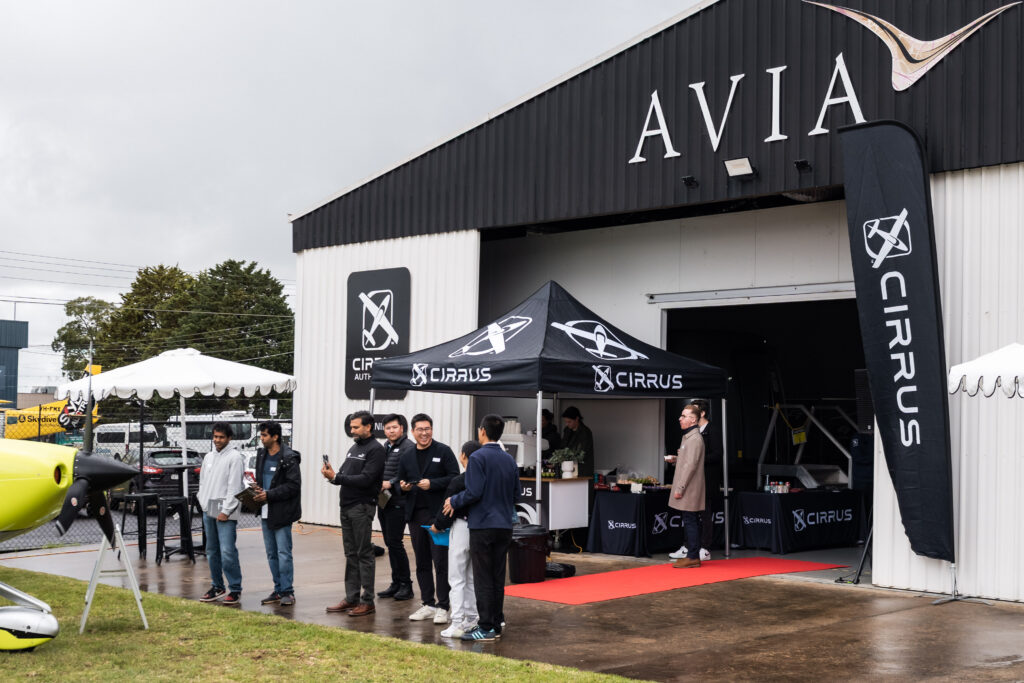
If you’re looking for Cirrus flight training in Melbourne, you’re probably looking for something more specific than a standard flying lesson.
You might be completely new to aviation and want to learn to fly in a Cirrus from day one. You might already hold a pilot licence and be transitioning into an SR20 or SR22. Or perhaps you’re purchasing a Cirrus and want structured training in the aircraft, its avionics, automation and safety systems.
Cirrus flight training can cater to all of these pathways.
The Cirrus SR20 and SR22 are modern single-engine aircraft combining advanced avionics and automation with the Cirrus Airframe Parachute System (CAPS). Cirrus has also developed a structured training system around its aircraft, supported by Cirrus Authorised Training Centres and Cirrus Standardised Instructor Pilots (CSIPs).
In Melbourne, Cirrus-specific training is available at Moorabbin Airport, with training ranging from learning to fly and Private Pilot Licence (PPL) training through to Cirrus transition, CAPS, instrument and recurrent proficiency training.
One of the important distinctions is that Cirrus training isn’t reserved for experienced pilots.
You can learn to fly in a Cirrus from the beginning, developing the fundamental skills every pilot needs while progressively learning how to operate the aircraft’s systems, avionics and automation.
For someone who ultimately intends to fly an SR20 or SR22, that creates another option: rather than earning a licence in one aircraft and transitioning into a Cirrus later, you can learn the aircraft and work towards your licence at the same time.
This guide explains how Cirrus flight training in Melbourne works, the different training pathways available and what you should consider before choosing where and how you train.
Cirrus flight training is available in Melbourne at Moorabbin Airport, covering everything from initial learn-to-fly training through to advanced training for existing Cirrus pilots.
According to the supplied research, Avia Aviation at Moorabbin Airport is Victoria’s only Cirrus Authorised Training Centre, offering training in Cirrus SR20 and SR22 aircraft with experienced Cirrus Standardised Instructor Pilots (CSIPs).
The type of training you need will depend heavily on where you are in your flying journey.
| Training | Who It’s For |
| Learn to Fly / PPL | New pilots wanting to learn in Cirrus aircraft |
| Cirrus Transition Training | Licensed pilots moving into an SR20 or SR22 |
| CAPS Training | Cirrus pilots learning aircraft-specific emergency procedures |
| Instrument Training | Pilots progressing into instrument flying |
| Recurrent / Proficiency Training | Existing Cirrus pilots maintaining and improving proficiency |
This is an important distinction when searching for Cirrus training.
There isn’t one single “Cirrus course” that every pilot completes.
A person who has never flown before will need a very different training program from an experienced PPL holder who has just purchased an SR22. Likewise, someone wanting to complete instrument training will have different objectives from a Cirrus owner returning for recurrent training.
The broader Cirrus training system is designed to accommodate those different stages.
A pilot’s pathway could therefore look something like:
First Flight → PPL → Cirrus Proficiency → Instrument Training → Recurrent Training
Or, for someone who already holds a licence:
Existing Pilot → Cirrus Transition → CAPS & Systems → Ongoing Proficiency
The starting point depends on your existing experience and what you ultimately want to do with the aircraft.
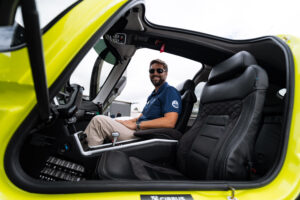
Cirrus flight training is aircraft-specific pilot training centred around the Cirrus SR-series, particularly the SR20 and SR22.
At its core, learning to fly a Cirrus still involves developing the same fundamental flying skills required in other aircraft.
You’ll learn aircraft control, straight-and-level flight, climbs, descents, turns, circuits, navigation and decision-making as you progress through your training.
Where Cirrus training becomes more aircraft-specific is in how those fundamental flying skills are combined with the systems and technology found inside the aircraft.
Depending on the Cirrus model and training program, this can include:
The idea isn’t to replace fundamental flying skills with technology.
It’s to teach a pilot how to fly the aircraft while also understanding and appropriately managing the technology available to them.
That distinction becomes increasingly important as pilots progress into cross-country, instrument and more advanced flying.
Is Cirrus Training Different From Normal Flight Training?
In some ways, yes. In others, no.
The fundamental principles of flying an aeroplane don’t suddenly change because there’s a Cirrus badge on the aircraft.
A new pilot still needs to learn how attitude, power and control inputs affect the aeroplane. They still need to develop good judgement, situational awareness and aircraft-handling skills. And someone working towards an Australian pilot licence still needs to satisfy the applicable CASA requirements.
What changes is the aircraft you’re learning those skills in.
Cirrus aircraft introduce students to systems, avionics and automation that become part of how the aircraft is operated. CAPS also introduces an aircraft-specific emergency system that pilots need to understand as part of their overall decision-making.
For a complete beginner, those elements are introduced progressively. You’re not expected to climb into an SR20 for your first lesson and immediately understand every page of the avionics or every aircraft system.
You start with the fundamentals and build from there.
That’s one of the reasons structured Cirrus training matters: learning the technology shouldn’t come at the expense of learning how to fly the aeroplane.
Cirrus flight training in Melbourne is available at Moorabbin Airport, one of Victoria’s major general aviation and flight-training airports.
For pilots based in Melbourne’s south-east, Moorabbin provides access to a busy training environment where students can develop their flying skills while gaining experience operating from a controlled airport.
The supplied research identifies Avia Aviation at Moorabbin Airport as Victoria’s only Cirrus Authorised Training Centre.
That distinction is particularly relevant if you’re specifically searching for Cirrus flight training, rather than simply looking for a flight school that happens to operate a Cirrus aircraft.
A Cirrus Authorised Training Centre forms part of the broader Cirrus training network, with training aligned to Cirrus’ standardised approach.
What Cirrus Training Is Available in Melbourne?
The available training isn’t limited to one experience level.
For someone starting from zero, the pathway can include initial flight training and working towards a Private Pilot Licence in Cirrus aircraft.
For an existing pilot, training can instead focus on transitioning into an SR20 or SR22, understanding Cirrus systems, becoming comfortable with the avionics and automation, and developing proficiency with the aircraft’s normal and emergency procedures.
More advanced pilots can continue into areas such as instrument and recurrent proficiency training.
That means the right place to start depends less on how much Cirrus experience you have and more on a simple question:
What do you ultimately want to be able to do in the aircraft?
A Cirrus Authorised Training Centre is part of Cirrus Aircraft’s global training network.
These centres follow a standardised training approach developed around Cirrus aircraft, their systems and the way Cirrus expects pilots to operate them.
The idea is consistency.
A pilot training at an authorised centre in Melbourne should be introduced to the same broad Cirrus operating philosophy as someone training elsewhere in the Cirrus network.
That includes areas such as:
The supplied research describes authorised centres as delivering training aligned with Cirrus’ factory-backed programs and using instructors who have been trained and evaluated within the Cirrus system.
Why Does Cirrus Authorisation Matter?
The biggest benefit is standardisation.
There is a difference between receiving general flight instruction in an aircraft and completing training within a structured aircraft-specific program.
Cirrus authorisation means the school is working within the broader Cirrus training framework rather than developing its own completely independent approach.
That can be particularly valuable for pilots who intend to continue flying Cirrus aircraft after their initial training.
It also creates continuity for pilots who may train in one location and later fly or receive recurrent training elsewhere.
That does not mean every non-authorised flight school is automatically inferior.
The distinction is simply that an authorised centre has a formal relationship with the Cirrus training system and follows Cirrus-specific standards and programs.
A Cirrus Standardised Instructor Pilot, commonly referred to as a CSIP, is a flight instructor who has completed additional Cirrus-specific training and standardisation.
Their role extends beyond simply being familiar with an SR20 or SR22.
A CSIP is trained around the broader Cirrus operating philosophy, including the aircraft’s systems, avionics, automation and safety features.
That can include areas such as:
The supplied research identifies CSIPs as an important part of the Cirrus training network and the standardisation process used by authorised training centres.
Do You Need a CSIP to Learn to Fly a Cirrus?
Not every flight in a Cirrus legally requires instruction from a CSIP.
However, if you specifically want Cirrus-standardised training, a CSIP provides aircraft-specific instruction within the Cirrus training framework.
That distinction becomes particularly relevant for:
For someone learning from zero, a CSIP can also introduce Cirrus-specific systems and operating habits progressively while the student develops their core flying skills.
The two main aircraft associated with Cirrus flight training in Melbourne are the Cirrus SR20 and SR22.
Both belong to the Cirrus SR-series and share much of the same design philosophy, but they can suit different training and flying objectives.
Cirrus SR20
The SR20 is widely used as a training and private flying aircraft within the Cirrus ecosystem.
It combines traditional flight training with features commonly associated with modern technically advanced aircraft, including:
For a new student, learning in an SR20 means becoming familiar with this technology from the beginning rather than transitioning into it later.
It can also provide continuity for someone who ultimately intends to operate Cirrus aircraft after completing their licence.
Cirrus SR22
The SR22 is a higher-performance aircraft and is commonly associated with private touring, owner flying and more advanced operations.
For an existing pilot moving into an SR22, transition training can place greater emphasis on:
The best aircraft depends on the pilot’s experience and objective.
A complete beginner and an experienced pilot purchasing an SR22 may both be undertaking Cirrus training, but the training pathway will look very different.
Learning to fly a Cirrus does not mean spending your first few lessons staring at screens and programming avionics.
You still begin with the fundamentals.
A new pilot needs to learn how an aircraft responds to changes in attitude, power and control inputs before advanced systems become genuinely useful.
Early flight training will therefore still focus on core skills such as:
As the student becomes more comfortable, Cirrus-specific systems and technology can be introduced progressively.
That can include:
The important point is that technology should support good flying rather than replace it.
A pilot needs to understand how to manually fly the aircraft while also knowing how and when to use the tools available.
Learning in a technologically advanced aircraft therefore means developing two skill sets together: flying the aeroplane and managing the systems inside it.
Yes.
Cirrus flight training is not limited to pilots who already hold a licence.
The supplied research specifically identifies complete Private Pilot Licence pathways using Cirrus SR20 and SR22 aircraft.
A complete beginner can start their initial flight training in a Cirrus and continue through the stages required to work towards a licence.
A typical progression might look broadly like:
Introductory Flight → Initial Flight Training → Circuits → Solo → Navigation → PPL
Along the way, the student progressively learns both traditional flying skills and Cirrus-specific systems.
That means someone who ultimately wants to fly a Cirrus has the option of learning the aircraft from the beginning rather than first becoming licensed in another aircraft and transitioning later.
There is no universal rule saying this is the best option for every student.
It comes back to:
Private Pilot Licence Training in a Cirrus
A student can complete their Private Pilot Licence training in Cirrus aircraft rather than treating Cirrus flying as something they move into after obtaining a licence.
The PPL training itself still develops the same fundamental competencies expected of a private pilot.
That includes:
The difference is that these skills are developed in a Cirrus aircraft.
Alongside traditional PPL training, students also become familiar with:
Why Complete Your PPL in a Cirrus?
The strongest reason is continuity.
If you know that you eventually want to fly Cirrus aircraft privately, learning in one from the beginning means the aircraft itself is already familiar by the time you obtain your licence.
You are not learning one cockpit, one avionics environment and one operating philosophy before immediately transitioning into something different.
For some pilots, that makes sense.
For others, it may not.
Who Might Prefer a Different Training Aircraft?
Someone whose primary objective is earning a PPL at the lowest possible hourly aircraft rate may decide that a lower-cost trainer better suits their goals.
Cirrus training may involve a higher aircraft cost.
That does not make one approach better or worse.
The question is whether you are choosing an aircraft simply to complete the licence or choosing an aircraft that reflects the type of flying you want to do after the licence.
There is no single cost for Cirrus flight training because there is no single Cirrus training program.
A complete beginner working towards a PPL will naturally require much more training than an experienced pilot completing a Cirrus transition.
Likewise, training in an SR20 may have a different cost structure from training in an SR22.
Your final cost can depend on:
Why Can Cirrus Training Cost More?
Aircraft type is one of the biggest factors in any flight-training budget.
A modern, technologically advanced aircraft can cost more to operate than a traditional training aircraft.
That difference flows through to the hourly training rate.
For someone comparing flight schools, it is therefore more useful to compare:
Aircraft + hourly rate + training included + expected hours + intended outcome
rather than comparing headline prices alone.
Don’t Compare PPL Programs on Price Alone
If one program uses a lower-cost aircraft and another uses a Cirrus, the two prices are not necessarily describing the same training experience.
Someone choosing Cirrus training may be deliberately selecting the aircraft they want to continue flying once licensed.
That does not mean everyone should choose the more expensive option.
It simply means price should be considered alongside aircraft choice and long-term goals.
Cirrus transition training is designed for licensed pilots who are moving into an SR20 or SR22 for the first time.
You are not starting flight training again from zero.
Instead, the focus shifts towards learning how the Cirrus operates.
The supplied research identifies transition training as covering areas such as:
For someone coming from a more traditional aircraft, there may also be a significant avionics transition.
A pilot who is perfectly comfortable flying a conventional trainer may still need time to become proficient with the Cirrus cockpit and operating environment.
Who Is Cirrus Transition Training For?
It may be appropriate for:
The objective is not simply to show someone where the switches are.
Good transition training should help the pilot understand how the aircraft is intended to be operated.
Buying an SR20 or SR22 is a major step for any pilot.
Even an experienced pilot can benefit from structured aircraft-specific training before operating a Cirrus independently.
Owner transition training can focus on:
The supplied research also identifies dedicated owner-transition programs as part of Cirrus training in Australia.
This can be particularly useful when moving from a significantly different aircraft.
A pilot may already be highly experienced, but experience in one aircraft does not automatically translate into familiarity with another aircraft’s systems, performance and operating philosophy.
The objective is therefore not to teach an experienced pilot how to fly from the beginning.
It is to help them become competent and confident in the aircraft they have purchased.
One of the most recognisable features of Cirrus aircraft is the Cirrus Airframe Parachute System, commonly known as CAPS.
CAPS is an aircraft parachute system incorporated into Cirrus aircraft.
But Cirrus-specific training is not simply about knowing that the system exists.
Why Is CAPS Training Important?
CAPS training focuses on understanding the system as part of a broader emergency decision-making process.
That includes areas such as:
The supplied research describes CAPS instruction as an important part of both initial and recurrent Cirrus training.
CAPS Is More Than Knowing Where the Handle Is
A pilot can memorise where a piece of equipment is located without truly understanding how it fits into an emergency response.
The more important question is:
When would I use it?
That requires judgement.
For that reason, CAPS training should be treated as part of the overall Cirrus operating philosophy rather than a quick demonstration of a system.
Modern Cirrus aircraft are closely associated with advanced glass-cockpit avionics.
The supplied research identifies Garmin Perspective and Perspective+ as important parts of the Cirrus training environment.
These systems can provide pilots with a significant amount of information.
But more information is only useful if the pilot understands what they are looking at and how to use it correctly.
Cirrus avionics training may therefore focus on:
Learning Automation Properly
Modern avionics can reduce workload, but they can also create confusion if the pilot does not understand what the system is doing.
A well-trained pilot should be able to answer questions such as:
What is the aircraft doing?
Why is it doing that?
What mode have I selected?
What should happen next?
That level of understanding becomes particularly important during instrument flying and higher-workload operations.
Autopilot training forms another important part of becoming comfortable in a modern Cirrus.
The goal is not simply to learn which button activates the autopilot.
Pilots need to understand how automation interacts with:
Autopilot can be an extremely useful tool, especially during longer flights and more advanced operations.
But the pilot remains responsible for understanding what the aircraft is doing.
That is why autopilot training is closely connected with broader avionics and automation training.
It becomes especially relevant for pilots transitioning into Cirrus aircraft and those progressing into instrument flying.
Cirrus training does not stop once a pilot can fly under visual conditions.
The supplied research identifies instrument training using the Garmin Perspective+ avionics suite as part of Cirrus training.
Instrument training develops the skills required to operate when outside visual references become limited and when flying under instrument procedures.
Within a Cirrus, this can place greater emphasis on integrating:
Why Is Cirrus Relevant to Instrument Training?
The avionics and automation available in Cirrus aircraft can become particularly valuable during instrument operations.
But pilots need to understand those systems thoroughly.
The objective is not to become dependent on automation.
It is to understand how to use the available technology while retaining the fundamental ability to control and manage the aircraft.
Completing a Cirrus transition does not mean the learning process is finished.
Like any complex skill, flying benefits from continued practice.
The supplied research identifies recurrent and proficiency training as an ongoing part of the Cirrus training philosophy.
Recurrent training can revisit areas such as:
This can be particularly useful for pilots who fly infrequently.
A pilot may remain legally current while still recognising that certain skills would benefit from additional practice.
That is an important distinction.
Currency and proficiency are related, but they are not always the same thing.
Cirrus recurrent training therefore fits into a broader philosophy of maintaining competence rather than treating transition training as a one-time event.
No.
Cirrus training can be relevant to pilots at very different stages of their aviation journey.
| Pilot | Possible Cirrus Training |
| Complete beginner | Initial flight training |
| Student pilot | PPL pathway |
| PPL holder | Cirrus transition and proficiency |
| Cirrus owner | Owner transition |
| Instrument pilot | Instrument training |
| Experienced Cirrus pilot | Recurrent and proficiency training |
Someone taking their first flying lesson and someone who has flown for decades can therefore both be undertaking Cirrus flight training.
They are simply working towards different objectives.
One of the most common questions is whether learning in a Cirrus is fundamentally different from learning in a conventional training aircraft.
The answer is both yes and no.
The basic principles of flying remain the same.
What changes is the aircraft and the technology surrounding those fundamentals.
Aircraft
A traditional trainer may provide a simpler and lower-cost platform for learning basic flying skills.
A Cirrus provides a modern aircraft environment with additional systems and technology.
Avionics
Depending on the aircraft, traditional trainers may use conventional instruments or other glass-cockpit systems.
Cirrus aircraft commonly use the Perspective or Perspective+ environment.
Automation
Cirrus training can involve a greater emphasis on understanding and managing automation.
CAPS
CAPS introduces an aircraft-specific safety system that becomes part of emergency decision-making and recurrent training.
Cost
Cirrus aircraft can cost more to operate than traditional trainers.
That can increase the total price of flight training.
Training Goal
This is ultimately the most important question:
What aircraft do you want to fly after you obtain your licence?
If your goal is simply to complete a licence at the lowest possible aircraft rate, a lower-cost trainer may make sense.
If your goal is to continue flying Cirrus aircraft, learning in a Cirrus from the beginning may provide valuable continuity.
There is no universal best aircraft.
The right choice depends on your budget, goals and intended flying.
Not necessarily.
A Cirrus contains systems and technology that a student also needs to learn, but that does not automatically make it unsuitable for beginners.
The important thing is how the training is structured.
New students are not expected to master every avionics function on their first lesson.
Training is progressive.
The student first develops core aircraft-control skills and then gradually builds familiarity with the technology.
There is undoubtedly more to learn in a technologically advanced cockpit.
But learning those systems progressively can make them feel normal rather than something that must be introduced later.
The objective should always remain the same:
Build a pilot who understands how to fly the aircraft first and how to use the technology appropriately second.
It depends entirely on what you want from your flight training.
Cirrus training can involve higher aircraft operating costs, so it may not be the lowest-cost way to obtain a pilot licence.
That does not automatically make it poor value.
Cirrus Training May Make Sense If:
A Lower-Cost Aircraft May Make More Sense If:
Your overriding objective is simply achieving a licence at the lowest possible aircraft hourly rate.
That is a perfectly reasonable objective.
The mistake is assuming there is one correct aircraft choice for every student.
Someone who intends to fly Cirrus aircraft may place greater value on learning that aircraft and its systems from the beginning.
Someone focused purely on obtaining the licence may prioritise cost.
The better comparison is:
What aircraft best matches the flying you intend to do after training?
If you specifically want Cirrus training, compare more than the aircraft parked outside the school.
A school operating an SR20 or SR22 is not necessarily offering the same training environment as a Cirrus Authorised Training Centre.
Useful areas to compare include:
Aircraft availability deserves particular attention.
Even a good training program becomes difficult to progress through if you cannot book the aircraft consistently.
The same applies to instructor availability.
If you plan to fly regularly, ask whether the school can realistically accommodate that schedule.
Perhaps the best question to ask is:
“What Cirrus training pathway would you recommend based on what I want to do after completing the training?”
That turns the conversation away from simply asking for an hourly rate and towards designing training around an outcome.
Getting started is relatively straightforward, but the right first step depends on whether you are a beginner or already licensed.
Step 1: Decide What You Want to Achieve
Think about your objective.
Are you:
The supplied research identifies these different pathways as part of the broader Cirrus training offering.
Step 2: Speak With a Cirrus Training Provider
Explain your:
That allows the school to recommend an appropriate pathway.
Step 3: Take an Introductory Flight or Assessment
For a new student, this may be an introductory flight.
It gives you an opportunity to experience the aircraft and training environment before committing to a longer program.
For an existing pilot, the starting point may instead involve discussing previous experience and identifying an appropriate transition program.
Step 4: Complete Relevant Prerequisites
Depending on your training objective, you may need to address relevant medical, licensing or training prerequisites.
These will vary depending on whether you are learning from zero or already hold a licence.
Step 5: Begin Structured Cirrus Training
Depending on your course, training can combine:
Ground instruction + flight training + Cirrus systems + avionics + CAPS
with additional areas introduced as you progress.
Can I learn to fly from zero in a Cirrus?
Yes.
You do not need to hold a pilot licence before starting Cirrus flight training.
A complete beginner can undertake initial flying lessons in an SR20 or SR22 and progress towards a Private Pilot Licence.
The important thing is that the training remains progressive. You begin with fundamental aircraft-control skills and gradually add Cirrus-specific systems, avionics, automation and CAPS as your experience develops.
Where can I complete Cirrus flight training in Melbourne?
The supplied research identifies Avia Aviation at Moorabbin Airport as Victoria’s only Cirrus Authorised Training Centre.
Training includes Cirrus SR20 and SR22 aircraft and can cover PPL training, transition training, CAPS, instrument training and recurrent proficiency.
How much does Cirrus flight training cost?
The cost depends on what training you are completing.
A complete PPL pathway will cost considerably more than a short transition or proficiency program.
The final price can also vary depending on:
Because Cirrus aircraft can have higher operating costs than some traditional trainers, Cirrus training may cost more per hour.
However, comparing hourly rates alone does not show the full picture. Consider the aircraft, training included and what you ultimately want to fly.
What is a Cirrus Standardised Instructor Pilot?
A CSIP is a Cirrus Standardised Instructor Pilot.
These instructors have completed additional Cirrus-specific training and standardisation focused on the aircraft, its systems and the broader Cirrus operating philosophy.
They form part of Cirrus’ worldwide training network.
Do I Need Cirrus Transition Training If I Already Have a PPL?
Holding a PPL means you already have fundamental pilot skills, but it does not automatically mean you are familiar with the Cirrus SR20 or SR22.
Transition training focuses specifically on the aircraft.
That can include:
For pilots moving from a significantly different aircraft, structured transition training can help build familiarity and proficiency before operating the Cirrus independently.
Cirrus flight training in Melbourne can cover much more than simply learning how to operate an SR20 or SR22.
It can form an entire training pathway.
For a new pilot, that might begin with a first flight and continue through a Private Pilot Licence.
For an existing pilot, it might involve transitioning into a Cirrus, learning the avionics and aircraft systems or preparing to operate a newly purchased aircraft.
For more experienced pilots, it can continue through instrument and recurrent proficiency training.
The pathway can therefore look something like:
Complete Beginner → PPL → Cirrus Proficiency → Instrument Training → Recurrent Training
or:
Existing Pilot → Cirrus Transition → CAPS & Systems → Ongoing Proficiency
The defining feature is not simply the aircraft itself.
Cirrus flight training includes understanding the broader operating environment around the aircraft:
For someone who ultimately intends to fly Cirrus aircraft, learning within that training system can provide continuity from the beginning.
Rather than earning your licence in one aircraft and learning an entirely new aircraft environment later, you can develop your pilot skills and Cirrus-specific knowledge together.
That will not be the right choice for every student.
But if an SR20 or SR22 is the type of aircraft you ultimately want to fly, it is worth considering the aircraft you train in as part of the bigger decision — rather than looking only at the cheapest way to obtain the licence.
Cirrus flight training is pilot instruction delivered in Cirrus SR-series aircraft (typically the SR20 and SR22) using Cirrus Aircraft’s factory-endorsed curriculum and instructors who meet Cirrus’ global standards.cirrusaircraft+1
Training focuses on advanced avionics (Garmin Perspective/Perspective+), automation, and safety systems like the Cirrus Airframe Parachute System (CAPS), and is delivered by Cirrus Standardised Instructor Pilots (CSIPs) at Cirrus Authorized Training Centres.cirrusaircraft+2
In Melbourne, the primary provider is Avia Aviation at Moorabbin Airport, which advertises itself as Victoria’s only Cirrus Authorised Training Centre.aviaaviation.com
Avia offers PPL, instrument rating, CAPS, and owner transition training in Cirrus SR20 and SR22 aircraft, all aligned with Cirrus’ global training standards.aviaaviation.com+1
No. You can start Cirrus flight training as a complete beginner through a Private Pilot Licence (PPL) pathway conducted entirely in Cirrus aircraft.aviaaviation.com+1
If you’re already a licensed pilot, you can also do Cirrus conversion/transition training to move from other aircraft types into an SR20 or SR22, focusing on systems, automation, and CAPS.flightone.edu
At Avia Aviation in Melbourne, you can complete:
For more advanced or commercial pathways, some pilots combine Melbourne-based Cirrus training with other providers (such as Flight One in Brisbane) that also offer Cirrus-focused CPL and owner programs.flightone.edu
To begin: